
Livraison le jour même ou le lendemain

Qualité garantie

Débloquez vos offres de bienvenue: Livraison GRATUITE | Jusqu'à -80 % | 30 jours d'essai gratuits à JoyPlus
Téléchargez l'application
The double-walled glass is far more than a simple gimmick?: it's a small revolution for coffee and tea lovers. Its spectacular design, which makes your drink appear to levitate, and its promise to keep hot drinks hot without ever burning your fingers, has been a massive hit. But be warned—not all models are created equal. Behind a frequently similar design often lie flaws that can quickly turn a coveted item into a bitter disappointment. We'll explain how to sort through the options to find a model that truly combines style with durability.
Don't be swayed by aesthetics alone, which are often prioritised over the essentials. Here are the three most common problems that can ruin your experience.
To make the right choice, focus on these three technical points. They are the true guarantors of the quality and longevity of your future insulated glass cup.
Borosilicate glass is essential for its resistance to thermal shock, allowing you to switch from an iced tea to a boiling coffee without fear of it cracking. But the material isn't everything?: the manufacturing method is crucial. "Mouth-blown" glasses are often a sign of quality, featuring more careful control and a superior finish. Trust your senses as well?: a glass that feels too light or fragile to the touch probably won't last long.
That small silicone dot under the glass isn't a defect—quite the opposite. It's an essential hydrophobic valve that regulates the pressure of the air trapped between the walls during temperature changes. The quality of this valve and its seal is therefore paramount. A model advertised as dishwasher-safe is generally a good sign, indicating a better seal. However, hand washing remains a wise precaution to extend its lifespan.
Every drink has its ideal container. A latte glass worthy of the name should hold at least 350?ml to accommodate milk and foam, whereas a 150?ml cup is more than enough for an espresso. So, think about your favourite beverage. If you're considering a model with a handle, check that it's wide enough for a comfortable grip. For a glass tea cup, a thin rim is often more pleasant.
Here are a few models that check all the boxes, for very different user profiles.
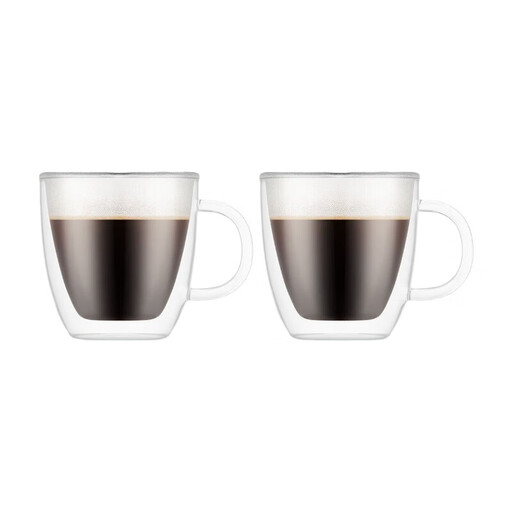
Why we love it : Perfect for enjoying your espresso the right way. Its 150 ml capacity is ideal for a double espresso or a lungo, and its sleek, handle-free design beautifully showcases the coffee's crema.
The seal of a reputable brand like Bodum is a good guarantee of the silicone valve's quality, minimising the risk of condensation. Its mouth-blown borosilicate glass is built for daily use.
Its award-winning design (iF Design Award) and its compatibility with microwaves and dishwashers make it an ally that's as beautiful as it is practical for everyday life.
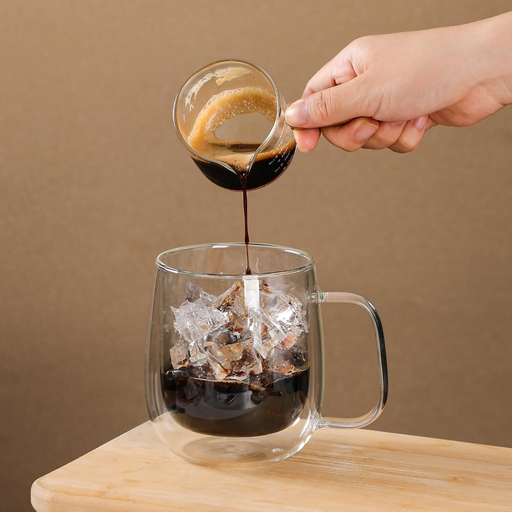
Why we love it : For anyone who can't imagine their morning without a large latte, tea, or hot chocolate. Its generous 350 ml capacity and practical handle ensure a comfortable and secure grip.
This model checks the crucial box for ergonomics. Its well-designed handle guarantees comfort and safety, avoiding the sometimes precarious grip of handle-free glasses, especially with a hot drink.
Its capacity-to-functionality ratio is unbeatable. Sold as a set of two, it offers excellent value for daily use, and its dishwasher-safe compatibility is a real bonus for maintenance.
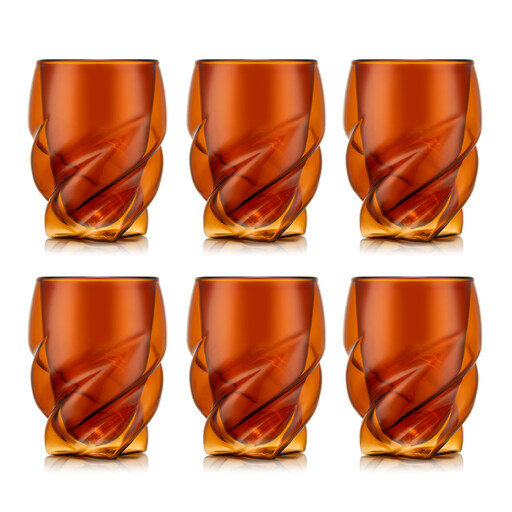
Why we love it : Perfect for those who love to entertain and want to surprise guests with a touch of colour. This set of six is ideal for serving coffees, iced teas, or even cocktails in style, all while benefiting from thermal insulation.
Beyond the Bodum-signed manufacturing quality, this set stands out with its very chic, colourful design. It avoids the "gimmicky" product trap by combining a strong aesthetic with flawless thermal insulation.
The combination of a six-piece set, a bold colour, and thermal performance makes it an ultra-versatile choice, equally at home for family breakfast or for wowing guests.
Explore our full selection of products that meet our strictest quality and safety criteria.
Yes, many models are advertised as compatible, which is often a sign of a quality seal valve. However, to maximise its lifespan, place it on the top rack, where the water jets are less aggressive. Nevertheless, hand washing remains the best insurance against any long-term risk of water infiltration.
The longevity of a double-walled glass depends primarily on its manufacturing quality and how it's cared for. A good model made of thick borosilicate glass, handled with care, can last for years. Its two worst enemies?? Physical shock and water infiltration. Therefore, avoid extreme thermal shocks (like pouring boiling water into a glass straight from the freezer) and impacts.
This dot is none other than the famous pressure-equalising valve. The air trapped between the walls expands with heat and contracts with cold. Without this valve, the built-up pressure could shatter the glass. It is designed to be hydrophobic?: it lets air escape but blocks water from entering. A faulty valve is therefore the number one cause of internal condensation.