
Livraison le jour même ou le lendemain

Qualité garantie

Débloquez vos offres de bienvenue: Livraison GRATUITE | Jusqu'à -80 % | 30 jours d'essai gratuits à JoyPlus
Téléchargez l'application
A steaming coffee that seems to float in mid-air, an iced tea that stays cool without a hint of condensation… The double-walled glass has won over beverage enthusiasts who want to combine aesthetics with performance. But be warned: behind its sleek design lie pitfalls that can quickly turn a promising purchase into a disappointment. To make sure you get it right, here are the details that separate a quality glass from a short-lived gadget.
The number one pitfall: fragility. Many models crack after just a few weeks, including those labeled "borosilicate glass." Another recurring problem is the seal. A poorly sealed silicone plug under the glass is all it takes for water to seep between the walls from the very first wash, ruining both the insulation and the look. Finally, be wary of the advertised capacity: it often corresponds to the volume filled to the brim, not the usable, everyday volume.
To make an informed choice, you just need to focus on a few technical features that make all the difference.
Borosilicate glass is the go-to material for double-walled mugs. Its superpower? Excellent resistance to thermal shock, allowing it to go from cold to hot without cracking. But be careful, not all borosilicate glasses are created equal. Thickness is the true indicator of durability. A model that is too thin, even if it's lightweight, is likely to break from the slightest knock in the sink. In the absence of an official standard, trust how it feels in your hand to assess its sturdiness.
The effectiveness of an insulated glass depends on the sealed layer of air between its two walls. To create it, manufacturers drill a hole which they then seal with a silicone plug. It is precisely this seal that is the Achilles' heel of many models. If it's defective, water or condensation will seep in, rendering the glass useless. The smart move: scrutinize customer reviews on this specific point and opt for models that are explicitly listed as dishwasher-safe, a good sign of their sturdiness.
The ideal capacity depends entirely on your habits:
With or without a handle? It's a matter of taste, but not only that. A glass mug with a handle ensures a more stable grip, especially with hot liquids, and keeps the glass free of fingerprints. Handleless models, on the other hand, offer a minimalist aesthetic and stack more easily.
To help you decide, here are a few models that caught our eye for their durability and smart design.
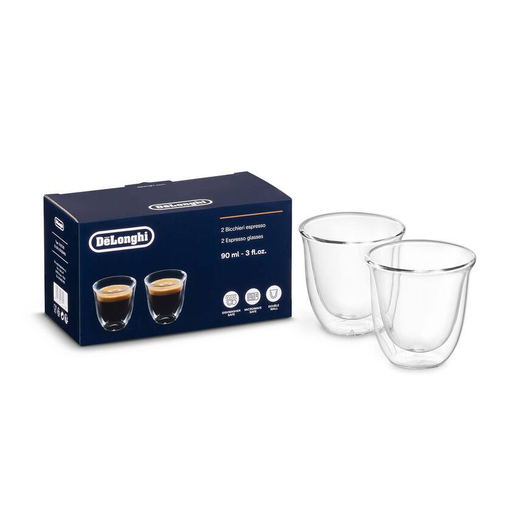
Why we love it: For an espresso lover, the serving temperature is non-negotiable. This set maintains it perfectly, without ever burning your fingers.
This set benefits from the expertise of a specialist coffee brand. The design is meticulous, the seal is reliable, and its dishwasher-safe compatibility is confirmed.
A perfectly calibrated 90 ml capacity for an espresso. The hand-blown glass ensures impeccable clarity and finish.
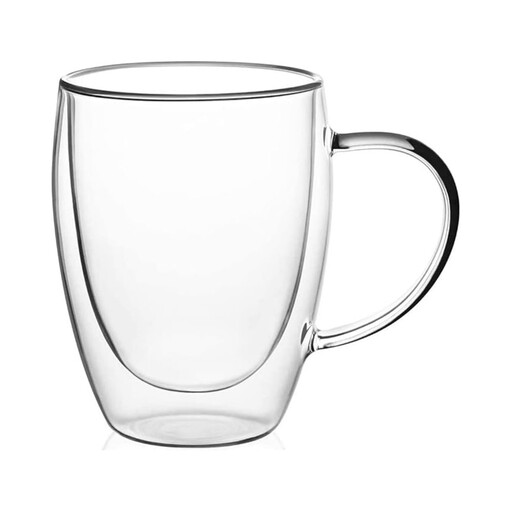
Why we love it: Perfect for your morning coffee or afternoon tea, this set combines a generous capacity with the comfort of a handle, which ensures a secure grip and insulates from heat.
Its sturdy handle reduces the risk of drops, the leading cause of breakage. The 350 ml capacity is realistic and designed for daily use, not just to look good on the label.
Excellent value for money. The set of 2 format is perfect for getting equipped without breaking the bank.
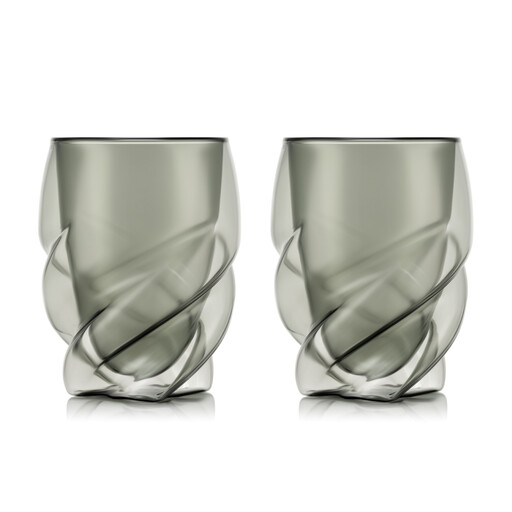
Why we love it: For those who believe presentation matters as much as the contents. The smoky grey finish and sleek silhouette of this Bodum model add an instant touch of design.
Bodum is a benchmark brand in double-walled glass. You're investing in proven expertise, which guarantees meticulous finishing and better durability than entry-level models.
A signature design that makes a statement. Its versatile 270 ml capacity makes it as perfect for a flat white as it is for a cocktail.
Discover our full selection of products that meet our quality criteria and current safety standards.
Yes, most quality models are compatible. However, it's crucial to always check the manufacturer's recommendations. To extend their lifespan, place them on the top rack of the dishwasher and choose low-temperature cycles. This minimizes the risk of water seeping through the seal and preserves the clarity of the glass.
This silicone plug seals the hole that was used to create the insulating layer of air during manufacturing. It's an essential component, but also the glass's weak point: a poor seal here means a leak is guaranteed.
Although both keep drinks warm, their uses are different. The double-walled glass, being transparent, is designed for savouring drinks at home or in the office. It enhances the beverage while keeping it at the right temperature long enough to drink it. The insulated travel mug, on the other hand, is for on-the-go use. Made of stainless steel, it's designed for transport and maintains the temperature for several hours thanks to its airtight lid. In short: the former is for aesthetics and enjoyment, the latter is for performance and portability.