
Livraison le jour même ou le lendemain

Qualité garantie

Débloquez vos offres de bienvenue: Livraison GRATUITE | Jusqu'à -80 % | 30 jours d'essai gratuits à JoyPlus
Téléchargez l'application
A coffee that stays hot, an iced tea that leaves no condensation, a drink that seems to levitate… Magic? No, just a double-walled glass. This designer item has become a staple in our kitchens, but be warned: not all models are created equal. Behind a similar appearance lie vast differences in quality that can turn an impulse buy into a real disappointment. To ensure you make the right choice, here are the key points to check.
As a product expert for the editorial team, my mission is to separate fact from fiction for you. Let's forget the marketing jargon and get straight to the point. Here are the 3 classic mistakes to avoid when buying a double-walled mug, and more importantly, how to outsmart them.
To avoid these pitfalls, you only need to check a few key points. These are the true guarantees of quality and longevity for your future insulated glass.
The main difference between a good and a bad double-walled glass comes down to one thing: the material. Borosilicate glass is the gold standard. Unlike ordinary glass, it offers two major advantages:
Insisting on borosilicate glass should therefore be your first instinct. It's the guarantee of a safe and long-lasting purchase.
It's often overlooked, yet capacity is crucial. Choosing the right size ensures a perfect tasting experience.
Before you check out, consider its primary use. Also, remember to check its dimensions to ensure it will fit under your coffee machine and in your cupboards.
The most advanced models, like those from Bodum, feature a small, hydrophobic silicone valve on the base. Far from being a flaw, this small plug is a true innovation. It allows the air trapped between the walls to expand and contract with temperature changes without ever letting water seep in. This ingenious system prevents stress on the glass and acts as the ultimate shield against internal condensation.
Because every coffee or tea lover has their own habits, here is our selection of models that meet specific needs while ticking all the quality boxes we've just discussed.
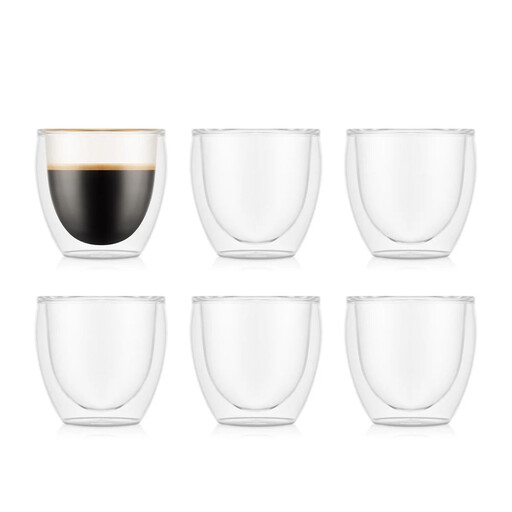
Our take: This set is tailored for short coffee purists. The 80 ml capacity is ideal for an espresso, preserving its crema and temperature. The sleek, handle-free design offers a comfortable grip, while the thermal insulation does its job perfectly.
Made from borosilicate glass, it withstands the thermal shock of a piping hot espresso without flinching. The Bodum-signed manufacturing quality ensures a perfect seal, eliminating any risk of internal condensation.
Its compact size and six-pack format make it the perfect set for daily use with an espresso machine or for serving guests with elegance.
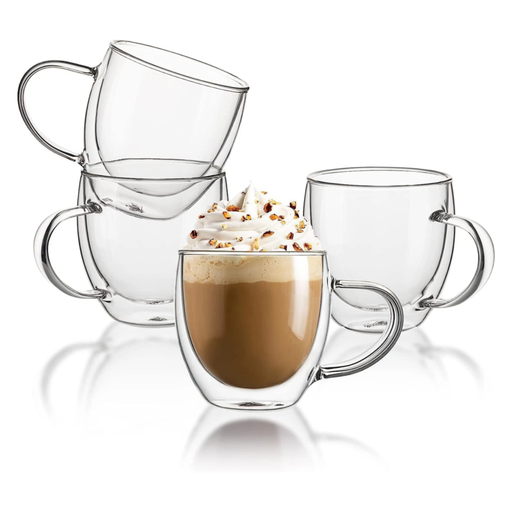
Our take: The perfect companion for your morning coffee or afternoon tea. Its handle ensures a secure and comfortable grip, while its 250 ml capacity makes it the ultimate all-purpose size for everyday drinks.
With its handle, it directly addresses the issue of ergonomics, offering an excellent alternative for those who prefer not to hold the body of the glass. Its borosilicate glass construction protects it from thermal shock.
The combination of a versatile capacity (250 ml) and an ergonomic handle makes it the practical choice for heavy daily use.
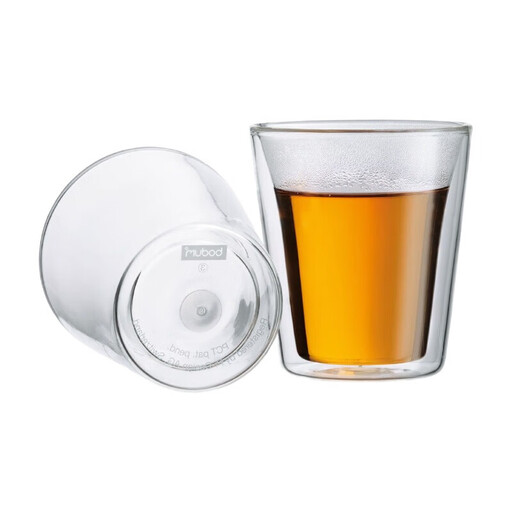
Our take: This set of six 200 ml glasses is the secret to successful hosting. Its versatile size is just as suitable for a coffee, tea, or fruit juice as it is for a plated dessert. The Canteen design, a brand classic, adds a touch of timeless sophistication.
This model is equipped with the famous pressure-regulating silicone valve, a foolproof barrier against water infiltration. Its compatibility with dishwashers, microwaves, and even ovens (up to 180°C) is a testament to its premium design.
Its extreme versatility (hot drinks, cold drinks, desserts, oven-baked verrines) and its six-pack format make it the ideal solution for a harmonious table setting.
Our editorial team has selected a full range of products that meet our demanding specifications for quality and safety.
Yes, most quality borosilicate models are designed to be dishwasher-safe. However, to preserve their shine and ensure the seal's longevity, hand washing is still ideal. A word of advice: always follow the manufacturer's recommendations. The presence of a silicone valve is often a good indicator of compatibility.
As we've discussed, this is a hydrophobic valve that regulates the air pressure between the walls. Far from being a flaw, it's a sign of smart design that protects the glass from temperature changes and prevents water from seeping in. Whatever you do, don't try to remove it!
It all depends on its manufacturing quality and how you care for it. A double-walled glass made of borosilicate glass, handled with care, can last for many, many years. Its worst enemies are impacts (especially drops) and, on low-end models, a failing seal. By investing in quality, you're making a long-term investment.