
Livraison le jour même ou le lendemain

Qualité garantie

Débloquez vos offres de bienvenue: Livraison GRATUITE | Jusqu'à -80 % | 30 jours d'essai gratuits à JoyPlus
Téléchargez l'application
The promise of a double-walled cup is certainly appealing: coffee that stays piping hot without burning your fingers, and iced tea that remains frosty without a drop of condensation. Its sleek design, especially in a transparent double-walled glass version, transforms sipping into a true visual experience. The problem? The market is flooded with models that, despite looking identical, hide flaws that quickly turn the dream into a disappointment.
Before you fall for your next double-walled mug, it's crucial to know how to avoid the most common pitfalls. Some models crack at the first thermal shock, while others fill with fog between the walls after a few washes, ruining both their look and their insulating power. This guide is here to help you identify the true markers of quality and make an informed choice.
Because yes, aesthetics aren't everything. Here are the three recurring problems that too often turn a good purchase into a regret.
Internal Condensation: The Telltale Sign This is the most frustrating flaw: seeing water or fog seep between the two walls. The culprit? The small seal, often a silicone plug at the bottom of the cup, which is used to equalize pressure during manufacturing. If it's no longer watertight, the damage is done. A single trip through the dishwasher or a minor bump can compromise it, making the cup opaque and destroying its insulating properties.
Glass Fragility: When Design Sacrifices Durability Not all glass is created equal—far from it. Many entry-level models use thin glass that is highly sensitive to thermal shock. Pouring boiling water into a room-temperature cup, or placing it on a cold surface after taking it out of the microwave, can cause an immediate crack. A good double-walled glass must be made of borosilicate glass to eliminate this risk.
Poor Ergonomics: A Poorly Designed or Non-Existent Handle An insulated cup without a handle is very stylish, but not always practical. If the insulation is subpar, the outer wall can quickly become warm. Even more common: a glass mug with a handle where the handle is too small, poorly attached, or too fragile. The result is an uncomfortable, or even dangerous, grip when holding a hot beverage.
To avoid these pitfalls, focus on a few technical details that make all the difference.
The type of glass is the primary indicator of quality. Borosilicate glass is the material of choice for any glass coffee cup worthy of the name. Unlike standard soda-lime glass, it offers excellent resistance to thermal shock, meaning it can handle abrupt temperature changes without cracking. It's also lightweight and offers a crystal-clear clarity that lasts over time, perfect for admiring the layers of a latte glass. For heavy-duty durability, especially for travel or at the office, stainless steel is an excellent alternative, even if the visual effect is less spectacular.
The effectiveness of a double-walled cup relies on the layer of air (or vacuum) sealed between the two walls, which acts as an insulator. Quality models, like certain Bodum cups, go a step further by integrating a hydrophobic silicone valve on the base. This smart valve allows air pressure to equalize without ever letting water seep in. The risk of internal condensation is thus drastically reduced, even after many dishwasher cycles. This is THE technical detail to check to ensure maximum longevity.
Capacity is a very personal criterion, but it shouldn't be overlooked.
Also, consider the shape. A tall, slender cup will enhance a macchiato, while a wider, sturdier mug will be more stable and practical for daily use. If you plan to buy a set of coffee cups, opt for a versatile size.
Here are a few models that tick all the boxes, each catering to a specific need.
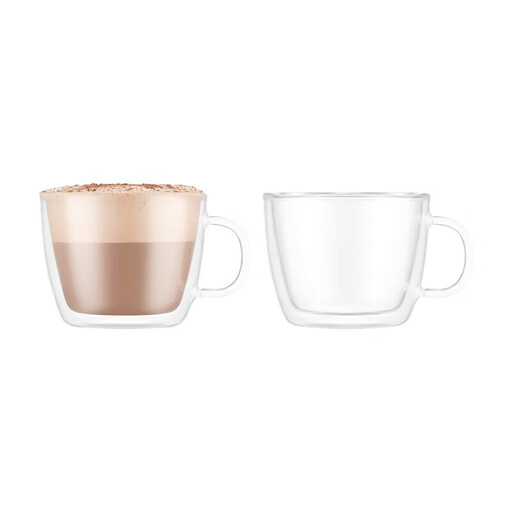
Why we love it: For latte macchiato fans, its large 450 ml capacity and tall shape are perfect for admiring the drink's layers. The mouth-blown glass adds a welcome artisanal touch.
Bodum guarantees it: the patented silicone valve at the base regulates pressure and prevents any water from seeping in. It's the best weapon against internal condensation.
Its large capacity (450 ml) is perfect for indulgent drinks. Made from mouth-blown borosilicate glass.
Why we love it: This set is an excellent starting point. Its 350 ml capacity is the perfect all-rounder size, ideal for morning coffee or afternoon tea. Its wide handle ensures a comfortable and secure grip.
Its wide, well-integrated handle solves the ergonomics problem. The grip is secure, even with a piping hot drink.
The versatile 350 ml format with a handle. Dishwasher safe for hassle-free cleaning.
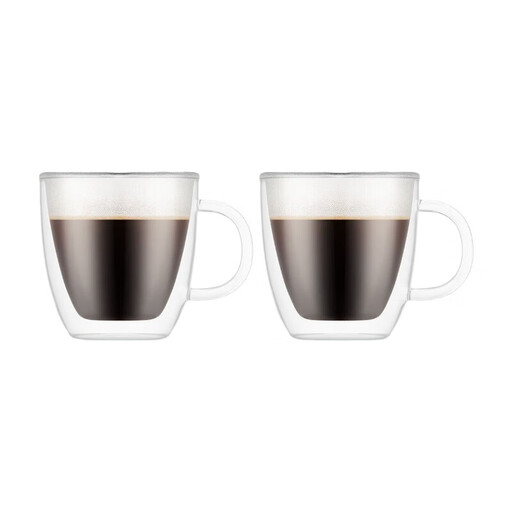
Why we love it: For any espresso lover, temperature and a stable *crema* are sacred. This cup's 150 ml capacity and insulation are perfectly calibrated to concentrate aromas and keep the coffee at the right temperature.
Made from borosilicate glass, it effortlessly handles the thermal shock of a freshly pulled espresso shot. The risk of cracking is therefore minimal.
Size optimized for espresso (150 ml). Microwave and dishwasher safe for simplified daily use.
Explore our full selection of products that meet our quality criteria and safety standards.
Yes, most borosilicate glass models are designed to be dishwasher safe. However, it's advisable to place them on the top rack to avoid impact. This compatibility is even more reliable on models equipped with a silicone valve. Always check the manufacturer's recommendations, but keep in mind that hand washing is still the safest method to preserve the seal and clarity over the long term.
The presence of fog or water between the walls is a sign that the seal is defective. Humid air then infiltrates the gap, most often during a wash cycle. Once the seal is compromised, the defect is irreversible: the cup loses all its insulating properties and its aesthetic appeal. This is why it's so important to choose a model with a reliable sealing system.
Borosilicate glass incorporates boron trioxide into its composition, which gives it a very low coefficient of thermal expansion. In practical terms, it expands and contracts much less than ordinary glass when exposed to heat. It is this property that makes it so resistant to thermal shock (the infamous switch from hot to cold) and makes it the material of choice for laboratory glassware and, of course, quality double-walled cups.