
Livraison le jour même ou le lendemain

Qualité garantie

Débloquez vos offres de bienvenue: Livraison GRATUITE | Jusqu'à -80 % | 30 jours d'essai gratuits à JoyPlus
Téléchargez l'application
A double-walled coffee glass helps keep your drink at the right temperature while preventing burnt fingers. Its transparency also shows off the distinct layers of a latte macchiato, the froth of a cappuccino or the colour of an iced coffee. However, not all models are created equal, and each one suits different needs.
Before you place an order, a few checks are essential to avoid unpleasant surprises: an unsuitable capacity, fiddly cleaning or fragility when faced with temperature changes. Here are the criteria to consider, followed by a selection of models for different requirements.
The double wall creates a layer of air between the two surfaces of the glass. It slows down heat exchange and limits condensation on the outside, but it doesn't turn the glass into an airtight container or a vacuum flask. Your drink will naturally cool down — or warm up — over time.
Think of this design as a way to improve your drinking comfort and presentation, not as a guarantee that your drink will stay at the perfect temperature for hours.
An 80 ml glass works well for an espresso, while a 270 ml model can accommodate a filter coffee, tea or a cold drink. For a latte macchiato with milk and froth, a capacity of 330 to 450 ml gives you more room.
A glass that's too small risks overflowing, especially with an automatic coffee machine. On the other hand, a large model is impractical for serving a short espresso and takes up unnecessary cupboard space.
Borosilicate glass generally handles temperature changes better than standard glass, but it's still breakable. Avoid pouring boiling liquid into a cold glass, placing a hot vessel on a very cold surface, or using a chipped or cracked glass.
Dishwasher compatibility depends on the specific product. Even when it's stated as safe, a gentle cycle and keeping the glasses from knocking together will help preserve their clarity and lifespan.
Borosilicate glass is widely used for thermal glasses because of its lightness, transparency and better resistance to temperature changes. That doesn't mean it's unbreakable, though.
The double wall must be perfectly formed, without any cracks or chips. Some models have a silicone valve underneath the glass to balance the pressure between the two walls. This part must never be pierced or handled with a sharp object.
A tall shape shows off the layers of milk and coffee better. A handle can also make the glass more comfortable to hold, especially at the office or when the drink is served very hot.
Look for the dishwasher-safe label on the product page. For mouth-blown models, hand washing with a soft sponge may be preferable to reduce friction and the risk of impact.
Double-walled coffee glasses aren't necessarily suitable for the oven, hob or microwave. Always follow the manufacturer's instructions rather than judging by appearance. Inspect each glass before use and discard it at the first sign of damage.
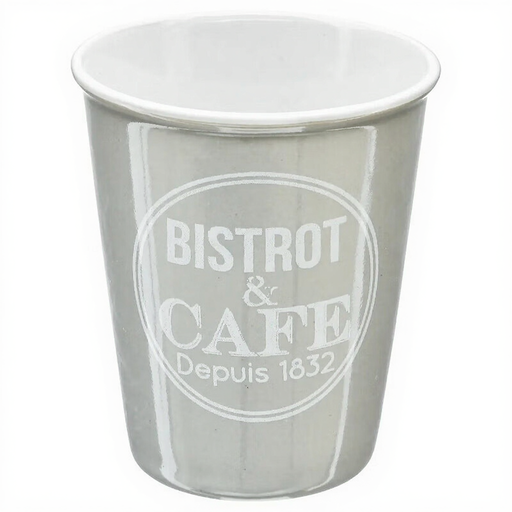
Why this choice suits this profile: This set of six 10 cl earthenware cups is ideal for households wanting to stock up on a budget, with an espresso format and a bistro-style look.
The capacity is clearly stated, so you won't accidentally order large cups for serving short coffees. The product page also confirms the set is dishwasher-safe.
A six-piece set in a 10 cl format, made from earthenware and presented in a gift box. Please note: these are standard cups, not double-walled glasses.
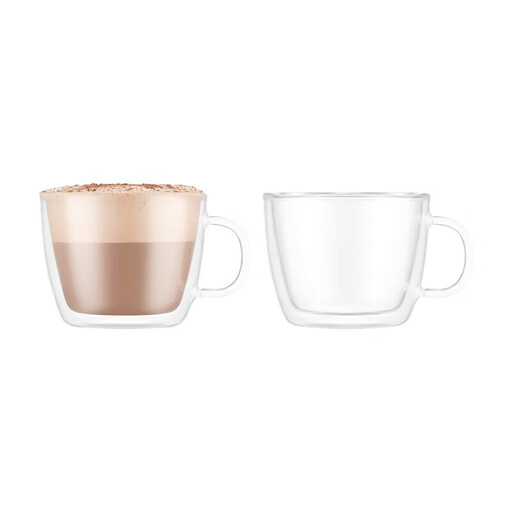
Why this choice suits this profile: These two mouth-blown borosilicate glass cups are perfect for showcasing milky drinks made at home.
With its 450 ml capacity, this model is designed for generous lattes and cappuccinos rather than a short espresso. The double wall also reduces condensation on the outer surface.
Two 450 ml cups made from mouth-blown borosilicate glass with a silicone valve. The product page states they are dishwasher-safe.
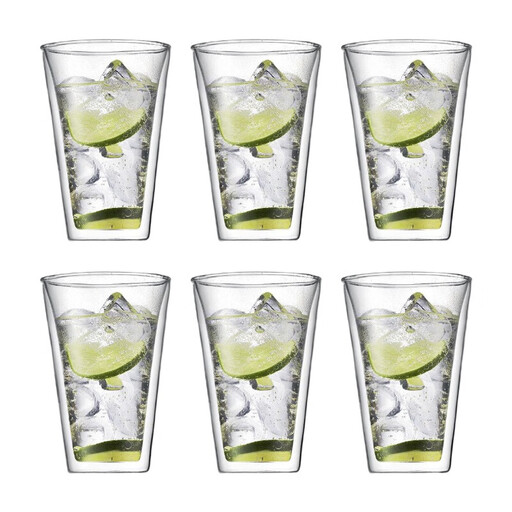
Why this choice suits this profile: This set of six large glasses is ideal for families, offices, cafés and restaurants that regularly serve both hot and cold drinks.
The product page clearly states the capacity, material and precautions to take against thermal shock. With its 400 ml capacity, this set isn't limited to espresso alone.
Six 400 ml glasses made from heat-resistant borosilicate, with a silicone pressure compensation valve and stated dishwasher compatibility.
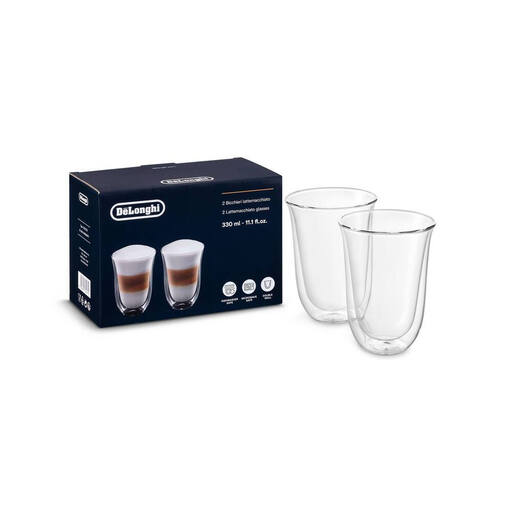
Why this choice suits this profile: These two 330 ml glasses are designed for latte macchiato and milky drink lovers who want a matching set.
The capacity is well suited to milky drinks, while the product page reminds you of the precautions needed against thermal shock and heat.
Two 330 ml glasses made from hand-blown borosilicate with a double wall. The manufacturer also states they are dishwasher-safe.
We've put together a comprehensive, real-time updated list of products that meet these exacting standards, while also taking European safety regulations into account.
They are designed for serving hot drinks, but you should always follow the manufacturer's recommendations. Avoid pouring boiling liquid into a glass that's just come out of the fridge, and handle it with care. The double wall reduces the heat you feel on the outside, but it doesn't completely eliminate the risk of burns.
A 300 to 350 ml size is generally suitable for a drink made with an espresso, milk and froth. Models of 400 to 450 ml are better suited to larger drinks, iced coffees or recipes generously loaded with ice cubes.
It depends on how often you use them, how you store them and the knocks they're exposed to. Borosilicate handles temperature changes better than some ordinary glasses, but no model is unbreakable. Careful washing, avoiding forced stacking and regularly checking for cracks will help extend their lifespan.