
Livraison le jour même ou le lendemain

Qualité garantie

Débloquez vos offres de bienvenue: Livraison GRATUITE | Jusqu'à -80 % | 30 jours d'essai gratuits à JoyPlus
Téléchargez l'application
Double-tipped watercolour pens typically combine a brush tip and a fine tip in one body. This means you can switch from a broad wash of colour to a precise outline without having to rummage through a whole pencil case of accessories. This format works equally well for drawing and colouring as it does for lettering, journaling, manga or illustration studies.
However, not all watercolour markers are created equal. A glossy presentation can hide a tip that flattens quickly, ink that’s difficult to blend, or a palette full of repetitive shades. Here are the points to check before choosing your set of artist pens.
The term ‘brush’ doesn’t always guarantee a wide range of stroke widths. If you’re looking for pens for brush lettering or calligraphy, make sure the tip is genuinely flexible and that the stroke variation depends on the pressure you apply. A firmer tip can work perfectly well for colouring, but it won’t be as comfortable for creating thick and thin lines.
The second tip also deserves your attention. A fine fibre tip is suitable for outlines and hatching, whereas a metal tip of 0.6 mm or a 0.4 mm tip generally offers more consistency for detailed work.
A water-based ink can be diluted, but the result depends as much on the paper and the amount of ink as it does on the formulation. Some inks blend easily with a damp brush and produce soft transitions. Others leave visible marks or bleed through paper that’s too thin.
To create genuine wash effects, it’s best to use watercolour paper or paper that’s thick enough. Always test on a separate sheet before starting an important illustration. Terms like water-soluble, blendable or water wash are more telling than a simple promise of vibrant colours.
A set of 60 pens isn’t necessarily more practical than a box of 12 or 24 colours. A large palette offers more choice, but it also costs more, takes up more space and multiplies the shades you’ll hardly ever use. To begin with, a balanced assortment of primary, secondary, neutral colours and a few dark tones is usually enough.
For portrait work, manga or themed colouring, a specialised palette can even be more relevant than a very broad assortment.
Here are the most useful pairings depending on your use:
Also consider the material of the tip. A soft fibre moves nicely with broad strokes, while a more robust tip holds its shape better if you use your pens very often.
Watercolour pens with water-based ink generally blend well with a damp brush. However, their fluidity can vary noticeably from one brand to another. A transparent ink makes layering easier, whereas a heavily pigmented ink gives a denser colour but often needs more water to achieve an even gradient.
For notebooks and bullet journals, choose paper that’s thick enough to prevent the ink from showing through on the reverse side. If your illustrations are meant to last, also check the information about lightfastness. The intensity of the colour straight from the pen isn’t enough on its own to judge this characteristic.
Replace each cap as soon as you’ve finished using a pen. Then store the markers horizontally if the packaging recommends it. A tip left exposed to the air dries out quickly, even when the range claims better resistance to drying out.
Washable pens with water-based ink are practical with children, but ‘washable’ doesn’t mean that every stain will disappear from every fabric. Clean up marks promptly and protect your table. Sets containing small parts or caps are not suitable for children under 3 years old. Adult supervision is still recommended during the activity.

Why this choice suits this profile: With 12 colours, this set lets you discover brush pens and wash techniques without investing in a large palette straight away. It’s suitable for sketching, colouring and first attempts at lettering.
The limited number of colours stops you paying for shades you’ll rarely use and makes storage simpler.
Two tips per pen and a compact palette for everyday creative activities.
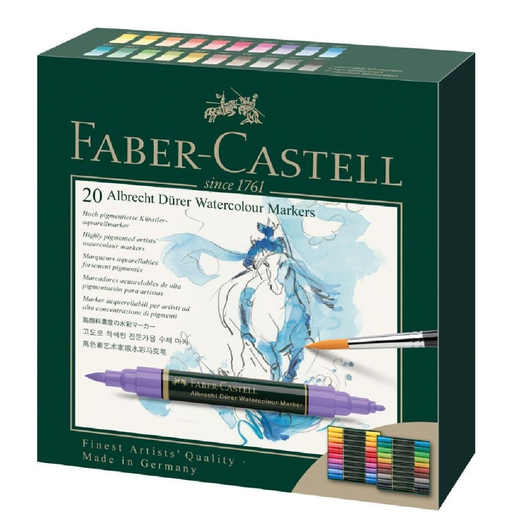
Why this choice suits this profile: This set of 20 markers pairs a flexible brush tip with a fine tip, using a water-based ink described as soluble and lightfast.
The product page clearly distinguishes the two uses of the tip and recommends paper suited to water techniques, helping to avoid unrealistic expectations.
20 colours, a double tip and a rigid case for drawing and mixed-media projects.
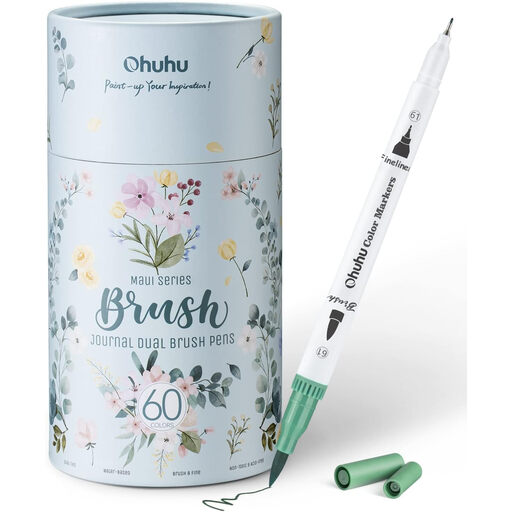
Why this choice suits this profile: With 60 numbered colours, a fine tip of 0.4 mm and a brush tip of 1 to 6 mm, this set is ideal for notebooks, detailed drawing and projects that need an extensive palette.
The colour chart helps you identify shades and avoid approximate mixing during regular use.
60 colours, two tips per marker and five replacement tips included.
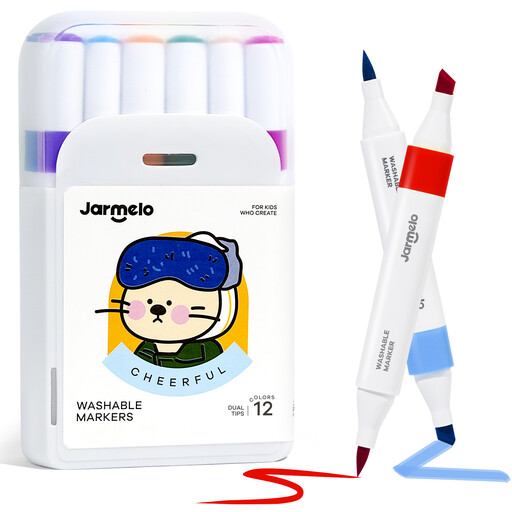
Why this choice suits this profile: This set pairs a brush tip and a chisel tip with a water-based ink described as washable from skin and most fabrics.
The washable formula is a real plus for activities that might end in stains, but it doesn’t remove the need to clean surfaces quickly.
12 colours, a carry case and ventilated caps; not suitable for children under 3 years old.
We’ve put together a full selection, updated in real time, of products that meet these demanding criteria and European safety standards.
To make your drawing and colouring pens last longer:
The lifespan depends on how often you use them, the pressure you apply and how long they spend without their caps. A brush tip that’s pressed too hard will wear out faster. Replacement tips, when included, can extend the life of the set, but they won’t make up for poor storage.
Yes, for drawing and writing. For gradients and washes, watercolour paper or a thick support will generally give a more even result and reduce ink showing through on the reverse side.
Water-based pens refer primarily to the type of ink and its ability to be diluted. Washable pens, on the other hand, focus on how easily stains can be removed. A pen can therefore be water-based without being easy to clean from all fabrics.
A box of 10 to 15 colours is usually enough to learn the techniques, play with contrasts and experiment with blending. A palette of 24 colours or more becomes worthwhile if you regularly work on illustrations, notebooks or themed projects.