
Livraison le jour même ou le lendemain

Qualité garantie

Débloquez vos offres de bienvenue: Livraison GRATUITE | Jusqu'à -80 % | 30 jours d'essai gratuits à JoyPlus
Téléchargez l'application
A double-sided tape can save you from drilling into a wall, speed up a fitting, or make a fix almost invisible. But a poorly chosen product can peel off quickly, leave marks, or simply not hold for long enough. The right choice depends less on the promise of "extra-strong" and more on the surface, the weight it needs to support, the environment, and whether the installation is permanent or removable.
A capacity given in kilograms doesn't mean every installation will support that weight. The result depends on the length you use, the width of the tape, how flat the surface is, and the setting time. On a dusty or uneven surface, the fix can give way long before reaching the stated value.
For a heavy object, spread the load across several strips and carefully check the manufacturer's recommendations. Objects installed above a walkway need extra caution.
A wall adhesive that requires no drilling can be handy in a rented home, but not all tapes come off the same way. A permanent glue risks pulling off paint, wall covering, or decorative finish. On the other hand, a reusable nano-gel tape is less suitable for an installation exposed to the weather or under heavy load.
A tape designed for indoors won't automatically work on a façade, fence, or damp room. For outdoor use, check its resistance to rain, UV rays, and temperature swings. For repairing a seal, a double-sided bitumen waterproof tape faces very different demands from a mounting tape meant to fix an object.
The surface must be clean, dry, degreased and dust-free. Glass, metal, tiles and some painted surfaces are generally smoother than porous plaster, wallpaper or a textured wall. If the finish is delicate, always test on a small, inconspicuous area first.
For floors, choose a product designed for the specific flooring. A double-sided carpet and vinyl tape must stick to the floor while allowing a smooth lay of carpet, vinyl or lino. For skirting boards, a width of 50 mm helps spread the adhesive evenly over wooden or PVC profiles.
Compare the width of the tape, its length and the actual surface area you'll use. A narrow tape is more discreet, while a wider strip spreads the load better across a skirting board or floor covering. Some products claim instant hold, while others only reach full strength after several hours.
Always allow a margin above the stated weight. A mirror, shelf or letterbox isn't just supporting its own weight: vibrations, knocks and handling all add extra stress on the fix.
A clear double-sided tape minimises visual impact on glass, metal or a light-coloured surface. For a temporary installation, look for terms like "removable", "reusable" or "residue-free". These aren't an absolute guarantee, though: removal also depends on the paint, temperature and how long it's been in place.
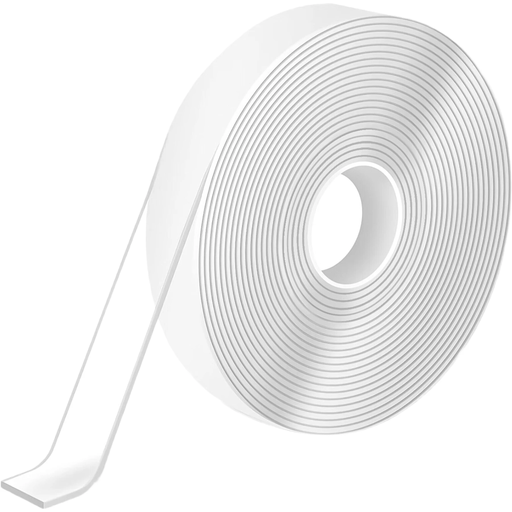
Why this suits this profile: With its 3 m length and washable design, this tape works well for small decorations, cables, photos and accessories you might want to move around in a rented home.
It doesn't claim to suit every situation: the surface must stay clean and the load must remain moderate.
Acrylic gel, 3 m length, can be washed and reused as per the manufacturer's instructions.
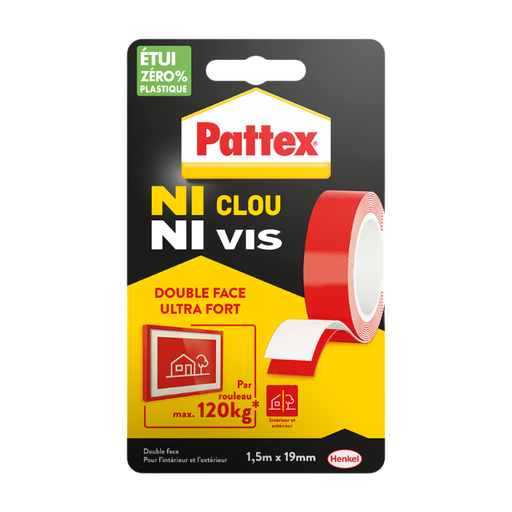
Why this suits this profile: This solution is aimed at installations that need a permanent fix on various materials, indoors and outdoors.
The product page details compatible surfaces, indoor and outdoor uses, and a stated load of up to 120 kg per roll.
Roll of 1.5 m x 19 mm, with stated resistance to moisture and high temperatures.
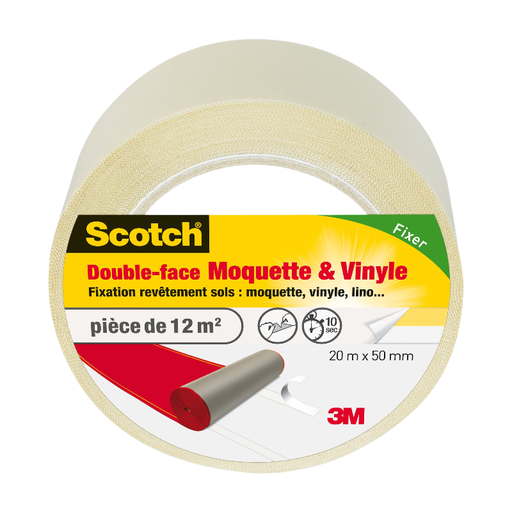
Why this suits this profile: Its 50 mm width and 20 m length are ideal for fitting carpet, vinyl or lino, at home or in a professional setting.
It's designed for floor coverings, not for wall fixing or hanging a load.
20 m length, 50 mm width, hand-tearable and stated coverage of 12 m².
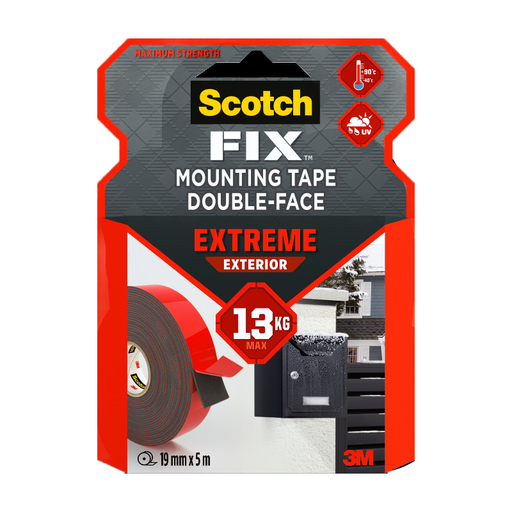
Why this suits this profile: This powerful mounting tape is suitable for decorations, signs and items installed on a compatible outdoor structure.
The product page mentions outdoor use and resistance to weather and UV, but the surface still needs careful preparation.
Black roll of 5 m x 19 mm, stated resistance to rain, sun and UV, with a stated load of up to 13 kg.
For a skirting board, space the strips along the full length and check alignment before pressing them onto the surface. For a seal, the surface must be compatible with bitumen and free from standing water, grease and dust.
We've put together a full, real-time updated list of products that fully meet these strict selection criteria and European safety regulations.
Yes, as long as the wall is smooth, clean and has enough grip. Test in an inconspicuous spot before going ahead. On fresh, matt or flaky paint, as well as on wallpaper, removal may damage the finish.
The duration varies depending on the product, weight, temperature, humidity and surface preparation. An outdoor fix exposed to sun and rain faces more stress than an indoor decoration. Check the usage conditions and regularly inspect installations that are under significant strain.
For a light object you might want to reposition, a reusable nano-gel adhesive can work. For a heavier permanent fix, choose an extra-strong double-sided tape with its load capacity, compatible surfaces and usage conditions clearly stated. For carpet, skirting boards or vinyl flooring, use a product designed for floors rather than a wall adhesive.