
Livraison le jour même ou le lendemain

Qualité garantie

Débloquez vos offres de bienvenue: Livraison GRATUITE | Jusqu'à -80 % | 30 jours d'essai gratuits à JoyPlus
Téléchargez l'application
Choosing a double bedding set seems simple… until the duvet cover is too short, the buttons come undone during the night or the fabric creases after its first wash. To avoid a disappointing purchase, it is therefore worth looking beyond the colour and displayed price.
Here are the criteria to consider when comparing a double bedding set, a duvet cover with pillowcases or a duvet suited to your bedroom.
A double bed does not necessarily correspond to just one duvet size. For a 220x240 cm duvet cover, make sure the duvet has exactly the same measurements. A 200x200 cm model will leave more room at the sides, while a 240x260 cm duvet requires a larger cover.
The height of your mattress and your preference for a more or less generous overhang should also be taken into account. Always check the contents carefully: some sets include two pillowcases, while others include only one.
A cotton bedding set generally offers a natural feel and good breathability. That said, the weave, fabric weight and washing instructions are also important. Polyester dries quickly and creases less, but its feel can vary considerably from one finish to another.
Polycotton blends combine cotton and polyester. They are suitable for people looking for easy-care bed linen, provided you check the stated proportions carefully.
A side button fastening can make it easier to fit the duvet, but the quality of the construction remains crucial. Openings that are too narrow make inserting the duvet more difficult and increase the time needed to fit it. Also check the washing temperature, whether tumble drying is permitted and whether ironing is required.
The term ‘non-iron’ indicates a practical benefit of the textile. However, it does not guarantee that the fabric will remain perfectly smooth whatever the drying conditions.
For a bedroom intended for a couple, the most common sizes include:
Also remember to measure your existing duvet before ordering. A cover that is too large may form creases, while one that is too small will put the seams and fastening under strain.
A cotton bedding set with 57 threads/cm², as found on some models in this selection, provides a useful indication of weave density. This figure alone is not enough to predict the comfort felt by every individual, but it is a more meaningful reference point than a simple promise of softness.
52% polyester and 48% cotton polycotton combines a natural fibre with a synthetic fibre designed to simplify care. 100% polyester, meanwhile, is often chosen for its quick drying time and low tendency to crease.
The Oeko-Tex Standard 100 label applies to products tested and certified according to the criteria specific to this label. It should be confirmed in the product listing and is not, under any circumstances, a medical recommendation.
For a hypoallergenic duvet, read the composition, washing instructions and full description carefully. The presence of this term in an item's name does not replace the manufacturer's information or the advice of a healthcare professional in cases of particular sensitivity.
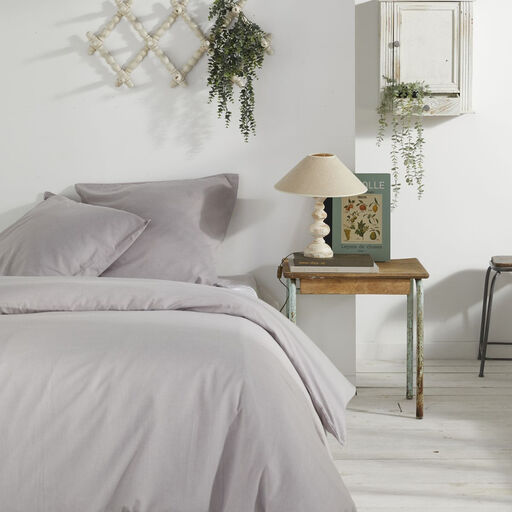
Why this choice suits this profile : This set includes a duvet cover and two 63x63 cm pillowcases. Its blend of 52% polyester and 48% cotton is ideal for a first purchase where easy care is a priority.
The composition and machine-washing instructions at 30 °C are clearly stated. The side openings and button fastening make fitting the cover easier.
52/48 polycotton, two pillowcases included and Oeko-Tex certification mentioned in the product listing.
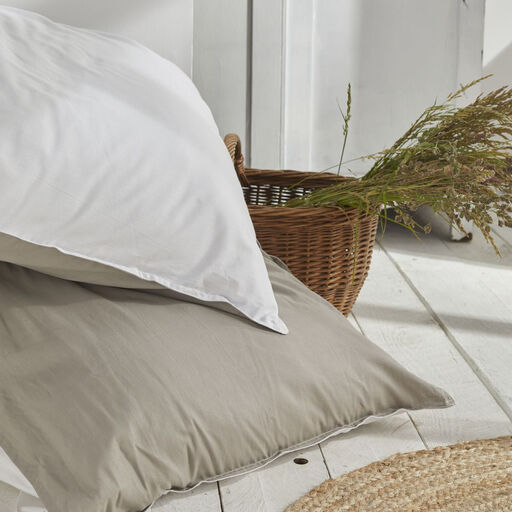
Why this choice suits this profile : The 100% cotton and stated weave density of 57 threads/cm² are ideal for people who pay close attention to the material and finish of their bed linen.
The 220x240 cm and 240x260 cm double-bed sizes are clearly differentiated. The side button fastening reduces the risk of choosing incorrectly when fitting the cover.
100% cotton, two 63x63 cm pillowcases in the double-bed size and machine washable at 40 °C according to the product listing.
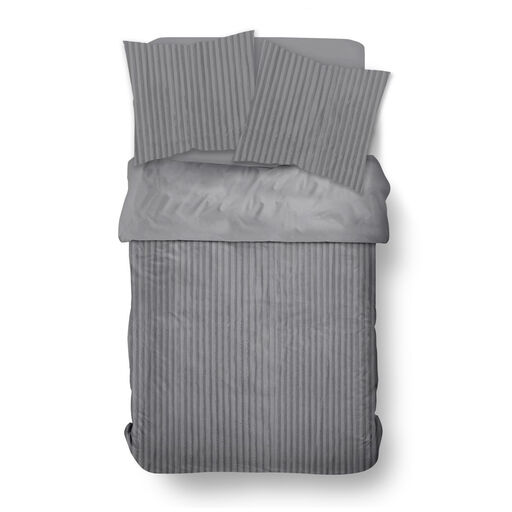
Why this choice suits this profile : Its 200 g/m² polyester construction, with a microfibre side and a fleecy, plush-effect side, is well suited to cooler bedrooms and regular use.
The two sides are described separately, allowing you to choose the texture you want to use. Washing at 30 °C and tumble drying at a low temperature are also specified.
200 g/m² polyester, reversible design, 240x220 cm double-bed size and two pillowcases included.
We have put together a comprehensive, real-time updated list of products that meet these demanding selection criteria and European safety regulations.
For year-round use, compare the filling, weight and dimensions rather than relying solely on the description ‘warm all-season duvet’. A lightweight duvet may be suitable for a well-heated bedroom, while a thicker model will be better suited to a cooler room.
Products described as non-allergenic or hypoallergenic should be assessed based on their product listing, composition and washing conditions. Good Nite microfibre duvets, for example, are available in double-bed sizes, including 200x200 cm, with a 15 tog warmth rating stated in their name. Make sure this size matches your cover before placing your order.
Start by measuring your duvet. The 220x240 cm size is frequently supplied with two 63x63 cm pillowcases. However, a high bed or a preference for a more generous overhang may make a 240x260 cm model the better choice.
It depends on how often it is washed, how it is dried and the quality of the stitching. Rotating several sets, following the recommended temperature and avoiding excessive heat in the tumble dryer will help preserve the fibres and colours for longer.
Not necessarily. Cotton may take longer to dry and require more ironing, while polyester dries quickly and creases less. Polycotton is an appealing compromise for households that want to retain a pleasant textile feel while making care easier.