
Livraison le jour même ou le lendemain

Qualité garantie

Débloquez vos offres de bienvenue: Livraison GRATUITE | Jusqu'à -80 % | 30 jours d'essai gratuits à JoyPlus
Téléchargez l'application
An icy draught seeping under the front door, a heating bill that's skyrocketing... It's an all-too-familiar scenario. Fortunately, good door insulation is often the simplest and most cost-effective solution to restore comfort and get your energy costs under control. But faced with a jungle of available options, the risk of making the wrong choice is very real. Some products, if poorly chosen or incorrectly installed, lose all their effectiveness in just a few months.
To help you see things more clearly, we've identified the 3 most common pitfalls to avoid during your purchase?:
To avoid falling into these traps, a few checks are necessary before you head to the checkout. This is your guarantee of a weatherstripping solution for doors and windows that is both durable and effective.
The fixing method has a direct impact on the ease of installation and the lifespan of your setup.
This is a decisive criterion for an effective anti-draught door bottom.
Before any purchase, take out your tape measure and measure the space between your door and the floor, or between the frame and the sash of your window.
To put theory into practice, here are a few options we recommend, each tailored to a specific need.
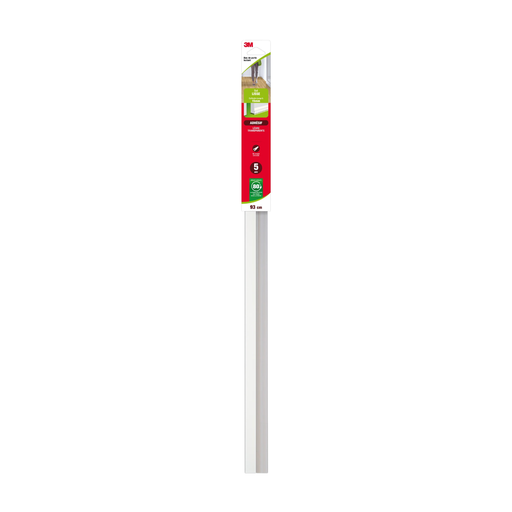
Why we chose it : The ideal solution for an effective, discreet, and drill-free installation. Perfect for rental apartments with modern floors (parquet, lino), it installs in minutes and can be removed without leaving residue.
Its design is intended for smooth floors, which prevents friction and premature wear. The 3M brand adhesive, provided it's applied to a clean surface, ensures excellent long-term hold.
Fills gaps up to 15 mm. Its transparent lip makes it very discreet. According to the manufacturer 3M, it can reduce airflow by up to 80 %.
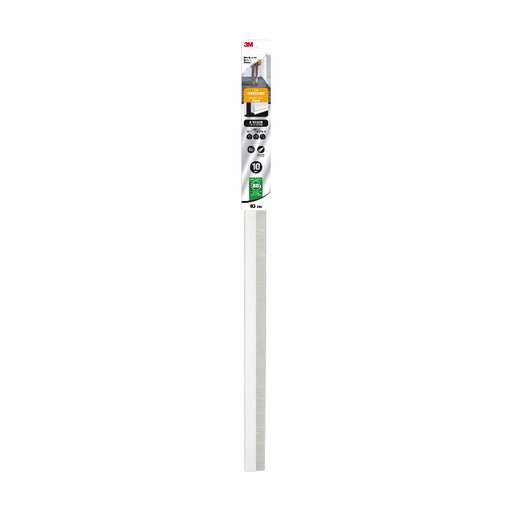
Why we chose it : For a permanent, high-performance solution, especially in older homes with floors that are no longer level. The screw-in fixing guarantees maximum durability, and its design ensures insulation without compromise.
Its double row of nylon brushes is the perfect answer for uneven floors: it conforms to the floor's imperfections where a standard model would be ineffective. The screw-in fixing, meanwhile, eliminates any risk of it coming unstuck.
Robust aluminium structure designed to last. Fills gaps up to 15 mm. The fixing system is invisible once installed, for a flawless finish.
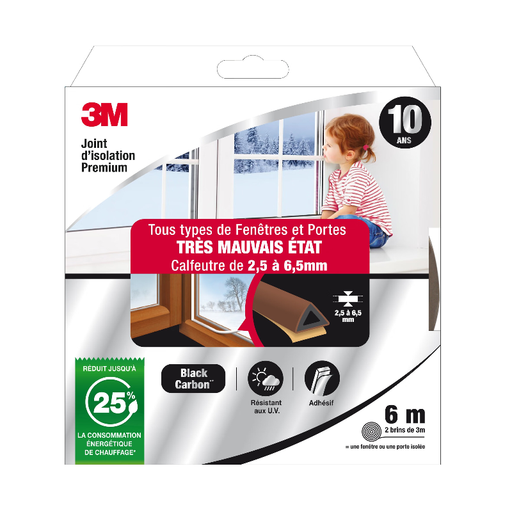
Why we chose it : For when the cold isn't just getting in at the bottom, but around the entire perimeter of the door or window. This weatherstripping solution is designed for old or warped frames that have a significant gap.
Its strength: it's designed to fill large gaps (2 to 6 mm), where a standard seal would be crushed and ineffective. The reinforced rubber offers much better resilience and durability than simple foam.
UV-resistant rubber material for a long lifespan. According to 3M, it can reduce heating-related energy consumption by up to 25 %. Easy to apply on wood, PVC, and aluminium.
If your door's issues go beyond just draughts (such as sagging or misalignment), it might be time to inspect other components.
It all depends on your situation and your priorities.
It all depends on the quality of the product and, most importantly, the preparation of the surface. A budget-friendly seal might peel off in a single season. Conversely, a quality adhesive door seal (like EPDM rubber), applied to a perfectly cleaned and degreased surface, can last for several years. Some 3M products, for example, are guaranteed for a lifespan of 10 years under normal use conditions.
A draught excluder is an effective temporary solution against draughts, but it has its limits. Since it's not attached to the door, it often needs to be put back in place. It is also less effective for soundproofing and blocking dust. A fixed door bottom (adhesive or screw-in) provides a more complete, durable, and aesthetically pleasing barrier because it becomes an integral part of the door.