
Livraison le jour même ou le lendemain

Qualité garantie

Débloquez vos offres de bienvenue: Livraison GRATUITE | Jusqu'à -80 % | 30 jours d'essai gratuits à JoyPlus
Téléchargez l'application
An icy draft seeping under the door, skyrocketing heating bills, or street noise disturbing your peace and quiet—these daily annoyances often have a simple cause and an easy solution. The humble door draft stopper, a discreet accessory, is actually a powerful ally in restoring comfort to your home and saving money.
Faced with a vast array of models, it's easy to end up with an unsuitable product that peels off after three weeks or wears out in no time. To make a smart purchase, here are the pitfalls to avoid at all costs.
adhesive door seal might seem like a bargain, but the glue is often its Achilles' heel. When exposed to temperature changes, humidity, or simply the repeated opening and closing of the door, the adhesive eventually fails, rendering the device useless.To get it right and ensure proper door bottom insulation, it's crucial to examine a few technical points. These are the details that will make all the difference between a purchase you regret and a solution that stands the test of time.
How the door bottom attaches is critical for its durability and convenience.
The choice of material should be dictated by the type of floor you have to prevent premature wear.
door bottom for uneven floors. The flexible bristles conform to the contours of tile or old hardwood floors without hindering the door's movement.door seals or window insulation seals (frame weatherstripping), these flexible materials are also found in slide-on draft guards.Before you order, there's one crucial step: take out your tape measure and measure the space between the bottom of the door and the floor. Every product indicates the maximum gap height it can fill (e.g., "up to 15 mm"). Ignoring this data is a surefire way to buy a door weatherstrip that still lets air through.
To help you see things more clearly, we've matched user profiles with suitable solutions, taking our selection criteria into account.
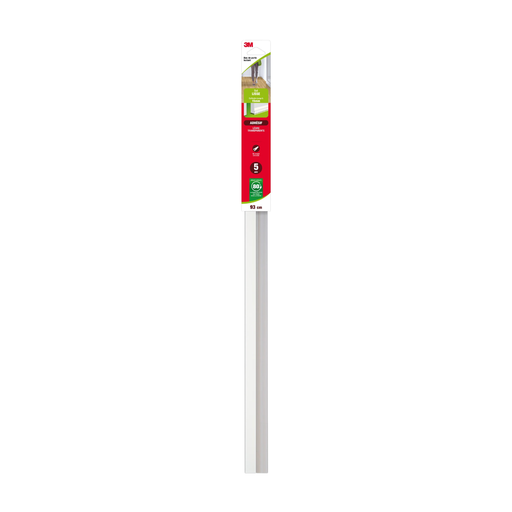
Why this model? Perfect for renters or for a simple, effective solution on smooth floors (hardwood, vinyl). Installation takes just a few minutes with no tools required, and its transparent lip ensures a nearly invisible finish.
It uses a 3M self-adhesive backing renowned for its long-lasting hold, which prevents the premature peeling typical of entry-level products.
Designed to fill a gap of up to 15 mm on smooth floors. Easily trimmable for a perfect fit on your door.
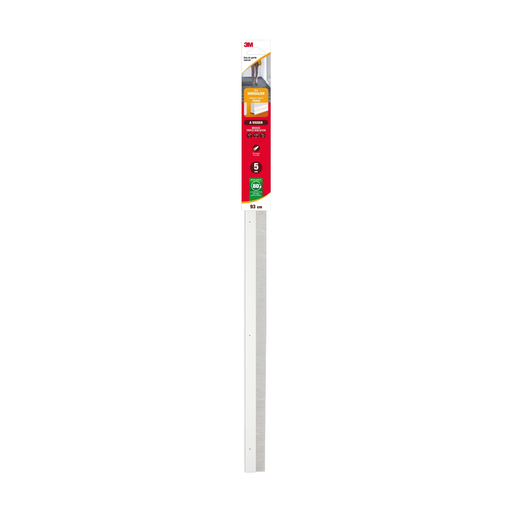
Why this model? This is the go-to solution for older floors like tile with wide grout lines or terracotta tiles. Its screw-in mounting guarantees a rock-solid hold, even on a heavily used door.
Its design, featuring a double row of bristles and a flexible membrane, is specifically engineered for uneven floors. It won't wear out prematurely like a standard model.
Screw-in mounting for maximum durability and an effective barrier against drafts, noise, and water. Fills a gap up to 15 mm.
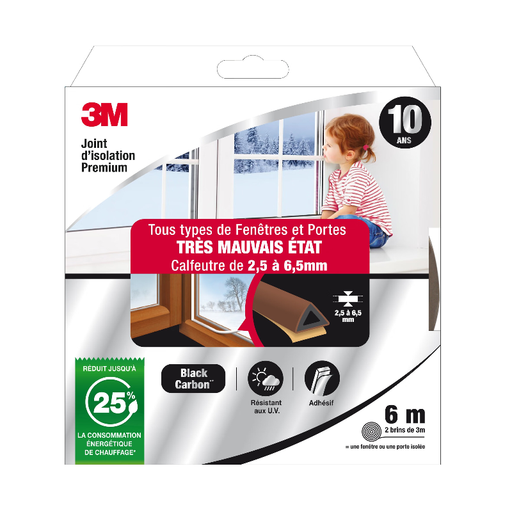
Why this model? For those who understand that drafts don't just come from the bottom, but also from the door or window frame. This rubber seal allows for complete weather sealing (doors and windows).
It addresses the problem of heat loss holistically, instead of just plugging a single leak. Its high-quality rubber is designed to last and resist UV rays.
Versatile, it's suitable for gaps from 2 to 6 mm on wood, PVC, and aluminum frames. According to 3M, it can help reduce heating bills.
Explore our full selection of products that meet our standards for quality and durability.
For maximum adhesion, preparation is key. The door surface must be perfectly clean, dry, and grease-free. Wiping it down with denatured alcohol usually does the trick. Next, measure the width of your door, trim the door bottom to the correct size, remove the protective film, and apply it firmly starting from one side, without ever stretching the material.
Longevity largely depends on the model and usage. A good adhesive door seal can last several years (for example, 3M states up to 5 years for some of its products under normal conditions). Screw-in models are, by nature, even more durable. Wear also depends on foot traffic and the type of flooring.
Yes, and it's a welcome bonus. In addition to thermal insulation, a door bottom improves sound insulation. By filling the gap where air passes through, it also blocks a portion of sound waves. The effectiveness varies by material (dense, well-fitted models are best), but you'll almost always notice a significant reduction in outside noise.