
Livraison le jour même ou le lendemain

Qualité garantie

Débloquez vos offres de bienvenue: Livraison GRATUITE | Jusqu'à -80 % | 30 jours d'essai gratuits à JoyPlus
Téléchargez l'application
Setting up or redecorating a home often reveals awkward junctions between rooms, from noticeable seams where laminate meets tile to persistent gaps under doors that let in cold draughts. In rental properties or finished spaces where drilling into screed, tiles or wooden door leaves is undesirable, self-adhesive thresholds and draught seals offer a tidy, non-destructive way to restore insulation and neatness.
Making the right choice depends on identifying the primary function you need to address. A floor-level transition strip sits horizontally across the doorway to cover expansion gaps and smooth out foot traffic, whereas an under-door bottom seal fixes vertically to the door leaf to block airflow and sound. Assessing whether you need to bridge level surfaces or seal an uneven threshold ensures long-lasting adhesion and a draught-free room.
A frequent error is purchasing a flat floor cover strip to address a draught issue, or attempting to stick a flexible brush seal horizontally across a flooring seam. Floor transition trims are designed to bridge the floor gap between two distinct floor coverings such as vinyl and tile, resting flat beneath foot traffic. Under-door seals attach vertically to the lower face of the door leaf itself to sweep against the floor, blocking airflow, dust and acoustic transfer.
Adhesive backing strips rely on complete contact with a clean, dry, non-porous substrate. Laying an adhesive threshold directly over dusty laminate joints, porous bare concrete or detergent-coated tiles will cause premature lifting within weeks. Thoroughly cleaning the application zone with an alcohol-based surface cleaner and letting it dry completely is essential before applying firm, even pressure along the entire length.
Not all doorways feature uniform levels. Standard flat adhesive profiles work reliably on flush surfaces, but applying a rigid flat strip across a noticeable step or wavy rustic tiles creates hollow pockets where the adhesive cannot grip. For floors with significant height variation or wavy grout lines, flexible PVC profiles or specialised multi-blade draught seals with deep clearance tolerances must be selected to accommodate the floor contours.
Establish whether the hardware will be fixed to the walking surface or directly to the swinging door leaf. Each placement demands different mechanical attributes.
Measuring the exact vertical space beneath the closed door or between differing floor heights prevents drag and ensures full closure.
The construction material determines how easily the product cuts to size and how well it maintains its form under daily wear.
These selected adhesive floor transitions and door seals match specific room layouts, floor types and draught challenges.
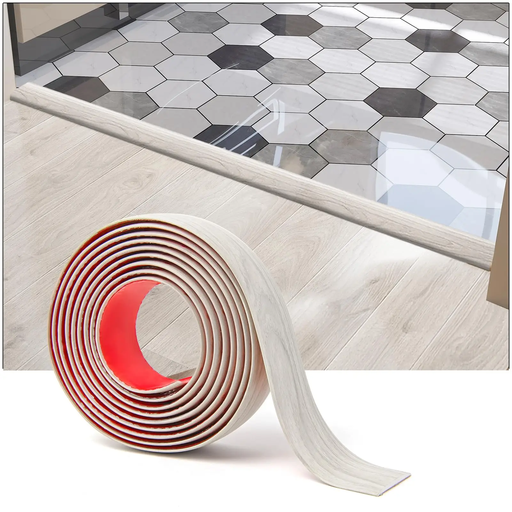
Why This Fits Their Persona: Providing a generous 3-metre continuous length of 4 cm wide flexible PVC, this strip effortlessly bridges expansive floor joins between light wood laminate, pale tiles or vinyl flooring across open-plan doorways without requiring multiple pieced sections.
Eliminates unsightly visible screw heads and the risk of drilling into underfloor heating pipes, providing a clean peel-and-stick install that can be cut accurately with standard household scissors.
Its generous 300 cm continuous roll allows seamless coverage across double doors or multiple adjacent threshold transitions in one matching washed-white tone.
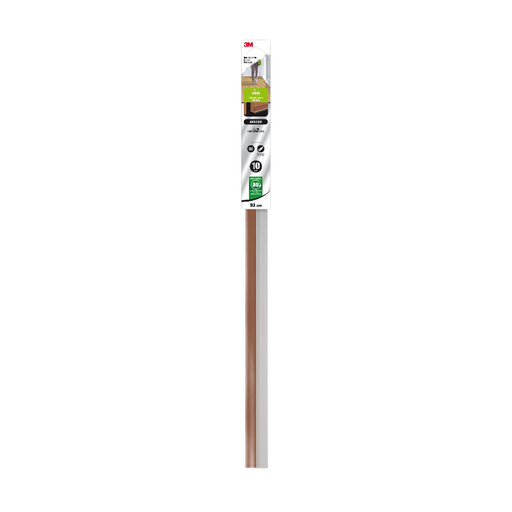
Why This Fits Their Persona: Designed specifically for flat, smooth interior floors, this 0.93-metre brown draught excluder adheres straight onto the door leaf to fill gaps up to 15 mm, significantly cutting chilly floor-level airflow without marking the rental property.
Avoids bulky mechanical fixings that damage timber finishes, applying firmly using reliable adhesive backing while remaining easy to size down to common continental door widths.
Reduces incoming air currents by up to 80 percent, delivering a noticeable thermal improvement on smooth parquet, laminate or polished tiles.
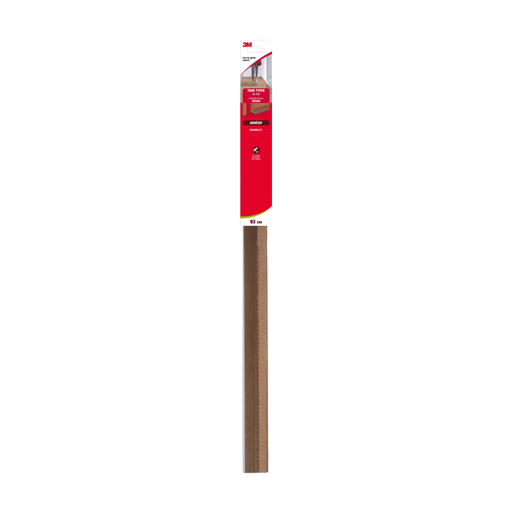
Why This Fits Their Persona: Featuring a sturdy aluminium carrier and a flexible multi-blade barrier, this 0.93-metre brown seal tackles problematic gaps up to 25 mm beneath doors that swing over wavy flagstones, irregular tiles or sloping floorboards.
Prevents draught strips from jamming or bending permanently out of shape on textured floors, combining triple insulation barriers that cushion movement over uneven joints.
Offers comprehensive triple-barrier protection against persistent draughts, water ingress and ambient corridor noise across substantial 25 mm gaps.
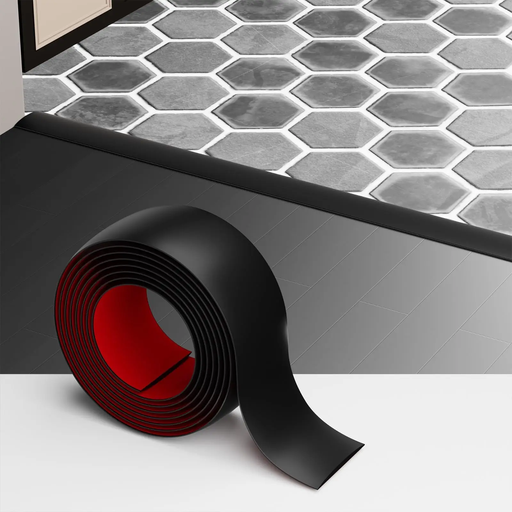
Why This Fits Their Persona: Measuring 122 cm long and 4 cm wide with a 0.3 cm low-profile height, this black PVC transition strip delivers a clean, modern boundary between adjoining rooms featuring darker tiles, wood or carpeted surfaces.
Avoids awkward cutting of stiff metal profiles in compact single-door spaces; it trims easily with scissors and sticks directly over floor expansion breaks without specialised tools.
The bold matte black finish provides a defined architectural line between rooms while maintaining a gentle 3 mm low-profile incline that prevents trip hazards.
Longevity depends on thorough surface preparation. Clean the target surface thoroughly using isopropyl alcohol or methylated spirit to eliminate grease, wax, and dust, avoiding soapy detergents that leave residues. Ensure the floor or door is completely dry, align the strip carefully before removing the backing paper, and apply firm, continuous downward pressure along the entire length for at least 30 seconds.
Floor transition strips are flat, low-profile strips fixed directly to the floor across room boundaries to conceal expansion gaps and bridge transitions between materials like tile and laminate. In contrast, under-door draught seals attach vertically to the lower edge of the swinging door to block the air gap beneath, preventing drafts, light, and noise from passing through.
For irregular floor surfaces such as rustic tiles, riven slate, or sloping floors, standard flat rubber sweeps tend to catch or leave gaps. A draught seal featuring an aluminium profile combined with a flexible multi-layer or triple-fin barrier is recommended. These flexible fins bend independently over grout dips and high points, accommodating clearance heights of up to 25 mm without jamming the door.