
Livraison le jour même ou le lendemain

Qualité garantie

Débloquez vos offres de bienvenue: Livraison GRATUITE | Jusqu'à -80 % | 30 jours d'essai gratuits à JoyPlus
Téléchargez l'application
That little trickle of cold air slipping under your door, the hallway noises creeping into your living room, or that heating bill climbing for no apparent reason... These daily annoyances often have the same cause: a gaping space under your doors. Fortunately, the solution is often simple and affordable: a well-chosen door bottom seal.
But be careful—when faced with shelves full of promises, it's easy to make a mistake. Here are the 3 pitfalls you must absolutely avoid:
To make the right choice the first time, focus on the features that truly matter.
Analysing a few key points will help you select a genuinely effective and long-lasting product that's right for your home.
This is the first choice you'll need to make. It depends on your door, as well as whether you are a tenant or a homeowner.
This is a detail that is often overlooked, yet it's crucial. The effectiveness of your insulating seal depends directly on it.
Precisely measure the gap between the bottom of your door and the floor. Manufacturers always state the maximum height their product can seal (e.g., up to 15 mm or 25 mm). An effective draught-proofing door seal must close this gap without turning opening the door into a test of strength.
Also consider overall weatherstripping. If air is also getting through the frames, a foam seal for window surrounds or a silicone sealant in wet rooms (bathroom, kitchen) will complete your insulation project.
To help you visualise the right solution, here is a selection of products that meet specific needs.
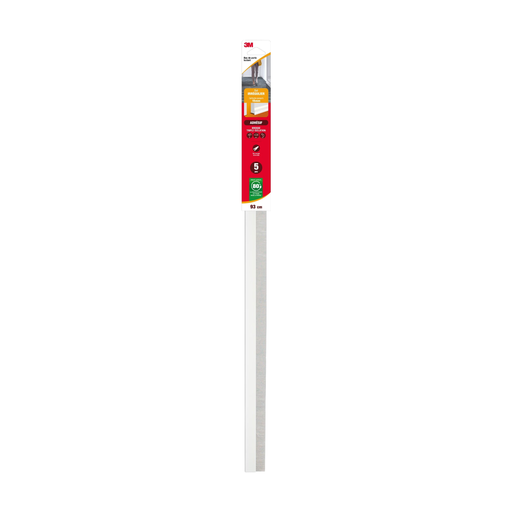
Why this choice: The perfect solution for immediate results without needing a drill. Its adhesive applies in an instant and won't damage the door—a key factor for tenants. Its flexibility allows it to adapt to the slight floor irregularities typical of apartments.
Its flexible PVC lip conforms to floor imperfections where a rigid seal would create a new air gap. This neatly sidesteps the "unsuitable rigidity" pitfall.
Tool-free installation; adjustable length; adapts to floors with minor irregularities.
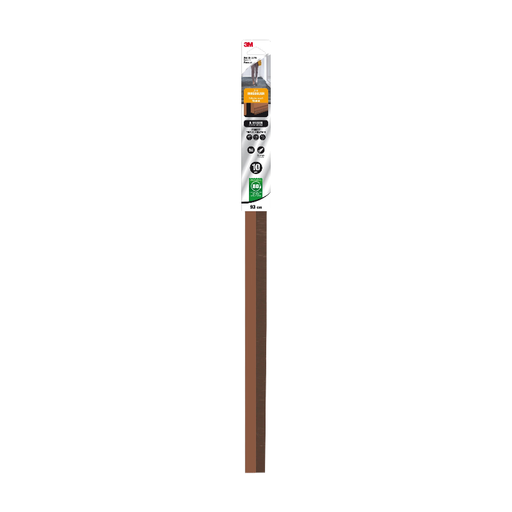
Why this choice: As a homeowner, you invest for the long term. This screw-on model offers a rock-solid attachment. Its premium design, featuring a brush and membrane, is engineered for lasting performance, with 3M stating a lifespan of over 10 years.
The screw-on mounting completely eliminates the risk of peeling. The combination of a brush and membrane ensures a perfect seal even on difficult floors, where an entry-level model would be useless.
Ultra-durable mounting; premium quality for 10+ years of effectiveness; seals gaps up to 15 mm.
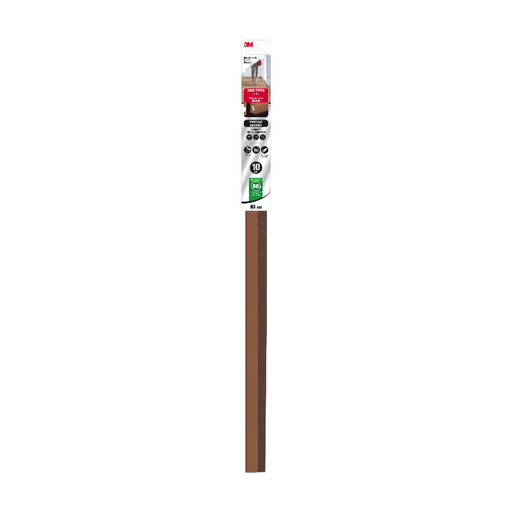
Why this choice: This is the last-resort solution for complex cases. An old terracotta tile floor, a warped parquet, a gap of over 2 cm under the door? This model is designed to seal gaps up to 25 mm, where all others fail.
It perfectly addresses the "misdiagnosis" pitfall by providing an oversized solution for situations where a standard door bottom seal would be completely ineffective.
Seals gaps up to 25 mm; premium adhesive for easy installation; designed for very uneven floors.
Explore our complete selection of sealing products, all chosen for their effectiveness and compliance with standards.
It all depends on the quality. An entry-level model will barely last a season. In contrast, a product from a reputable brand with a high-performance adhesive can stay in place for over 5 years, and even 10 years for the best ones. The secret to longevity: a flawless installation on a perfectly clean and dry surface.
Absolutely. Sound insulation is actually one of the most appreciated benefits. By blocking the passage of air, a good door bottom seal significantly reduces the transmission of noise (conversations, television, hallway sounds...). The acoustic effectiveness will depend on the density and design of the seal.