
Livraison le jour même ou le lendemain

Qualité garantie

Débloquez vos offres de bienvenue: Livraison GRATUITE | Jusqu'à -80 % | 30 jours d'essai gratuits à JoyPlus
Téléchargez l'application
A door bottom seal can help reduce draughts, dust and some passing noise. But you need to choose the right model: a poorly fitted seal can peel off quickly, obstruct the door's opening or leave a visible gap underneath. The key factors are the type of floor, the width of the door and the fixing method.
A door bottom seal with a rigid lip works well on a flat, even surface. On an old tiled floor, a warped wooden floor or a threshold with height differences, however, it can let air through in places. In this case, it's better to choose a flexible double-row brush or a model designed to compensate for unevenness.
A 93 cm door bottom seal isn't automatically suitable for every door. Measure the width of the door leaf, not the frame. A seal that's too short will leave part of the gap unprotected. A longer seal can usually be cut down, but check the recommended method: a saw for an aluminium profile, or scissors or suitable pliers for some brushes.
A self-adhesive door seal fitted to a dusty, greasy or damp surface can lose its grip quickly. This problem often occurs on kitchen doors, garage doors or doors that lead directly outside. Careful cleaning and thorough drying are therefore just as important as choosing the product.
On a smooth floor, a transparent lip, a short brush or a magnetic seal can follow the surface without causing excessive friction. A smooth floor door bottom seal is particularly suitable for a well-laid wooden floor, a regular tiled floor or a correctly installed laminate floor.
If the surface is uneven, choose an uneven floor door bottom seal fitted with flexible bristles. Some models advertised for significant gaps can cover an opening of up to 15, 25 or 30 mm, depending on the manufacturer's specifications. This figure refers to the maximum stated height: it doesn't guarantee an even seal along the entire length of the strip.
An aluminium profile provides a rigid structure and can be cut to the desired width with a suitable saw. Nylon brushes are more flexible and conform better to small floor imperfections. An additional membrane or lip can enhance protection against dust and draughts.
Claims such as "up to 80%" or "10-year lifespan" should be taken as data from the product sheet, under the conditions specified by the manufacturer. They don't replace the need to check the quality of the installation, the frequency of use and the condition of the surface.
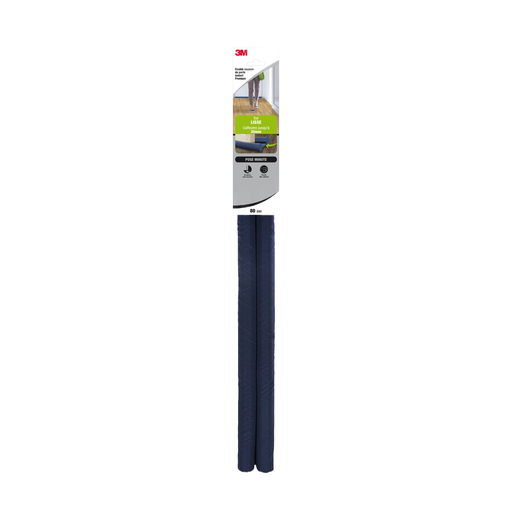
Why this choice suits this profile: its 80 cm length and quick installation make it ideal for an interior door on a smooth floor, when the aim is simply to limit draughts without drilling.
It doesn't claim to compensate for major unevenness: it's designed for smooth floors and gaps of up to 20 mm. This limit reduces the risk of choosing an unsuitable model.
Quick installation, compact 0.80 m length and stated compatibility with different door types.
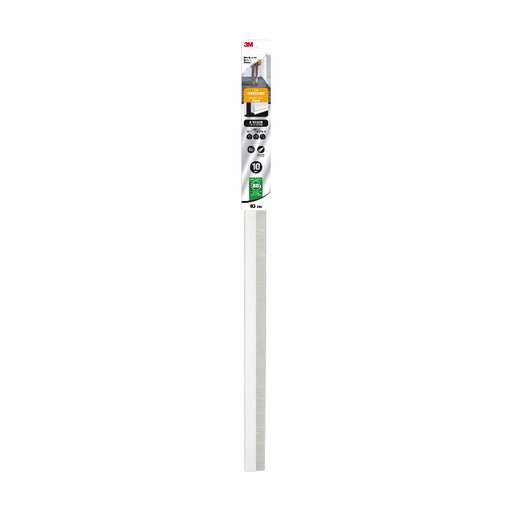
Why this choice suits this profile: its aluminium profile, screw fixing and double row of brushes are designed for doors that are used regularly on an uneven floor.
The screw fixing means you're not relying solely on adhesive on a door that gets a lot of use. The product sheet states it compensates for gaps of up to 15 mm.
Aluminium, 93 cm length that can be cut down, and fixing screws described as discreet.
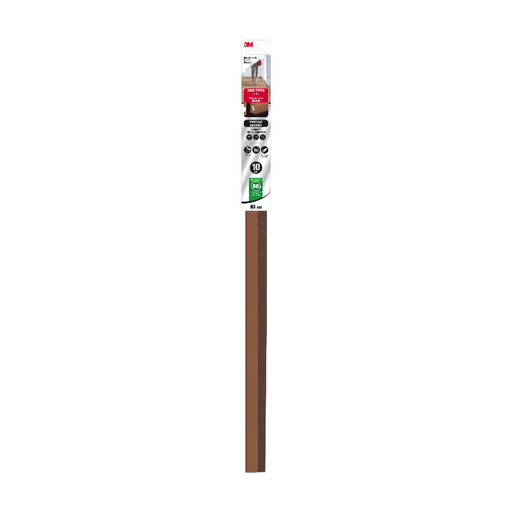
Why this choice suits this profile: this adhesive model is designed for very uneven floors and doors where drilling isn't an option, particularly in a rental property or for a quick renovation.
The product sheet states it covers gaps of up to 25 mm and can be fitted on different floor types. However, clean the surface with alcohol as per the instructions, and check that the adhesive won't damage the finish.
Tool-free installation, 93 cm length and stated as manufactured in France on the product sheet.
We've put together a comprehensive, real-time updated list of products that fully meet these strict selection criteria and European safety regulations.
Regular cleaning with a dry or slightly damp cloth will remove accumulated dust. Avoid harsh products on membranes and adhesive surfaces.
Choose a flexible brush, preferably double-row, then compare the maximum compensation height stated with the gap you've actually measured. A model designed for a smooth floor is unlikely to conform well to surface irregularities.
Adhesive is suitable for quick, drill-free installation, provided the surface is clean, dry and compatible. A screw-on door bottom seal requires more preparation, but its fixing is more reliable on a frequently used door.
A dust-proof and noise-reducing door seal can help reduce some draughts and the noise that passes through the gap under the door. However, the result depends on the door as a whole, its frame and the type of noise. On its own, this type of seal isn't a complete soundproofing solution.