
Livraison le jour même ou le lendemain

Qualité garantie

Débloquez vos offres de bienvenue: Livraison GRATUITE | Jusqu'à -80 % | 30 jours d'essai gratuits à JoyPlus
Téléchargez l'application
An icy draft sneaking under your front door? Skyrocketing heating bills with no explanation? Or simply noise and dust from the landing inviting themselves into your home? A simple door bottom seal is often the solution to all these problems. However, finding the right model isn't so simple. Make the wrong choice, and the adhesive gives out after a month, or the insulation remains an empty promise.
As the Head of Product Recommendations at Joybuy, I'm here to guide you. Let's forget the marketing jargon and focus on the criteria that truly matter for making a smart and long-lasting choice.
Before you buy, let's review the common mistakes that can render your door bottom seal useless, or even annoying.
To avoid these pitfalls, three essential points must be checked. This is what will guarantee the effectiveness and lifespan of your door bottom insulation.
The choice depends on your door, your floor, and whether you're looking for a temporary or permanent solution.
This is arguably the most important criterion for ensuring a proper seal.
Accurately measure the space (the "gap") between the bottom of your door and the floor. Each product specifies the maximum gap it can fill (e.g., up to 15?mm, 20?mm, etc.). Ignoring this information guarantees a useless purchase. Remember to measure in several places if your floor isn't perfectly level, and use the largest measurement.
To help you see how these criteria apply in practice, here are a few models tailored to specific needs.
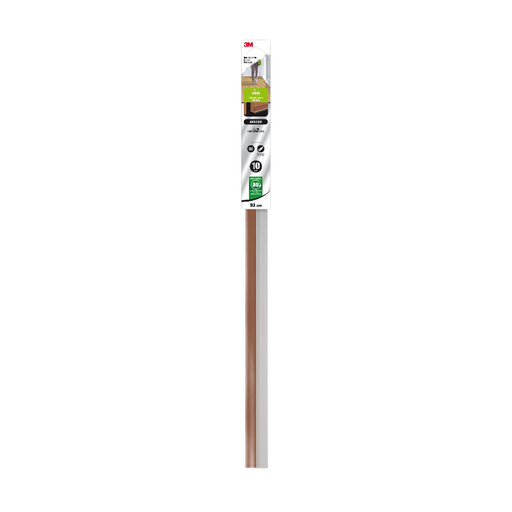
Why this model? It's the perfect solution for renters or anyone who wants immediate effectiveness without any tools. Ideal for a bedroom or office with laminate or linoleum flooring, it insulates against both noise and drafts.
It sidesteps the low-quality adhesive trap with its high-performance 3M backing. Its soft-lip design is specifically engineered for smooth floors, which solves the incompatibility problem.
Fills a gap up to 15 mm. The manufacturer claims it reduces airflow by up to 80% and has a minimum lifespan of 10 years.
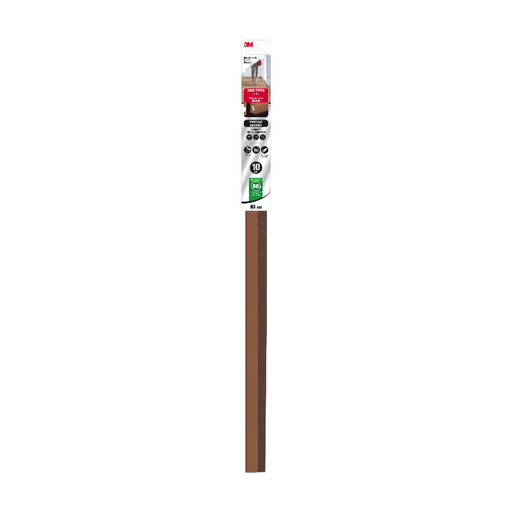
Why this model? This is THE solution for older apartments with deep-grouted tile or time-warped parquet floors. It tackles the difficult cases where a standard door bottom seal would be completely ineffective.
Specially designed for uneven floors, it combines brushes and a flexible membrane to perfectly conform to dips and bumps where a simple lip would fail. This resolves the incompatibility pitfall.
Fills a significant gap up to 25 mm. The premium quality of its materials ensures an effective lifespan of over 10 years, according to the manufacturer.
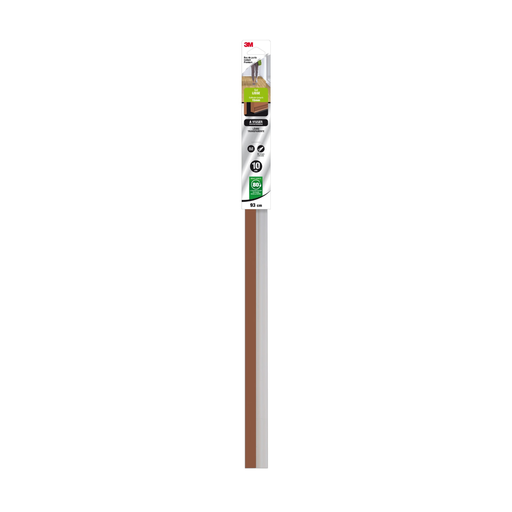
Why this model? For homeowners seeking a long-term solution. Perfect for a front door or a service door subject to heavy use, where a simple adhesive would quickly show its limits.
Screw-on mounting completely eliminates the risk of peeling, the number one pitfall of adhesive models. Its aluminum structure is far more resistant to impacts and wear than a simple PVC model.
French-made and backed by a 10-year manufacturer's warranty, a true mark of confidence. Its brown aluminum profile with a transparent lip combines discretion and robustness.
We have curated a complete selection of products that meet these quality criteria and current safety standards.
Preparation is the key to success. The door surface must be perfectly clean, dry, and degreased. Simply wiping the bonding area with rubbing alcohol makes all the difference. Then, apply the door bottom seal starting from one side and pressing down firmly along its entire length to push out any air bubbles. Most importantly, do not stretch it during application.
It all depends on the quality. An entry-level adhesive model will rarely last more than a year. Conversely, higher-quality models, whether adhesive or screw-on, can last from 5 to 10 years, or even longer. Durability depends on the materials (aluminum vs. PVC), the quality of the adhesive or screws, and of course, the frequency of use.
Yes, and the impact is far from negligible. According to ADEME (the French Agency for Ecological Transition), air leaks can account for up to 20% of a home's heat loss. A properly installed cold-blocking door bottom seal is one of the simplest and most cost-effective solutions to reinforce thermal insulation, curb energy waste, and ultimately, achieve real savings on your bills.