
Livraison le jour même ou le lendemain

Qualité garantie

Débloquez vos offres de bienvenue: Livraison GRATUITE | Jusqu'à -80 % | 30 jours d'essai gratuits à JoyPlus
Téléchargez l'application
A cold draught slipping under your front door, a heating bill that climbs for no apparent reason… These situations are familiar to many households. The solution seems simple: a door bottom seal. Yet, the market is flooded with products making various promises, and it's easy to make the wrong choice, leading to disappointing insulation and wasted money.
As a Product Expert at Joybuy, my role is to help you see things more clearly. Let's forget the marketing jargon and focus on what's essential. Before you rush to buy the first model you see, let's review the most common pitfalls that make a door seal completely ineffective.
To avoid these setbacks, a methodical approach is required.
Weatherstripping a door isn't something you can improvise. For successful and long-lasting insulation, three parameters should guide your selection.
The fixing method determines not only the ease of installation but also the durability of your solution.
The effectiveness of a draught excluder depends on its ability to perfectly conform to the floor's surface.
This is the simplest step, but also the one most often forgotten. Before any purchase, measure the space between the bottom of your door and the floor. Manufacturers always indicate the maximum height their product can cover (e.g., "up to 15?mm"). An undersized product will be useless, while an oversized one will strain the door and wear out prematurely. Don't forget to check the frames as well: an adhesive window seal or door frame seal can perfect your door's insulation.
To move from theory to practice, here are a few concrete solutions, chosen for their relevance to everyday situations.
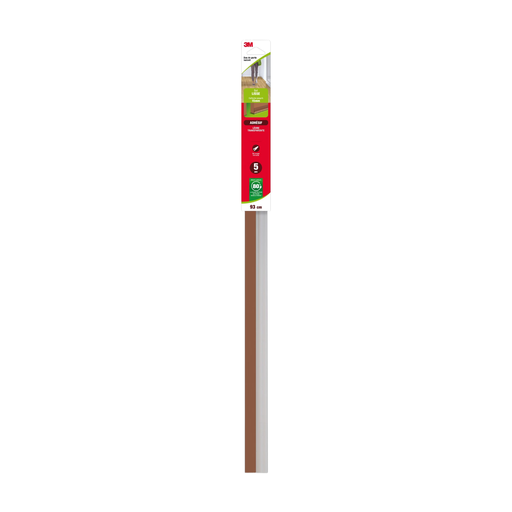
Why we chose it: Ideal for those seeking an effective, tool-free solution. Perfect for rental apartments where drilling into doors isn't an option. Its installation is clean and fast on smooth floors.
It bypasses the problem of low-grade adhesives thanks to 3M technology, renowned for its strong adhesion and durability, provided the surface is impeccably prepared.
Installs in minutes, no drilling required. Its flexible lip ensures a discreet seal on smooth floors and can bridge a gap of up to 15 mm.
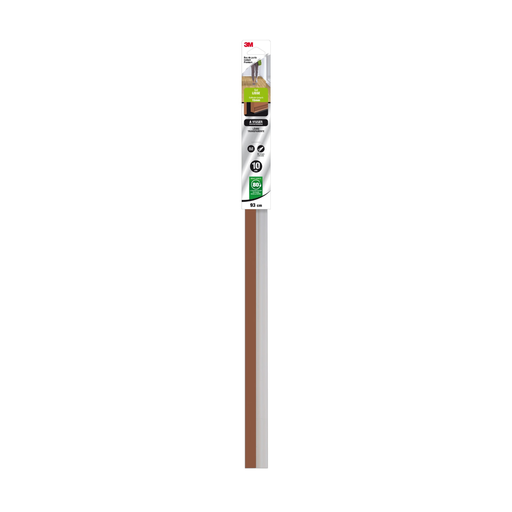
Why we chose it: For those investing in a long-term solution. The screw-in fixing guarantees a rock-solid hold, and the aluminium profile resists impacts and the wear and tear of time. It's the ultimate "set it and forget it" solution.
It eliminates the risk of peeling off by opting for a mechanical fixing. Its robust design is built to last, as evidenced by the manufacturer's 10-year warranty.
Maximum stability thanks to the screw-in fixing. The aluminium profile and flexible sealing lip are designed for lasting performance on smooth floors.
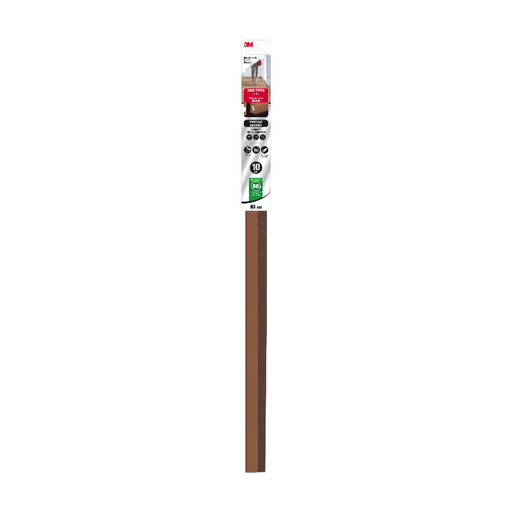
Why we chose it: The ultimate solution for challenging cases. Perfect for older homes with stone or wide-grout tiled floors. Its design is specifically engineered to fill large gaps and adapt to imperfections.
It tackles the problem of materials unsuitable for uneven floors head-on. The combination of brushes and a thin membrane allows it to follow the floor's contours without leaving any gaps.
Ability to bridge significant gaps of up to 25 mm. Its flexibility ensures a continuous seal on even the most rugged surfaces.
The secret is preparation. The door surface must be perfectly clean, dry, and degreased (using rubbing alcohol, for example). Apply the door seal without stretching the adhesive, then press firmly along its entire length for at least 30 seconds for optimal adhesion. If possible, wait a few hours before using the door.
The door bottom seal (or insulating door threshold) is designed to seal the gap between the bottom of the door (the leaf) and the floor. A door frame seal (or weatherstripping seal) is a strip, often made of foam or rubber, that is applied to the door frame (the jamb) or window to ensure a tight seal on the sides and top. The two are complementary for perfect insulation.
Yes. While its primary function is thermal insulation, a quality door bottom seal also improves soundproofing. By sealing the gap under the door, it limits the transmission of airborne noise from one room to another or from the outside. For enhanced acoustic insulation, specific, even denser models are available.