
Livraison le jour même ou le lendemain

Qualité garantie

Débloquez vos offres de bienvenue: Livraison GRATUITE | Jusqu'à -80 % | 30 jours d'essai gratuits à JoyPlus
Téléchargez l'application
A donut dog bed first catches the eye with its rounded shape and enveloping edges. But a plush look doesn’t always guarantee a practical bed for everyday use. An ill-fitting diameter, fiddly maintenance or a base that slides across the floor – a few small details can turn a love-at-first-sight purchase into an accessory your dog ignores.
This guide helps you spot the features that really matter, whether you’re looking for a bed for a small, medium or large dog, an orthopaedic dog bed, a soft dog bed or even a crate bed.
The padded edges take up some of the room. A bed listed as 70 or 80 cm in diameter doesn’t offer 70 or 80 cm of perfectly flat surface. Measure your dog when they’re lying down, then add a few centimetres so they can turn around comfortably.
For a medium-sized dog, models with a diameter of 70 to 80 cm can work, depending on their build and sleeping style. Larger dogs will generally need a 100 cm model, or a bed with dimensions specifically suited to them.
A washable dog bed isn’t necessarily easy to clean. Check that the cover really does come off, that there’s a zip to remove the inner cushion, and that the care instructions allow machine washing. A fixed cover can be particularly awkward to dry after an accident or a walk in the rain.
On tiles, wooden flooring or laminate, a lightweight bed can slide when your dog settles in. A base with non-slip rubber dots significantly improves stability, provided the bed is placed on a flat, dry surface. Also remember to check the seams, zip and padding regularly, especially if your dog tends to chew their accessories.
Observe your companion’s habits: do they sleep curled up or fully stretched out? For a bed for small and medium dogs, a 70 cm diameter may be enough. An 80 cm bed for a medium-sized dog will give more freedom to dogs who like to change position often.
A 100 cm model can suit some medium or large dogs, but also check the space available in the room or in a pen. If you’re looking for a crate bed, measure the inside of the crate precisely and check the height of the bed: the door must be able to close without force once the bed is in place.
The models featured here mainly use a plush or sherpa-type fabric, combined with PP cotton padding. The long fibres offer a soft feel, while the filling provides volume and comfort. This is not a medical claim: a bed never replaces a vet’s advice for a dog suffering from pain or joint problems.
For an older dog or one that struggles to get up, choose a stable base and a reasonable access height. The enveloping edges will appeal to dogs who like to rest their head on them, but some may prefer a flatter, less enclosed bed.
A removable cover is especially useful with multiple pets, a puppy or a dog that regularly comes home soaked from walks. The models below have a zip underneath the bed to remove the inner cushion. In all cases, follow the label instructions: a delicate cycle, mild detergent and air drying or low-temperature drying as recommended.
Beds delivered vacuum-packed need to be shaken and fluffed by hand as soon as they arrive. Several hours may be needed for them to regain their original volume. Before first use, place the bed in a dry spot away from a heat source, and perhaps add a blanket carrying the scent of home to help your dog adopt it.
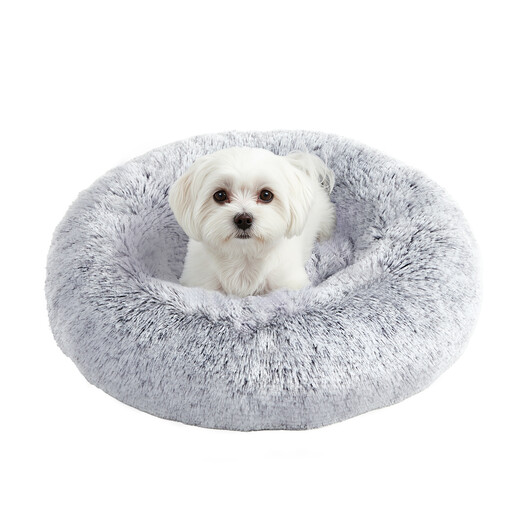
Why this choice suits this profile: its size will suit many small and medium dogs. Its simple design means you can place it in a cosy corner or in a sufficiently spacious crate.
The inner cushion can be removed via a zip located underneath the bed, while the base is fitted with non-slip rubber dots.
70 cm diameter, 20 cm height, plush fabric and PP cotton padding.
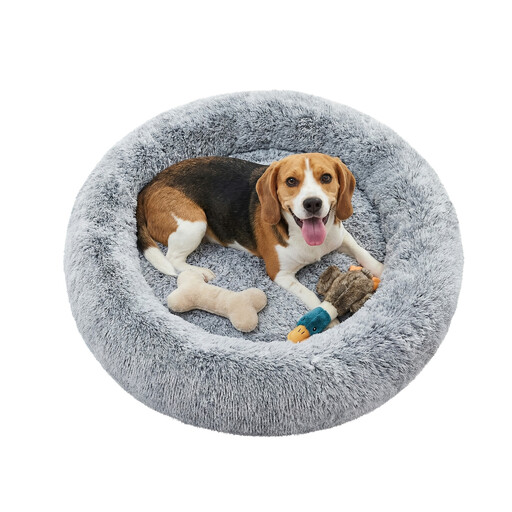
Why this choice suits this profile: this model offers a more generous surface for medium dogs who like to turn around or stretch out, without moving up to a 100 cm bed.
The cover is stated as removable and washable. The non-slip dots limit sliding on a suitable floor.
80 cm diameter, sherpa fabric, PP cotton padding and zip underneath the bed.
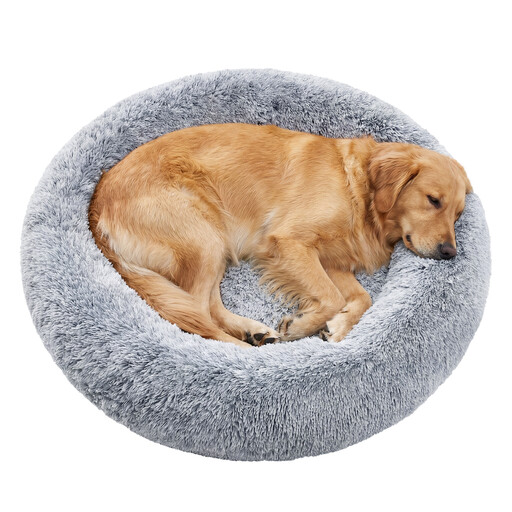
Why this choice suits this profile: its large diameter suits households with a medium to large dog or multiple pets, provided you have enough space.
The cover can be removed for washing and the base has rubber dots. The manufacturer does recommend checking for tears and any padding that becomes accessible.
100 cm diameter, 20 cm height, plush fabric and separate care for the cover and inner cushion.
We’ve put together a comprehensive, real-time updated list of products that fully meet these strict selection criteria and European safety regulations.
A plush fabric can trap hair and moisture. Vacuuming regularly and airing the cushion helps keep the space clean and healthy. The bed’s lifespan will depend on how often it’s washed, your dog’s weight and their behaviour.
Measure your dog lying down, then add a margin to give them enough freedom of movement. Compare this measurement to the bed’s inner surface, not just its outer diameter. For a medium dog, models of 70 to 80 cm are often the first to consider; a larger dog may need a 100 cm model.
Yes, as long as its dimensions match the inside of the crate exactly and the door can close normally. Check the width, height and thickness of the edges before buying. For travel, the bed must stay firmly in place and not obstruct ventilation.
Remove dirt quickly, follow the recommended wash cycle and avoid any direct heat source. Fluff the padding regularly and stop using the bed as soon as a seam comes undone or the filling becomes accessible. With a dog that chews, regular supervision is essential.