
Livraison le jour même ou le lendemain

Qualité garantie

Débloquez vos offres de bienvenue: Livraison GRATUITE | Jusqu'à -80 % | 30 jours d'essai gratuits à JoyPlus
Téléchargez l'application
With its raised edges and enveloping shape, a donut bed invites your dog to curl up, rest their head on the rim or simply snuggle down. But its cosy appearance alone does not guarantee a long-lasting purchase, especially when the bed is used every day in a flat, house or travel crate.
Here are the criteria to consider before placing your order, common mistakes to avoid and a selection of models suitable for different dogs and cats.
When a bed lists a diameter of 80 or 100 cm, this measurement generally includes the rim. The central area, where your pet lies down, is therefore considerably smaller. To choose a round bed, measure your dog while they are lying down, then add enough extra room for them to change position without feeling cramped.
A 70 cm model may suit a small dog, or even some medium-sized dogs that sleep curled up. For a larger pet, a 100 cm diameter offers more room, although it will not necessarily suit every body shape.
A very soft cushion can quickly lose its loft if the filling is unevenly distributed or difficult to reshape. Check its composition, whether it contains PP fibres or structured foam, as well as the care instructions.
Long-pile fabrics also tend to trap more hair and dust. They are pleasant for creating a cosy bed, but require regular vacuuming or cleaning with a lint roller.
On wooden, tiled or laminate flooring, a bed that slips will move with the slightest movement. Choose a non-slip base with rubber studs or made from a fabric that grips the floor well.
Another detail that is often underestimated is cleaning. A dog bed with a removable cover is much easier to maintain than a model with a permanently attached cover. However, check whether the inner cushion can also go in the washing machine, or whether it should simply be aired and spot-cleaned.
For a small dog, measure the length of their back and add around 15 to 25 cm. For a medium-sized dog, allow a more generous margin: the thickness of the rim reduces the central space. A dog that likes to sleep stretched out will also need a larger size than one that curls up.
Here are a few guidelines based on the models featured:
A height of 20 cm creates a clearly defined rim, but does not replace observing your pet’s habits. Some dogs prefer an open bed that is easy to access, while others clearly seek a cocoon-like feel.
The PP fibre filling is used in several models in this selection. It provides a soft feel and can regain its volume after unpacking. Vacuum-packed products should be shaken and patted before first use. Depending on the model, it can sometimes take up to 48 hours for the loft to be fully restored.
A honeycomb foam structure, such as that used in some sofa-style mats, provides a different feel. The bed is less enveloping than a donut bed, but offers more support for a pet that prefers to lie flat.
Before buying, check the following:
Inspect the stitching and fabric regularly. If your pet chews their bed, remove it as soon as a tear exposes the filling.
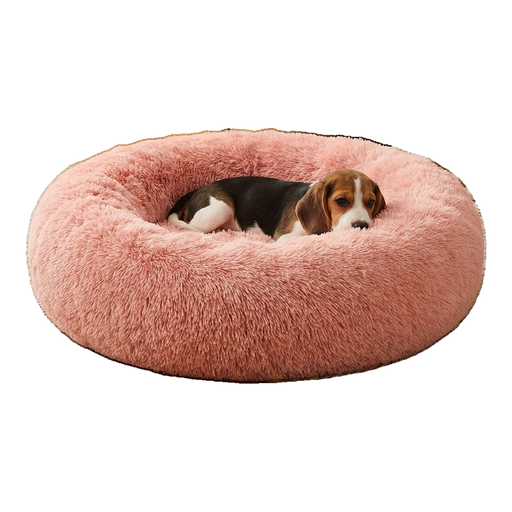
Why it suits this profile : With its 80 cm diameter and simple design, this bed is an easy first purchase for a small dog or cat.
The zip lets you remove the central cushion, while the rubber studs help prevent it from slipping on the floor.
Plush fabric, PP filling, removable cover and 80 × 20 cm dimensions.
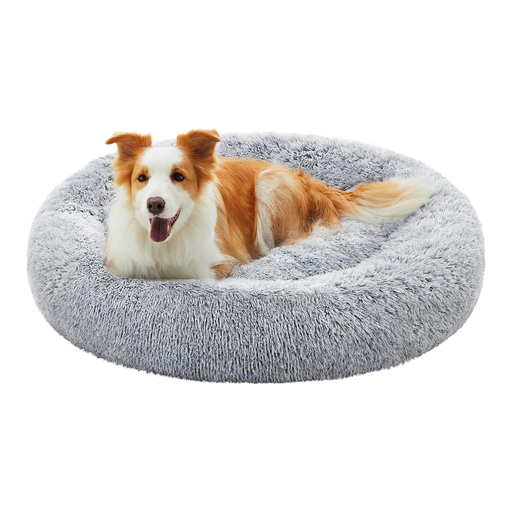
Why it suits this profile : Its generous size is ideal for households wanting to give a medium or large dog plenty of circular space.
The product details specify a 100 cm diameter, a removable central cushion and a base with non-slip studs.
Long-pile plush surface, 20 cm PP filling and stated capacity of up to 30 kg.
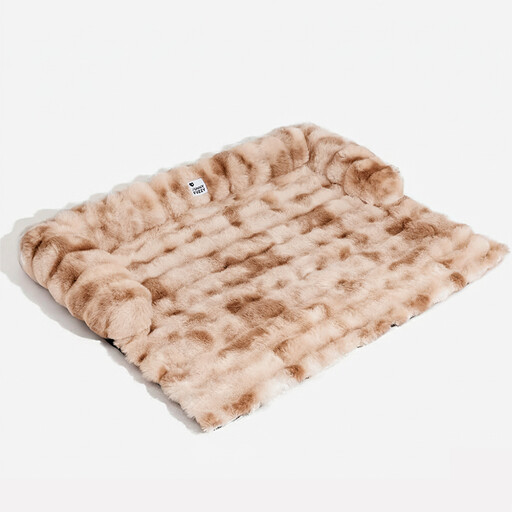
Why it suits this profile : This sofa-style mat is ideal for households looking for a more structured surface for their dog or cat than a simple round bed can provide.
The cover can be removed for machine washing, while the honeycomb foam core should be cleaned separately and must not be machine-washed.
Honeycomb foam, raised headrest, removable cover and non-slip underside.
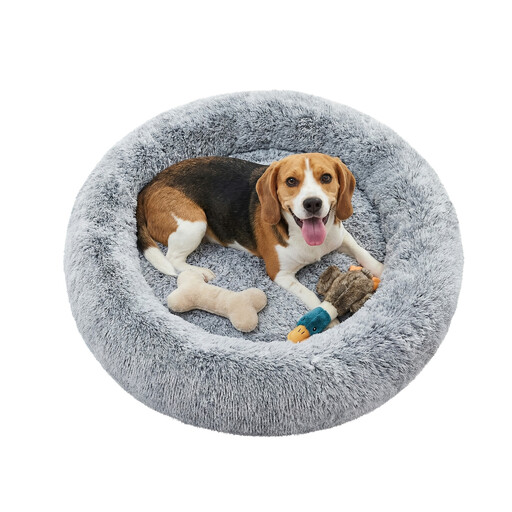
Why it suits this profile : This medium-sized model can fit in a living room, bedroom or crate, for a medium-sized dog or a large cat.
The studded base helps prevent slipping and the removable cover makes washing easier, in line with the label instructions.
80 cm diameter, 20 cm height, plush fabric and PP fibre filling.
We have brought together a complete, real-time updated selection of products that meet these demanding criteria and European safety standards.
Place the bed on a flat, dry and stable surface in a quiet area with little foot traffic. If you put it in a crate, make sure its diameter leaves enough room for the entrance and allows good air circulation. A blanket or familiar toy can help your pet settle into this new space more easily.
After washing, allow the cover to dry completely before putting the cushion back in place. Fluff up the edges regularly and vacuum any hair on the surface. Also avoid placing the bed near a radiator, fireplace or any other source of heat.
Measure your dog while they are lying down, then compare this measurement with the central space rather than the overall diameter. For a small dog, 70 to 80 cm may be enough. A medium or large dog will often need an 80 to 100 cm model, depending on their sleeping position and the thickness of the rim.
Its enveloping shape can visually define a reassuring resting space, but it is not a treatment and does not guarantee a calming effect. For an older dog, make sure above all that the bed is easy to access, that the base remains stable and that the cover can be cleaned regularly.
It depends on how often it is used, how frequently it is washed, your pet’s behaviour and the quality of the stitching. Air the filling, follow the stated washing temperature and discard the bed as soon as a tear appears or the filling becomes accessible.