
Livraison le jour même ou le lendemain

Qualité garantie

Débloquez vos offres de bienvenue: Livraison GRATUITE | Jusqu'à -80 % | 30 jours d'essai gratuits à JoyPlus
Téléchargez l'application
Are you looking for Dolce Gusto capsules for breakfast, a break at the office or a milky drink after a meal? The choice isn’t just about the intensity number on the box. Compatibility, format, ingredients and the actual amount that ends up in your cup all have a direct impact on the result – and on your budget.
Some mistakes are particularly common among shoppers in France:
Capsules compatible with Dolce Gusto machines are designed for appliances that use this format. However, the word “compatible” doesn’t let you off the hook – you should still check the exact model of your machine, especially if it’s an older model or has an automatic volume setting.
Always insert the capsule without forcing it, and follow the manufacturer’s preparation instructions. When trying a new product, start with the recommended setting on the packaging, then gradually adjust the volume to suit your taste.
Choosing between Dolce Gusto espresso capsules, lungo and long coffee depends mainly on the time of day and the size of cup you want:
The proportion of Arabica and Robusta also gives you a useful clue. A 100% Arabica capsule is usually associated with finer aromas and a gentler feel. A blend with more Robusta will often deliver more punch and body. These details tell you about the composition, but they aren’t enough to predict your personal taste preferences.
To compare Dolce Gusto coffee capsules, check the ingredients list, net weight and any allergens. A black coffee capsule typically contains only ground coffee. A latte, cortado or flavoured drink, on the other hand, may contain milk powder, sugar, flavourings or stabilisers.
The products in this selection state their storage conditions. In every case, keep the boxes in a cool, dry place away from direct sunlight, and reseal the bags carefully after opening. The best-before date is on the packaging – check it before buying in bulk, especially if you plan to stock up.
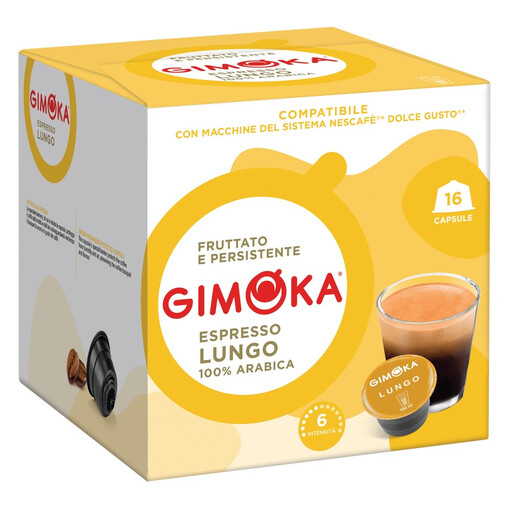
Why this choice suits this profile: The lungo format is a great entry point into the world of compatible capsules, offering a longer cup for the morning or an afternoon break.
The product page clearly states the format, total weight of 112 g and 100% Arabica composition. That makes it easier to compare this box of 16 capsules with competing products.
100% Arabica, 16 capsules and origin stated as Italy.
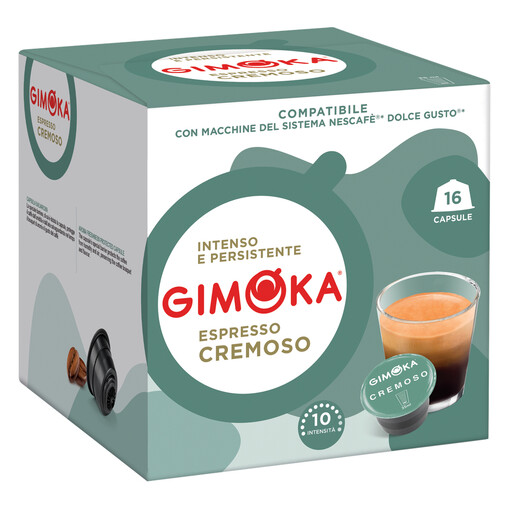
Why this choice suits this profile: This product is aimed at espresso fans who want a bold, well-defined blend with a lasting crema, as the product page indicates.
The 50% Arabica and 50% Robusta blend, combined with the stated intensity of 10, gives you more concrete information than a simple marketing promise.
Notes of dark chocolate, citrus and spices, with 16 capsules of 7 g each.
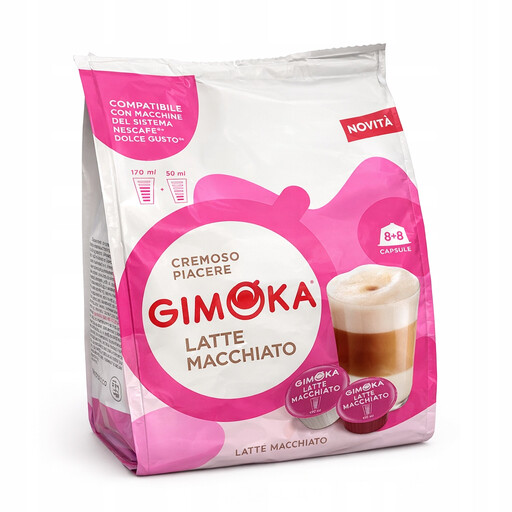
Why this choice suits this profile: The two-capsule system is ideal for households that switch between espresso and milky drinks and want to whip up a latte macchiato quickly.
The packaging clearly states that it contains 8 coffee capsules and 8 milk capsules. That way, you won’t confuse the total number of units with the number of complete drinks.
164 g total weight, milk and soya content stated, and origin indicated as Italy.
We’ve put together a full, real-time selection of products that meet these strict criteria and comply with European safety regulations.
They are designed for machines that use the Dolce Gusto system. However, it’s best to check your appliance’s model number and the seller’s information. If the capsule feels unusually hard to insert, don’t force it.
Follow the date on the box and keep the capsules in a dry place at room temperature, away from heat and direct light. An opened box should be resealed properly to preserve the aromas for as long as possible.
Yes. Dolce Gusto decaffeinated capsules are generally made from coffee that has had most of its caffeine removed. So the term “decaffeinated” doesn’t necessarily mean there is no caffeine at all. If this is important to you, check the product labelling.