
Livraison le jour même ou le lendemain

Qualité garantie

Débloquez vos offres de bienvenue: Livraison GRATUITE | Jusqu'à -80 % | 30 jours d'essai gratuits à JoyPlus
Téléchargez l'application
Choosing dog food is not simply a matter of comparing flavours or the claims printed on the packaging. From adult dog wet food and pâté to terrines, training treats and supplements, differences in ingredients and intended use can have a significant impact on your budget, as well as changing the balance of your dog’s meals.
Here are the key points to consider to avoid unsuitable purchases and choose an option that matches your pet’s age, size and lifestyle.
Complete dog food is formulated to provide a daily ration when served according to the manufacturer’s recommendations. By contrast, a treat, liquid reward or piece of dried meat is generally a complementary food.
This distinction appears on the label. A complementary product should not replace main meals. If you give your dog rewards every day, remember to reduce their usual food ration accordingly.
Grain-free dog wet food may suit some animals, but the absence of grains alone is not enough to assess the quality of a recipe. You should also check the ingredients list, analytical constituents, moisture content and whether it is labelled ‘complete food’ or ‘complementary food’.
A recipe containing chicken, turkey, vegetables or fruit should be assessed according to the actual proportion declared, not just the picture or product name.
A large multipack of dog food may reduce the cost per portion, but it is only worthwhile if its contents are consumed within the recommended timeframe. An opened tray should generally be refrigerated and eaten quickly. Instructions vary by product: the references featured here state a storage period of between 24 hours and 2 days.
For a small dog, individual 100 g portions or 150 g pouches can help minimise waste. For several dogs or regular consumption, a larger pack will often be more convenient.
Start by identifying what the product is intended for:
Ingredients are listed in descending order by weight. For example, an Edgar & Cooper recipe contains 30% chicken and 26% turkey, while a CESAR veal terrine lists 4% veal and 4% pork liver. These percentages make it easier to compare different products objectively.
The values to monitor include crude protein, crude fat, fibre, crude ash and moisture. Wet food often contains a lot of water: the Edgar & Cooper and CESAR products contain around 82% moisture.
You should therefore not directly compare the protein content of wet food with that of a dry treat without taking this difference into account. For example, Pedigree Schmackos treats contain 25% protein and 20% moisture, but they remain a complementary food that should be given in moderation.
A terrine is easy to serve in a bowl, while a soft bite or purée tube is better suited to walks and training sessions. Also check:
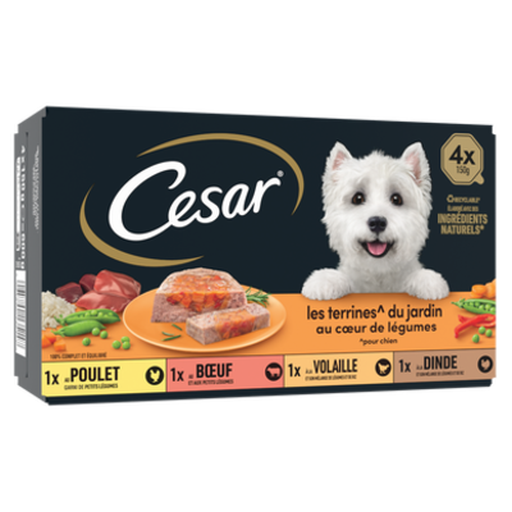
Why this product suits this profile : The four 150 g pouches allow you to try several recipes and manage portions easily without committing to a large quantity straight away.
The product information describes it as complete and balanced food for adult dogs and specifies the storage conditions after opening.
Four varieties, 82.8% moisture and no added sugar, artificial flavourings or colourings according to the product information.
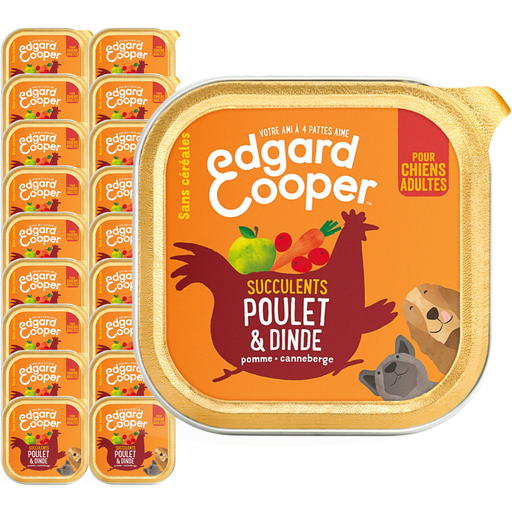
Why this product suits this profile : This multipack is ideal for households looking for grain-free wet food for adult dogs, with individual portions that are easy to organise.
The ingredients list specifies 56% chicken and turkey, with no grains and clearly stated ingredient percentages.
18 trays of 100 g, 9% crude protein, 5% crude fat and 82% moisture according to the available information.
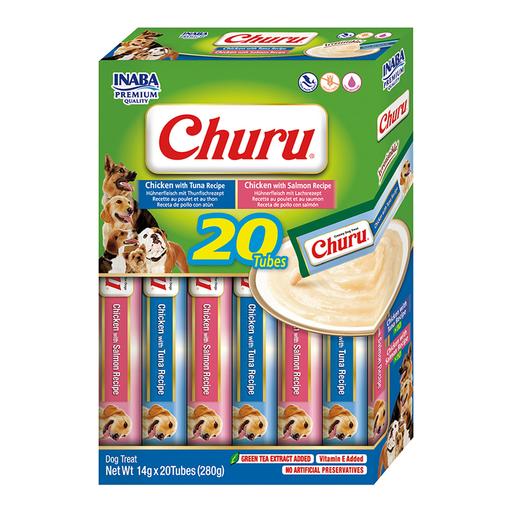
Why this product suits this profile : The individual tubes are convenient to take with you, whether for walks, rewards or training sessions.
The product information makes clear that this is a complementary food, not a complete meal. This makes it easier to control the amount given.
20 tubes of 12 g, two recipes combining chicken and fish, and around 90% moisture according to the product information.
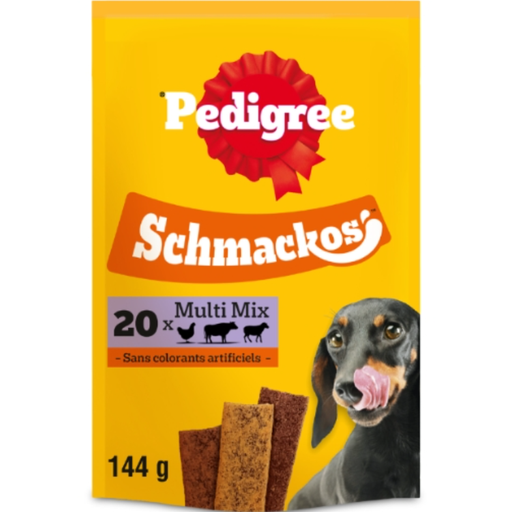
Why this product suits this profile : The strips are easy to portion for everyday rewards or short training sessions.
The product information classifies them as complementary food and states that each treat contains fewer than 30 kcal, with recommendations suited to the dog’s size.
20 pieces, three varieties and 25% crude protein as stated in the analytical constituents.
We have put together a complete, real-time updated list of products that meet these strict selection criteria and European safety regulations.
Dog treats should remain a limited part of your pet’s daily intake. Follow the recommendations on the packaging, then adjust the amount according to your dog’s weight, activity level and main food ration. For a less active dog, include rewards in the total food allowance rather than adding them without making an adjustment.
Refrigerate it after opening, placing it in a sealed container if necessary. The products featured generally recommend consuming it within 24 hours or 2 days. Serve wet food at room temperature and always check the label of the product you have purchased.
Make the switch gradually over several days by mixing the old and new recipes. Start with a small proportion of the new food, then increase it gradually according to how well your dog tolerates it. If your dog has specific dietary needs, ask a vet for advice before making a long-term change to their ration.