
Livraison le jour même ou le lendemain

Qualité garantie

Débloquez vos offres de bienvenue: Livraison GRATUITE | Jusqu'à -80 % | 30 jours d'essai gratuits à JoyPlus
Téléchargez l'application
A treat can reward good behaviour, make a training session easier or simply add a little variety. But not all dog treats should be chosen in the same way. Their format, ingredients, texture and serving size directly affect how useful they are day to day.
Before filling your basket, take the time to identify the most common pitfalls and check the information that really matters on the packaging.
Most dog treats are complementary foods. They are therefore not a replacement for your dog’s main food. A claim such as ‘rich in chicken’ or ‘with cheese’ describes a recipe, but is not enough to assess its overall nutritional balance.
The amount given should remain suitable for your dog’s age, weight, activity level and usual daily food allowance.
Claims such as ‘natural’, ‘grain-free’ or ‘made with real ingredients’ should always be checked against the ingredients list. In France and the European Union, ingredients are generally listed in descending order by weight. A treat advertised as containing chicken may therefore contain only a limited proportion, depending on the recipe.
When a product claims to contain an ingredient using the wording ‘with X’, check its exact proportion on the packaging. The information shown on a product page may vary depending on the batch or packaging.
A hard treat is not automatically suitable for every dog. A puppy, older dog, dog that eats too quickly or small breed may need a smaller, softer format. Conversely, once opened, a moist reward should generally be consumed quickly and stored in the fridge, in accordance with the manufacturer’s instructions.
Supervision remains essential with chew treats, particularly when a product combines a food-based element with a toy.
Start by comparing the ingredients list, then the levels of protein, fat, fibre and moisture. These figures are not enough to determine a product’s quality, but they make it easier to compare similar products.
A few useful pointers:
If your dog has a diagnosed allergy or specific dietary requirement, ask a vet for advice before changing their rewards.
For training, choose small pieces that are easy to give and tempting enough to keep your dog’s attention. Dog training treats should not significantly increase their daily energy intake.
Soft strips that can be broken up, mini bites and individual tubes make portion control easier. A multi-pack of dog treats can reduce the price per serving, but check the best-before date and your actual consumption before buying in bulk.
Sticks and strips may be suitable when you want a reward that lasts a little longer, while a soft bite can be given quickly. Dog chews and dental sticks should be offered under supervision and in a size suited to your dog’s weight.
Dental sticks for dogs can complement an oral hygiene routine, but they do not replace brushing or veterinary care. For products claimed to help reduce plaque, check whether this promise is based solely on a brand claim or supported by documented information on the packaging.
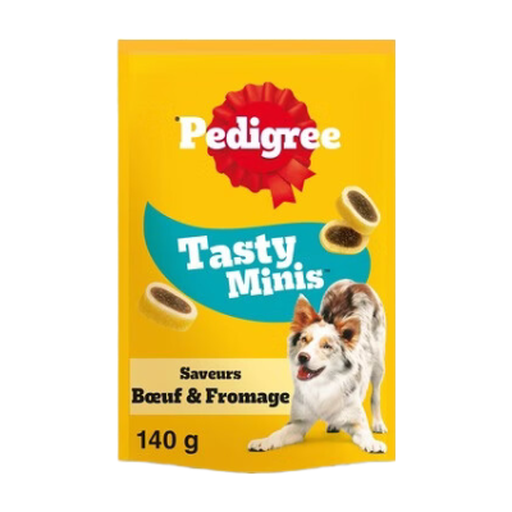
Why this product suits this profile : Its small format is ideal for repeated rewards and helps you control portions more effectively during your first training sessions.
The ingredients include cereals, 4% beef and 4% cheese powder. This helps put the highlighted flavour claims into perspective.
Mini beef and cheese bites in a handy 140 g pouch, ideal for trying the product.
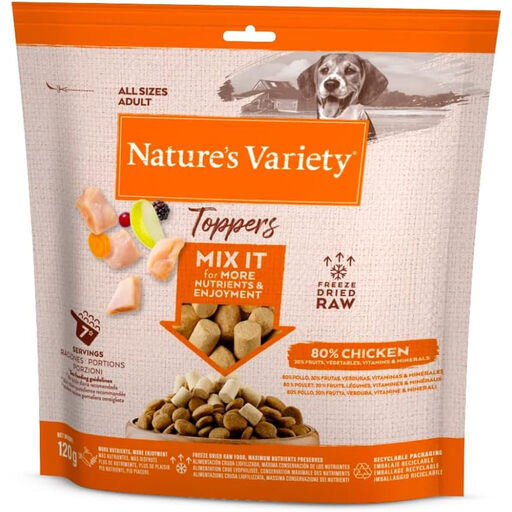
Why this product suits this profile : Its compact format and recipe advertised as containing 80% chicken may appeal to owners who want to know exactly what they are giving their dog.
The proportion of chicken is clearly detailed in the product information, rather than being suggested solely by an image or flavour name.
Chicken, carrot and apple listed in the ingredients, with a 15 g pouch suited to occasional use.
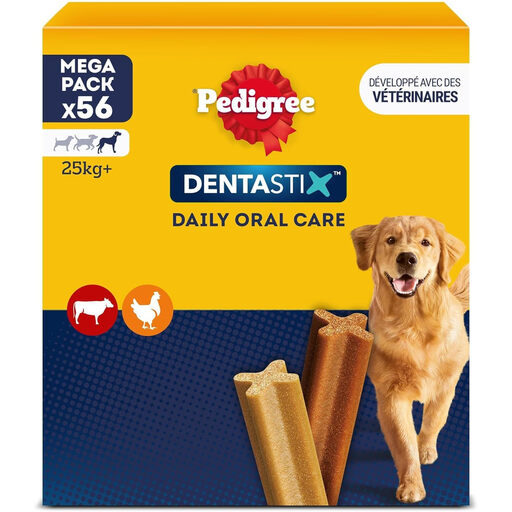
Why this product suits this profile : This pack of 56 sticks is designed for regular use by dogs weighing 25 kg or more, according to the product information.
The format is linked to a target weight and a recommended frequency of one stick per day. The product information also specifies usage limits for puppies.
A slightly abrasive texture and X-shaped design, which the brand presents as helping with mechanical cleaning. Supervision is still recommended.
Dog rewards should be given occasionally or included when calculating your dog’s daily food allowance. During training, give a small portion immediately after the desired behaviour. If the treat can be broken, divide it into several pieces.
Always provide fresh water and follow the storage instructions on the packaging. Once opened, a moist treat should generally be kept in the fridge and consumed quickly. For hard products, remove any piece that has become very small or damaged, and stop giving them if your dog shows an unusual reaction.
We have put together a complete, real-time updated list of products that fully meet these strict selection criteria and European safety regulations.
It depends on your dog’s weight, age, activity level and the product’s energy density. Treats should generally account for only a small proportion of their daily calorie intake. If recommended in the instructions, reduce their main food allowance and follow the guidance specific to each product.
Start with a short, easy-to-read ingredients list, such as a recipe based on a single protein source. Natural dog treats and grain-free dog treats are not necessarily suitable for every pet. If your dog has an identified sensitivity, advice from a vet can help you avoid repeated and potentially unsuitable trial and error.
No. Chewing can complement an oral hygiene routine, but it does not replace regular brushing or having your dog’s mouth checked by a vet. Choose a size suited to your dog’s build and stay nearby while they chew.