
Livraison le jour même ou le lendemain

Qualité garantie

Débloquez vos offres de bienvenue: Livraison GRATUITE | Jusqu'à -80 % | 30 jours d'essai gratuits à JoyPlus
Téléchargez l'application
A treat can reward good behaviour, make training easier or simply keep a dog occupied for a few minutes. However, not all dog treats are created equal, and they do not meet the same needs. Texture, ingredients, size, moisture content and frequency of use all directly affect how useful they are in everyday life.
Some of the claims displayed on packaging also deserve a closer look.
Most bites, strips and sticks are complementary foods. They therefore do not replace the main diet. Even when a recipe is described as natural, high in protein or grain-free, it should be given in reasonable quantities and incorporated into your dog’s usual diet.
A grain-free treat is not automatically suitable for every dog. Instead, look at the ingredients list, fat content and portion size. Conversely, the presence of cereals alone is not enough to determine whether a product is suitable for your pet.
A stick that is too small may be swallowed quickly by a large dog. Conversely, a product that is too hard or bulky may be difficult for a small dog to grip. Dental sticks for dogs, like chew toys, should therefore be used under supervision, particularly during the first few sessions.
Start by reading the ingredients list, which is presented in descending order by weight. For chicken dog treats, check the actual proportion of chicken rather than relying solely on the flavour highlighted on the packaging.
Analytical constituents also provide useful guidance:
High-protein treats, such as dried chicken strips, can be practical for training. Simply remember to break them into small pieces and adjust your dog’s daily food allowance accordingly.
For a training session, choose a small reward that is easy to chew and quick to hand out. Dog training treats should not interrupt the flow of the exercise.
For a calmer activity, a substantial strip, a natural chew or a toy may be more suitable. Moist products, such as certain chicken, cheese or pumpkin bites, are often easy to divide into portions, but should be stored according to the instructions on the label.
The durability of a chew toy cannot be judged by its appearance alone. In particular, check:
A toy should be replaced as soon as it develops a crack, a sharp edge or a part small enough to be swallowed. Chewing can contribute to cleaning a dog’s teeth, but it does not replace veterinary check-ups or recommended dental care.
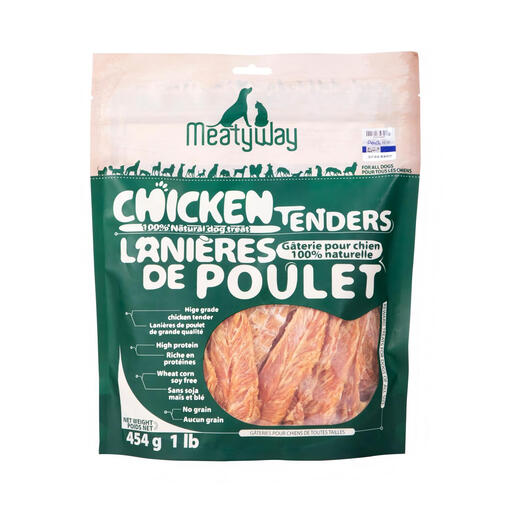
Why this choice suits this profile : These soft chicken strips are easy to break into small pieces. A practical format for your first reward-based training sessions with a small or medium-sized dog.
The product information states that it is made with chicken, contains no cereals and comes in a resealable 454 g pouch. It is still essential to check the label and store the product in a dry place after opening.
At least 30% crude protein, at least 15% fat and a tender texture that is easy to break into portions.
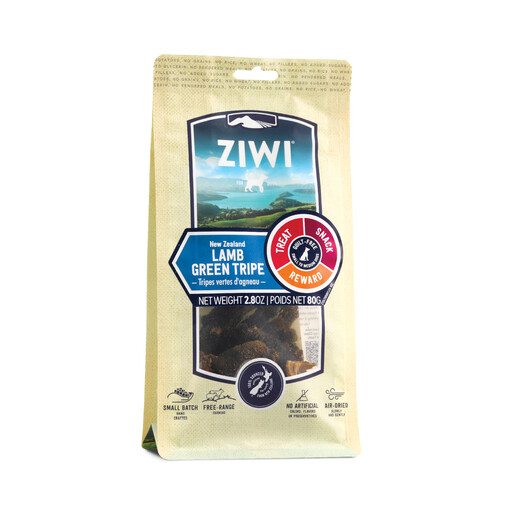
Why this choice suits this profile : This chew made with dried lamb lung is aimed at owners looking for a short ingredients list and a longer-lasting chewing experience.
The product information specifies that this is a complementary food and recommends removing the piece once it becomes small enough to swallow. This is useful advice for reducing risks associated with the chew’s size.
The product information states that it contains at least 60% crude protein and no more than 12% moisture, with a recommendation of 1 to 2 pieces per day depending on the dog.
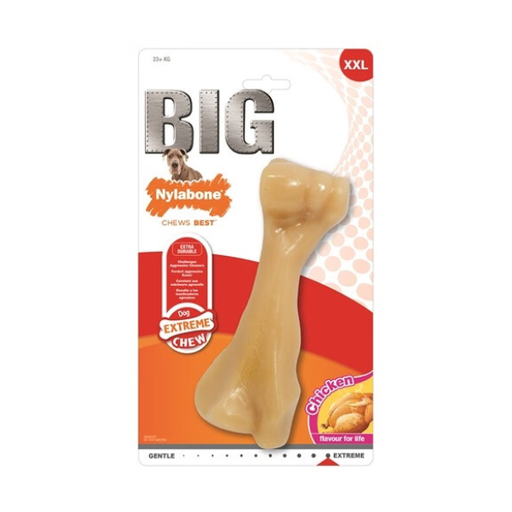
Why this choice suits this profile : This chew toy is designed for dogs weighing over 23 kg that are considered heavy chewers. It combines a nylon structure with a chicken flavour.
The recommended dog size is clearly stated. The product information also recommends inspecting the toy regularly and replacing it when it becomes too small or shows significant wear.
Nylon presented as durable, chicken flavour and can be cleaned with lukewarm water and a mild, non-toxic detergent.
We have put together a complete, real-time selection of products that meet these demanding criteria, as well as European safety standards.
The quantity depends on the dog’s weight, age, activity level and the product’s composition. Treats should generally account for only a limited proportion of the daily energy intake. Check the recommendations on the packaging and adjust the main meals to avoid overfeeding.
No. The claim ‘grain-free’ describes the composition, but does not guarantee better tolerance for every animal. Check the protein sources, fat content and other ingredients. If your dog has an allergy, digestive sensitivity or a prescribed diet, ask your vet for advice.
No. Their texture and shape may contribute to oral hygiene, but they do not replace brushing or a professional mouth check. Above all, choose an appropriate size and remove the product as soon as it becomes damaged or small enough to swallow.