
Livraison le jour même ou le lendemain

Qualité garantie

Débloquez vos offres de bienvenue: Livraison GRATUITE | Jusqu'à -80 % | 30 jours d'essai gratuits à JoyPlus
Téléchargez l'application
Between bites, soft treats, dental sticks and recipes labelled “natural”, it is not always easy to know what to choose. Attractive packaging does not guarantee a suitable composition, a practical format or appropriate use for your dog’s age and size.
Before buying dog treats, it is worth keeping three potential pitfalls in mind:
A reward should be suited to your dog’s build and life stage. Puppy treats do not necessarily meet the same needs or serve the same purpose as those intended for an adult dog.
In particular, check:
For example, some Dentastix for dogs are designed for medium-sized dogs weighing between 10 and 25 kg, while other formats are intended for small dogs. Dental sticks are not necessarily suitable for puppies under 4 months old.
The ingredients list should be considered as a whole. A recipe that highlights chicken may also contain cereals, animal by-products, fats or minerals.
To compare two products, look at:
Chicken treats for dogs can have very different textures. INABA Churu tubes have a moisture content of between 88 and 90%, while MeatyWay dried strips are firmer, with a stated moisture content of 18%. This information will help you choose according to your dog’s preferences and the intended use.
For training, a small reward that is easy to break into pieces will generally be more practical than a long stick. Dog training treats should be quick to give, without disrupting the flow of the session.
Depending on your needs:
Always follow the manufacturer’s recommendations and reduce the main meal if the treats provide a significant number of calories. As a general rule, they should not make up too large a proportion of your dog’s daily intake.
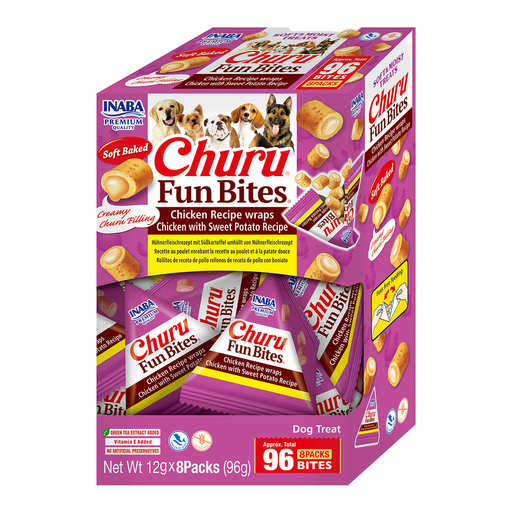
Why this choice suits this profile : These 40 g soft bites can be used as rewards during early training exercises or between meals. Their recipe combining chicken and sweet potato, along with their stated moisture content of 82%, provides an alternative to dry biscuits.
The texture and format are clearly described, making it possible to check the intended use before buying and avoid confusing this treat with a complete meal.
A chicken and sweet potato recipe, a stated moisture content of 82% and a format suited to both rewards and training sessions.
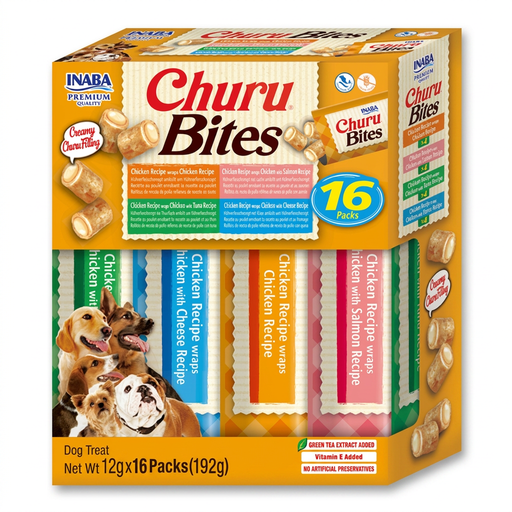
Why this choice suits this profile : This multipack of 16 12 g portions offers four chicken-based recipes, with a soft outer layer and a creamy centre. It is ideal for owners looking for more variety in their rewards or as a topping.
The individual portions help prevent storage issues and make it easier to control the amount served.
Four flavours, a stated moisture content of 68%, 24% protein and just 3% fat according to the product details.
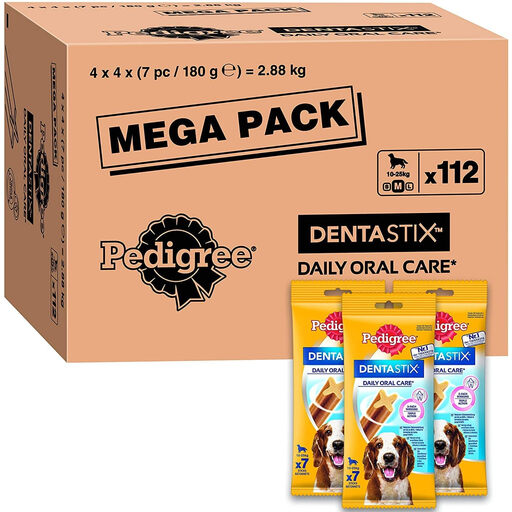
Why this choice suits this profile : The pack of 112 sticks, divided into 16 sachets, is suitable for a daily routine for a dog weighing 10 to 25 kg, provided the instructions in the product details are followed.
The target weight and frequency of one stick per day are clearly stated. This means you cannot choose a dental format without checking that it matches your dog’s size.
An X-shaped design, a texture described as slightly abrasive and portioned packaging. The product details state that daily use can reduce tartar formation by up to 80% : this claim comes from the manufacturer’s own marketing.
We have put together a complete, real-time selection of products that meet these demanding criteria and European safety requirements.
A dog treat is still a complementary food. To prevent overfeeding:
Moist products, such as tubes and some soft treats, should generally be used soon after opening and refrigerated when stated on the label. Pouches of dry products should be carefully resealed and stored in a cool, dry place.
The amount depends on your dog’s weight, age, activity level and main diet. Check the product’s feeding guide and make sure treats do not replace meals. If your dog follows a special diet, ask your vet for advice.
Choose small bites that are easy to chew and simple to break into pieces. Chicken recipes, soft treats and small formats are often well suited to quickly rewarding a behaviour without interrupting the session.
No. Dental sticks can complement an oral hygiene routine, in line with the manufacturer’s instructions, but they do not replace veterinary check-ups or the care recommended for your dog. Always choose a format suited to your dog’s weight and supervise its consumption.