
Livraison le jour même ou le lendemain

Qualité garantie

Débloquez vos offres de bienvenue: Livraison GRATUITE | Jusqu'à -80 % | 30 jours d'essai gratuits à JoyPlus
Téléchargez l'application
Choosing dog treats isn’t just about comparing flavours or hunting for deals. Between bites labelled “natural”, dental sticks and training rewards, the ingredients, texture and storage requirements can make a huge difference to everyday use.
The right choice depends above all on your dog’s size, age, how often you give treats and what you want to achieve. Here are the key factors to check before you fill your basket with doggy treats.
Most rewards are complementary foods. That means they don’t replace the main meal. Giving them too often or in large amounts can upset your dog’s daily energy intake, especially if they’re not very active or prone to gaining weight.
On the packaging, look out for:
For training, choose rewards that are easy to cut or break into pieces. And go easy: according to the guidelines on some products, treats should generally make up no more than 10% of daily calorie intake.
A label like “with chicken”, “with beef” or “with cheese” should always be checked against the ingredients list and the percentages given. For chicken dog treats, look at where chicken actually sits in the recipe, and whether there are any cereals, sugars, oils or additives.
A grain-free recipe isn’t automatically right for every dog. As for the term “natural”, it mostly refers to a formulation or marketing angle – on its own, it doesn’t tell you about texture, energy density or how well your dog will tolerate it.
A very hard bite can be unsuitable for a puppy, an older dog or one that struggles to chew. On the other hand, a soft dog treat is often more practical during a training session, but needs more care once opened.
Size also needs to match your dog’s jaw. Always supervise your dog while they chew, especially with sticks or dried meat pieces. Remove any pieces that are too large, sharp or brittle.
European packaging usually lists the analytical constituents: crude protein, crude fat, crude fibre, ash and moisture. These figures alone don’t tell you everything, but they do make it easier to compare different products.
If your dog has an allergy or food sensitivity, look at the whole recipe and introduce any new treat gradually.
Training treats need to be small, tasty and quick to eat so they don’t break the flow of the exercise. Tube formats, like INABA Churu purées, can be given straight from the tube, used as a reward or added as a topping, depending on the manufacturer’s instructions.
Dental sticks are designed to be chewed and often have a specific shape or texture. However, they don’t replace your usual dental care routine. Always follow the age and weight guidelines on the pack: some Pedigree Dentastix sizes are for medium dogs weighing 10 to 25 kg, while others are suitable for small dogs.
Soft treats and high-moisture products usually need to be eaten quickly after opening. Some INABA products recommend keeping them in the fridge and using them within 24 hours. For bags of dry bites, reseal the pack carefully and stick to the date on the label.
A natural dog treat is no exception to these rules. Always store products in a cool, dry place away from sunlight, and make sure fresh water is always available.
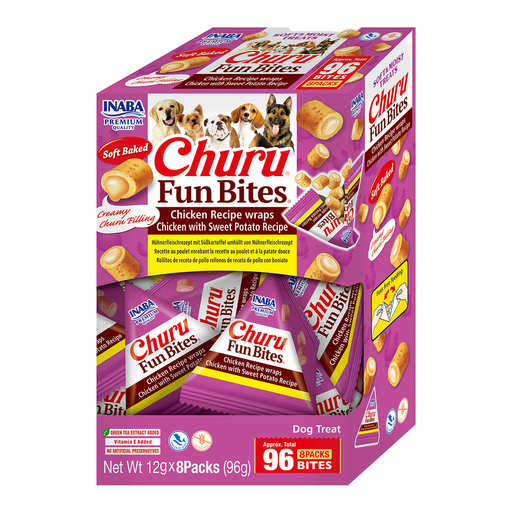
Why this suits this profile: With its 40 g pouch and soft texture, this product is ideal for a first taste of rewards, whether between meals or during training.
The ingredients and analytical constituents are clearly stated: 82% moisture, 11.5% crude protein and 2.2% crude fat.
Chicken, chicken broth and sweet potato in a soft bite, suitable for dogs of all sizes according to the product page.
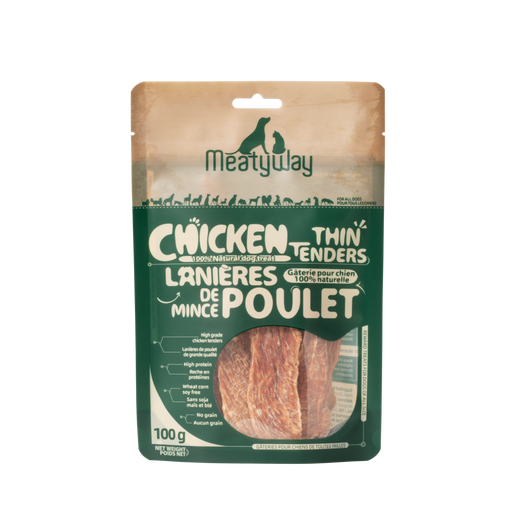
Why this suits this profile: This single-ingredient recipe is aimed at owners who want to check the ingredients quickly and control the amounts they give.
The product page mentions a chicken recipe with no cereals or artificial additives. However, you should still check the label on the pack you receive.
100% chicken according to the description, a soft texture and a stated minimum of 70% crude protein.
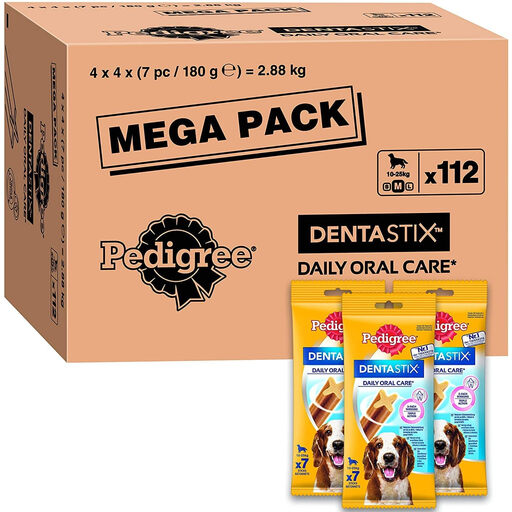
Why this suits this profile: With 112 sticks in the pack, this product helps you establish a daily routine for medium dogs weighing 10 to 25 kg, according to the product page.
The format, target weight and frequency of use are all specified. However, this product should not be given to puppies under 4 months old.
An X-shape, a chewy texture and individual packs of seven sticks to make daily distribution easier.
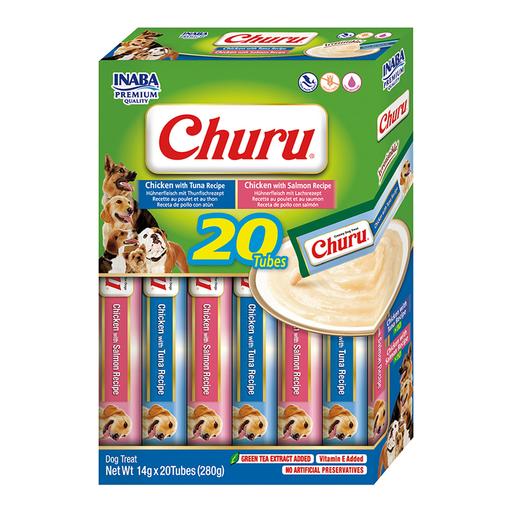
Why this suits this profile: The individual tubes are easy to use for sharing a reward, working on training or adding to a wet or dry meal.
The 12 g format makes portioning easy, while the product page states around 90% moisture. Once opened, the tube must be kept in the fridge and used quickly.
Two chicken-fish combinations, 20 individual tubes and the option to use as a reward or a topping.
We’ve put together a full, real-time updated list of products that fully meet these strict selection criteria and European safety regulations.
The amount depends on your dog’s weight, age, activity level and the recipe you choose. Check the feeding guide on the product and adjust the main meal accordingly. Rewards should be occasional or factored into the daily calorie intake.
Go for a product that clearly states the recommended age, with a suitable size and a texture that’s easy to chew. Some puppy treats are specially formulated for young dogs, while dental sticks aren’t always suitable for animals under 4 months. Always check the instructions on the packaging.
No. They can complement a dental care routine, following the manufacturer’s instructions, but they don’t replace regular care or a vet’s advice if your dog has discomfort, persistent bad breath or visible plaque on their teeth.