
Livraison le jour même ou le lendemain

Qualité garantie

Débloquez vos offres de bienvenue: Livraison GRATUITE | Jusqu'à -80 % | 30 jours d'essai gratuits à JoyPlus
Téléchargez l'application
Dog treats are used to reward your companion, keep them occupied, or support a training session. But an appealing packet alone isn't enough to make the right choice. Between high-calorie biscuits, dental hygiene claims that can be tricky to decode, and awkward formats, some purchases end up at the back of a cupboard.
Before ordering dog treats, take a moment to check three things: the ingredients, the format, and the intended use. Is your dog small or large? Do they need a quick reward during training, a chew treat, or something easy to store? Asking yourself these few questions will help you compare the different options with a bit more perspective.
Most dog snacks are complementary foods. They are not a replacement for a complete and balanced diet. A claim like "rich in meat" or "with chicken" describes a feature of the recipe, but on its own, it doesn't tell you about the overall nutritional balance for your pet.
Take the time to read the legal description, the ingredient list, and the analytical constituents. Treats should always be suitable for your dog's size, age, activity level, and body condition.
A natural dog treat might have a short ingredient list, but that doesn't mean it's right for every animal. Similarly, a grain-free recipe could be higher in fat or calories. The word "natural" doesn't let you off the hook when it comes to checking the ingredients, moisture content, and feeding guidelines.
A small, soft bite is often better for training than a large stick. On the other hand, a chew treat for dogs should be chosen based on its size and your dog's ability to eat it without gulping it down. Very moist products usually need to be sealed carefully and sometimes kept in the fridge after opening.
The ingredient list is presented in descending order by weight. Pay particular attention to:
For example, some chicken dog treats have a moisture content above 80%, while dry biscuits are around 10 to 12%. The weight of the packet alone isn't enough to directly compare two products.
For training treats, choose a texture that breaks apart easily or a small bite size. This way, you can give lots of rewards without handing out too big a portion with each exercise.
Dental sticks for dogs and chew products take more time. Give them under supervision and always have fresh water available. Also check the minimum age and weight range stated on the packaging.
Look at the best-before date, the closure system, and how long the product lasts once opened. Individual portions are handy for moist products, while larger bags are better for households that give treats every day.
If needed, slightly reduce the amount of main food to keep the calorie intake consistent. If your dog has a known allergy, is overweight, or is on a specific diet, ask your vet for advice before changing their eating habits.
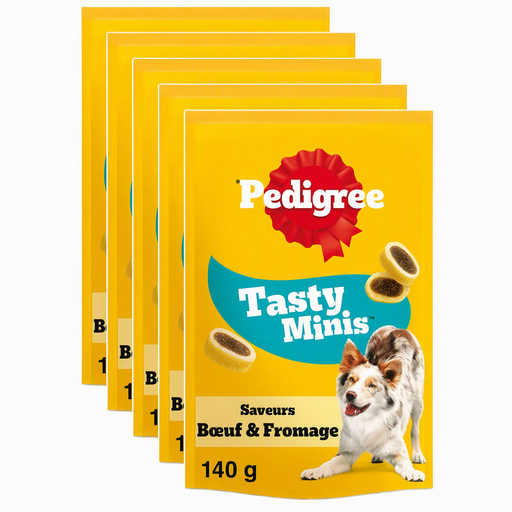
Why this choice suits this profile: The 700 g format is ideal for households that regularly give small rewards to a young dog. The bites can be used during training or offered between meals, following the guidelines on the packaging.
The product page clearly states it is a complementary food for young dogs. So it shouldn't be mistaken for a complete meal.
Miniature bites, 25% crude protein, 10% fat, and a resealable bag.
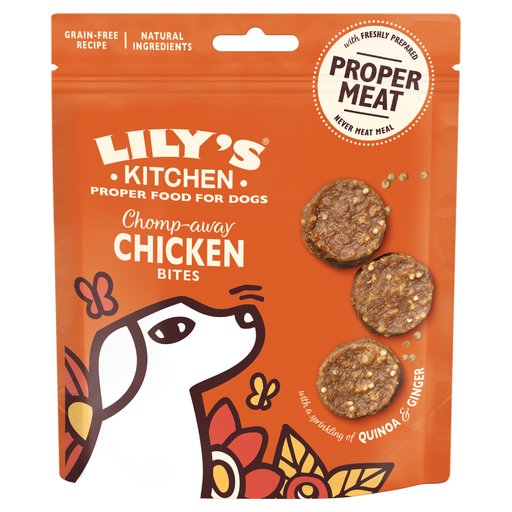
Why this choice suits this profile: This recipe is aimed at owners who want to closely examine the ingredients of a reward and prefer a bite that works well for training or bonding moments.
The product page details the presence of 80% chicken, 2% quinoa, and 0.5% ginger. This information lets you look beyond the claims on the front of the packet.
36% crude protein, 20% fat, and recommendations of up to five bites per day.
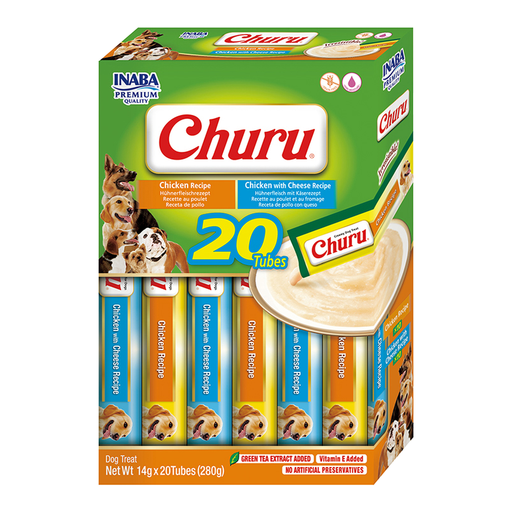
Why this choice suits this profile: The individual tubes are easy to carry and can be used as a reward, a topper on food, or to help your dog take a tablet, depending on their needs.
The stated water content is 88%, and the product page makes it clear this is a reward, not a meal. Once opened, the tube must be kept in the fridge and used within 24 hours.
20 tubes of 12 g, two chicken recipes, and can be given straight from the packaging.
Dental sticks for dogs serve a different purpose. The Pedigree DENTASTIX model shown here, for dogs weighing 10 to 25 kg, recommends giving one stick per day. According to the manufacturer, its X-shape and slightly abrasive texture are designed to help mechanically clean teeth during chewing. This indication is not a substitute for professional dental care, of course.
We've put together a complete, real-time list of products that meet these strict selection criteria and European safety regulations.
There's no one-size-fits-all amount. Follow the recommendations on the product and adjust them to your dog's weight, age, activity level, and main food ration. Treats should only make up a small part of their daily intake. For a dog that is prone to weight gain or on a special diet, ask your vet for advice.
A small bite that's easy to swallow or break apart is usually best. Soft textures, like some chicken bites, let you move through exercises without breaking the flow of the session. Avoid products that take a long time to chew when you need an immediate reward.
Dry biscuits keep well in a tightly sealed bag in a cool, dry place. Moist treats or tube treats should be stored according to the instructions on the packaging; some need to go in the fridge and must be used quickly after opening. Always have fresh water available for your dog.