
Livraison le jour même ou le lendemain

Qualité garantie

Débloquez vos offres de bienvenue: Livraison GRATUITE | Jusqu'à -80 % | 30 jours d'essai gratuits à JoyPlus
Téléchargez l'application
Choosing dog treats isn’t simply a matter of picking your pet’s favourite flavour. Between the ‘natural’ claims, the grain-free recipes and the dental chews, some essential information can easily slip under the radar. A poorly chosen treat can be too high in calories, difficult to break into pieces, or unsuitable for your dog’s age and size.
Here are the criteria to consider before you buy, along with a selection of products suited to different uses in the UK.
A label that says ‘chicken’ or ‘cheese’ doesn’t necessarily mean that ingredient forms the base of the recipe. Always check the ingredients list, which is presented in descending order, along with any percentages that are stated.
For example, Pedigree Tasty Minis dog biscuits contain cereals, meat derivatives and fats, with 4% beef and 4% cheese powder according to the available information. They can work as an everyday reward, but their composition is nothing like that of a treat made primarily from meat.
Treats are added to your dog’s main diet. The general rule is to limit complementary foods to around 10% of daily calorie intake, then adjust the regular meal portion if needed. The amount should also take into account your dog’s weight, age, activity level and physical condition.
Smaller formats, such as certain dog bites, are handy for giving multiple rewards during a training session. On the other hand, a large strip or a whole stick can represent a significant portion of a small dog’s daily ration.
Dental sticks for dogs are sometimes designed with a shape and texture intended to support chewing. However, they do not replace the care recommended by a veterinary professional. Always check the recommended size, the minimum age and whether your dog is able to chew properly.
A hard or bulky treat may be unsuitable for a puppy, an older dog, or a pet that tends to swallow without chewing.
For training treats, choose a format that’s easy to break into pieces and a texture that won’t crumble in your pocket. Recipes based on chicken, duck or other proteins can suit some dogs’ preferences, but any new food source should be introduced gradually.
If you’re looking for grain-free dog treats, make sure this feature is clearly stated in the ingredients list, not just in the product title. A grain-free recipe isn’t automatically suitable for every dog: the full ingredients list, fat content and the amount you give remain the deciding factors.
The analytical constituents allow you to compare products on a more objective basis. Dry foods generally have a low moisture content, whereas soft bites can contain much more. For example, INABA chicken bites state 82% moisture, 11.5% protein and 2.2% fat.
A high water content gives a soft, appealing texture, but it often requires more care after opening. Dried foods and chicken dog treats made from dried meat keep differently: reseal the packet carefully and follow the instructions on the packaging.
A puppy doesn’t have the same chewing ability as an adult dog. When choosing puppy treats, look for a clear age recommendation and opt for a size suited to their jaw.
In every case, give the treat under supervision, leave fresh water available, and remove any piece that becomes too small or could be swallowed awkwardly. A treat remains a complementary food: it never replaces a complete diet.
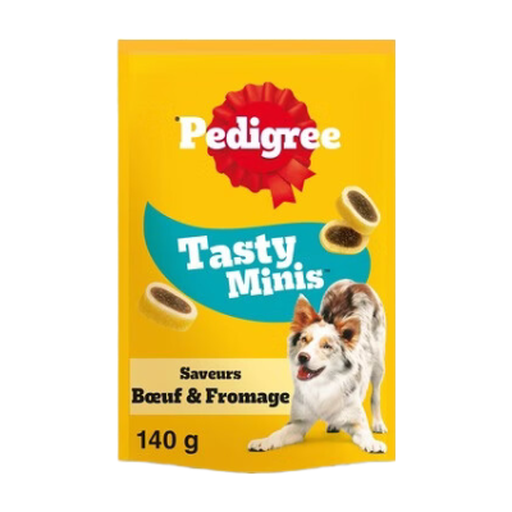
Why this choice suits this profile: Its small size works well for early reward sessions and lets you gradually increase the amount you give.
The 140 g bag keeps the initial investment low and makes it easier to check your dog’s digestive tolerance.
Mini format, 25% stated analytical protein, with a beef and cheese recipe.
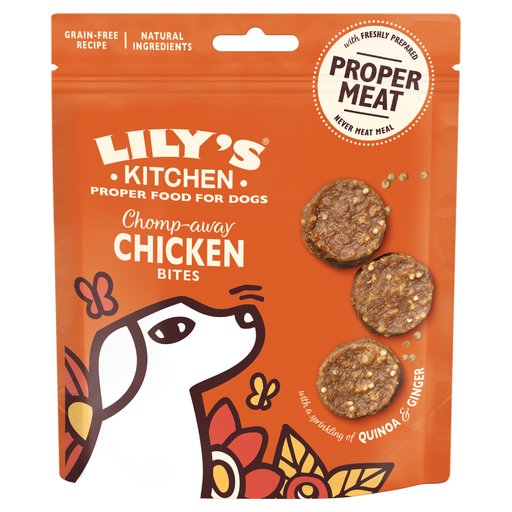
Why this choice suits this profile: This recipe is aimed at owners who want a short ingredients list with a clearly identified animal source.
The ingredients list states 80% chicken, along with quinoa and ginger, rather than just a flavouring mention.
Stated grain-free recipe, 36% analytical protein and a 70 g format.
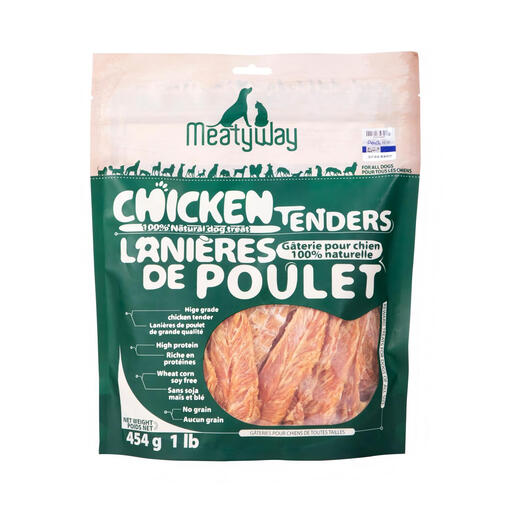
Why this choice suits this profile: The 454 g bag works well for households that give treats regularly during training or daily activities.
Its soft texture can be easily divided into small pieces, so you don’t have to give a whole portion for every command.
Chicken listed as an ingredient, grain-free recipe and at least 30% stated analytical protein.
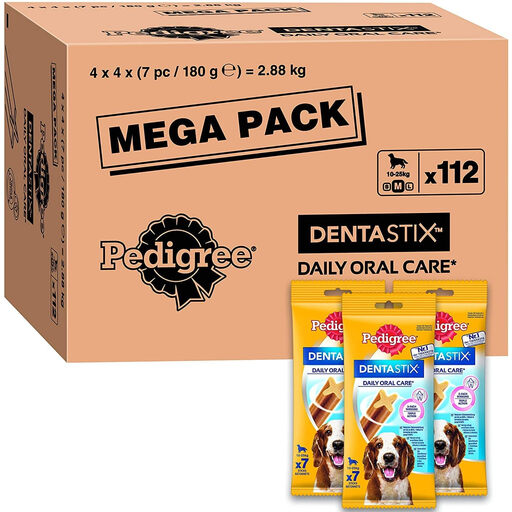
Why this choice suits this profile: The individually wrapped sticks fit easily into a regular routine for dogs weighing 10 to 25 kg.
The weight range and minimum age are clearly stated, which reduces the risk of choosing a stick that’s the wrong size.
X-shape, chewy texture and 112 sticks divided into 16 packs. The brand claims an effect on plaque; this claim should be treated as manufacturer information.
We’ve put together a comprehensive, real-time updated list of products that meet these demanding selection criteria and European safety regulations.
There’s no universal amount. Follow the manufacturer’s recommendations, take your dog’s weight and activity level into account, then reduce their regular meal portion if you’re giving lots of rewards. Treats should never replace a complete food.
Choose a size suited to their jaw, a texture that’s easy to chew, and a product with an age recommendation that matches their profile. Puppy treats should be introduced gradually, keeping a close eye on the first few times they eat them.
The term ‘natural’ isn’t enough to judge a product’s quality or suitability. Check the full ingredients list, the analytical constituents, the portion size and the storage instructions. If your dog has an allergy, a specific diet or a dental problem, ask your vet for advice before changing their eating habits.