
Livraison le jour même ou le lendemain

Qualité garantie

Débloquez vos offres de bienvenue: Livraison GRATUITE | Jusqu'à -80 % | 30 jours d'essai gratuits à JoyPlus
Téléchargez l'application
Dog treats are used to reward, occupy or simply add a bit of variety to your pet’s day. But an attractive packet alone isn’t enough to make the right choice. Between “natural” claims, grain-free recipes and family-sized packs, certain details can quickly turn a practical purchase into a product that’s not quite right.
Most dog rewards are complementary foods. They are not a substitute for main meals. A product may boast a short ingredient list or a high protein content while still being relatively high in calories.
To maintain your pet’s dietary balance, take into account the amount you give each day and slightly reduce their main meal if needed. The weight, age and activity guidelines on the packaging should always be your reference.
“Natural”, “grain-free”, “with chicken” or “high in protein” don’t necessarily describe the whole recipe. Instead, look at:
A chicken dog treat may also contain broth, cereals, animal by-products or other protein sources. That’s not necessarily a problem, but it’s good to know if your dog has a known food sensitivity.
A small, soft bite is often ideal for dog training, as it can be given quickly. In contrast, a chew stick for dogs takes longer and should be given under supervision. A piece that’s too hard, too large or difficult to break apart may not be suitable for a puppy or a small dog.
For training treats, choose a format that’s easy to break apart and small enough to give multiple rewards without overdoing it. Soft bites and strips are particularly handy during walks.
Dog biscuits are generally drier and crunchier. They store easily, but their size must match your pet’s build. For a puppy, check the minimum age stated on the packaging: some products aren’t suitable for dogs under 4 months old.
Don’t stop at the first ingredient. Compare the levels of fat, protein and moisture. Very moist products, such as certain bites in sauce or jelly, may be easier to chew, but they often need to be eaten quickly after opening, following the manufacturer’s instructions.
Grain-free dog treats can suit a compositional preference, but the absence of grains alone doesn’t make them a nutritionally sound choice. Examine the full recipe and the recommended portion.
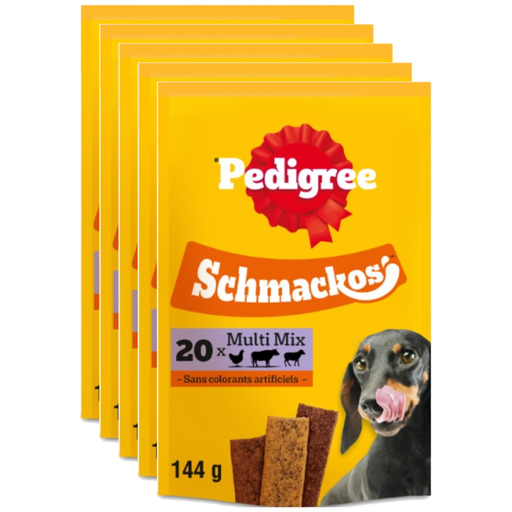
Why this choice suits this profile: The strip format and 100-piece pack mean you have rewards for several training sessions, with quantities indicated according to the dog’s weight.
The daily portion is detailed for small, medium and large dogs. However, you still need to reduce the main meal according to the amount given.
Three flavours, a soft texture and fewer than 30 kcal per piece according to the product sheet.
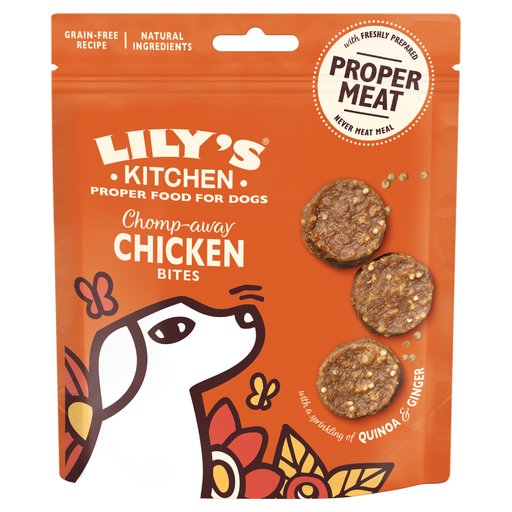
Why this choice suits this profile: This recipe features 80% freshly prepared chicken, 2% quinoa and 0.5% ginger. It’s aimed at those who scrutinise the ingredients list.
The product sheet provides the main percentages and analytical constituents, including 36% protein, 20% fat and 385 kcal per 100 g.
A grain-free recipe with no added sugar, suitable for dogs from 4 months old according to the product sheet.
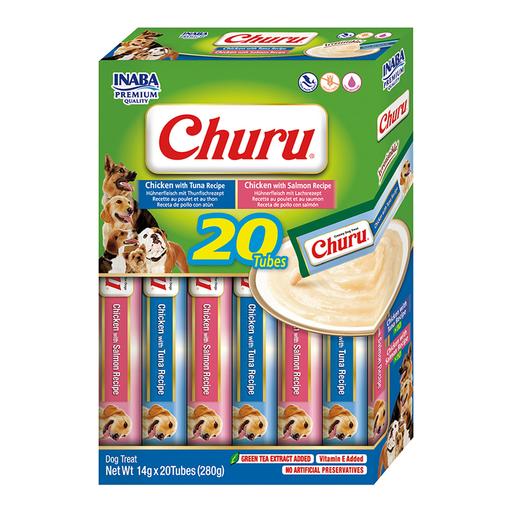
Why this choice suits this profile: The individual purée tubes are ideal for training sessions, on the go or as a topping on the usual meal.
The multipack makes it easy to control individual portions, while the stated 90% moisture content clearly sets this format apart from dry biscuits.
20 individual tubes, two chicken-seafood combinations and the option to use as a reward or topping.
We’ve put together a comprehensive, real-time updated list of products that meet these strict selection criteria and European safety regulations.
Start with a small amount when introducing new natural dog treats or a new protein source. Observe your pet’s reaction and follow the storage instructions. After opening, some moist products need to be refrigerated and used quickly.
If your dog is sensitive, make a note of the ingredients already in their diet. For a special diet, an unusual reaction or any concerns about a puppy, seek advice from a vet. Also, keep fresh water available and always supervise your dog when they’re chewing a large product.
The amount depends on the dog’s weight, age, activity level and the energy density of the product. Rewards should remain complementary to meals. Follow the table on the packaging and adjust the main meal to avoid overfeeding.
Choose puppy treats with a clear age indication, and a size and texture that’s easy to manage. Small bites are often practical for training. Avoid products that are too hard or too large, and supervise your pet while they eat.
No. Dental dog treats can be part of a chewing routine, following the manufacturer’s instructions, but they don’t replace proper dental care or the advice of a veterinary professional.