
Livraison le jour même ou le lendemain

Qualité garantie

Débloquez vos offres de bienvenue: Livraison GRATUITE | Jusqu'à -80 % | 30 jours d'essai gratuits à JoyPlus
Téléchargez l'application
Dog treats can be used to reward your companion, support training, keep them occupied or occasionally complement their diet. However, attractive packaging alone does not guarantee that a product is suitable for your dog’s size, age or chewing habits.
Three mistakes are particularly common when making a choice:
Start by identifying the product’s legal designation: complementary food for dogs, reward or product intended to supplement a meal. This wording is a reminder that quantities should be carefully controlled.
Next, review the ingredient list, which is presented in descending order by weight. For chicken treats for dogs, check how prominently chicken actually features in the recipe. Highlighting an ingredient on the front of the pack does not necessarily mean that it is the main ingredient. Similarly, a recipe marketed as a natural dog treat may contain several additives or animal by-products: only the label can confirm what is really inside.
Analytical constituents also provide useful points of comparison:
For training, choose dog training treats that are easy to break, compact and quick to eat. A reward that requires several minutes of chewing disrupts the pace of an exercise.
Soft bites are well suited to short sessions and dogs that prefer tender textures. Meat strips can be cut into small pieces, while dog chew sticks are better suited to longer periods of occupation.
Keep in mind, however, that a dental treat is not a medical treatment. Its shape and texture may mechanically encourage chewing, but they do not replace oral hygiene or advice from a professional.
Choose a reward that is appropriate for your dog’s size. For a small dog, a large treat should be easy to break without creating pieces that are difficult to swallow. For chew products, supervision remains essential.
After opening, follow the instructions on the packaging. High-moisture products generally need to be consumed quickly and, in some cases, refrigerated. Dry foods should be kept away from heat and moisture in a properly resealed bag.
As a general rule, rewards should account for only a small proportion of your dog’s daily energy intake. If recommended by the manufacturer, reduce the main food ration accordingly and regularly monitor your dog’s weight and body condition.
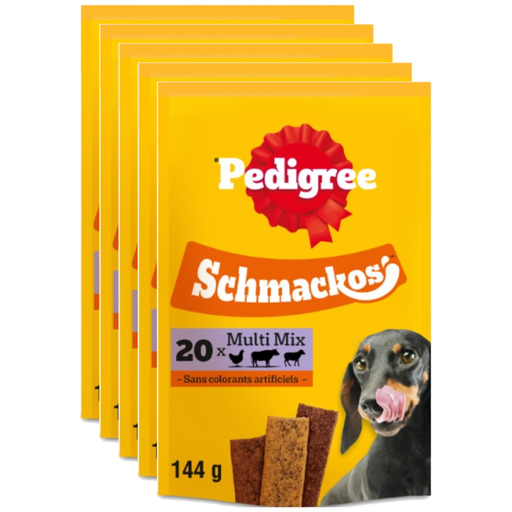
Why it suits this profile: this large pack of soft strips may suit owners who regularly give rewards to an adult dog.
The product information recommends up to 1 piece for a small dog, 2 for a medium-sized dog and 4 for a large dog. Adjust meal portions accordingly.
Three flavours, fewer than 30 kcal per piece as stated, and a strip format that is easy to portion.
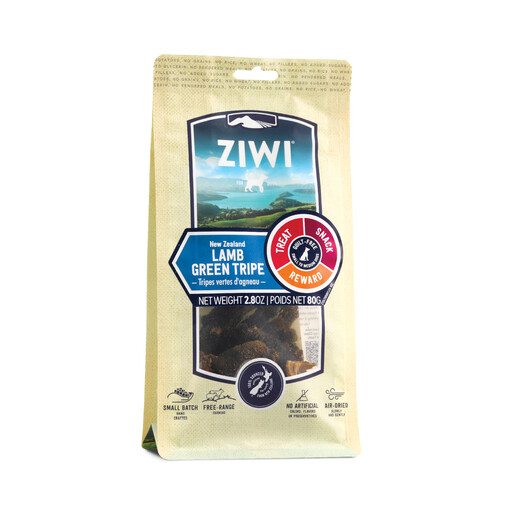
Why it suits this profile: this chew is aimed at owners looking for a recipe that specifies lamb lung and uses a slow-drying process.
This product is a complementary food, not a meal. Remove the piece once it becomes small enough to swallow.
The product information states at least 60% crude protein, no more than 12% moisture and recommends 1 to 2 pieces per day depending on the dog.
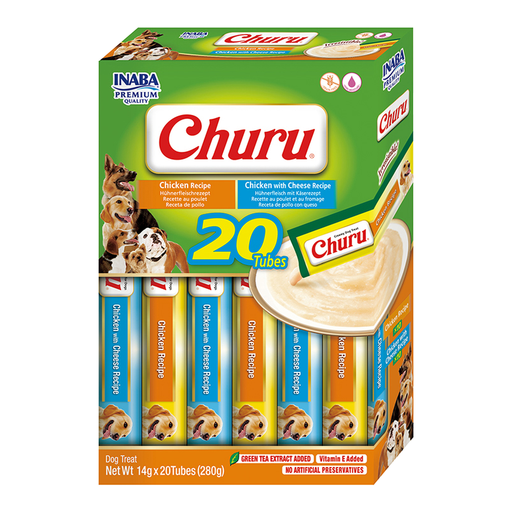
Why it suits this profile: its purée-like texture and individually portioned packaging make it suitable as a reward at home, on walks or mixed into food.
With approximately 88% moisture, this product should not be stored like a dry treat. Once opened, the tube should be refrigerated and consumed within 24 hours.
20 tubes of 12 g, two chicken recipes and the flexibility to use it as a reward or topper.
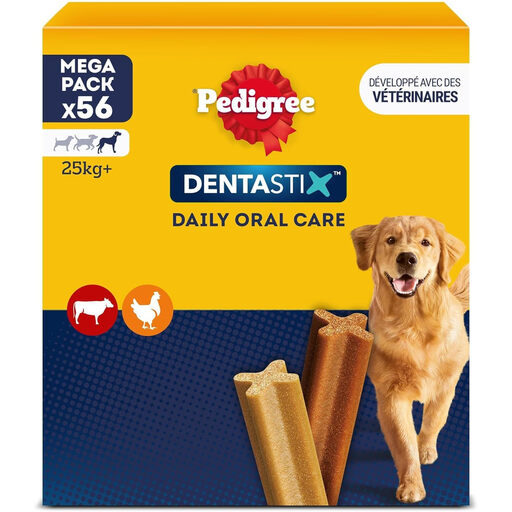
Why it suits this profile: the daily portion format is suitable for adult dogs weighing 25 kg or more that are already accustomed to chew products.
The product information recommends one stick per day and advises against giving it to puppies under 4 months old. Chewing does not replace brushing or veterinary care.
An X-shaped format, a slightly abrasive texture according to the product information and 8 packs of 7 sticks for easier portion tracking.
We have brought together an up-to-date selection of products that meet these criteria and the everyday needs of dogs in France.
It depends on your dog’s weight, age, activity level and the recipe you choose. Start by following the manufacturer’s feeding guide, then reduce the main food ration if necessary. For training, it is better to give very small pieces frequently than one large bite for every command.
No. “Grain-free” describes a formulation characteristic, but it does not by itself indicate whether a product is suitable for your dog. Compare the complete ingredient list, fat content, piece size and your dog’s tolerance. If your dog has a known food sensitivity, ask your vet for advice.
Wet products or treats in purée form should be stored in a cool place before opening, then consumed quickly once opened. Some, such as reward tubes, need to be refrigerated. Always check the manufacturer’s instructions and do not give your dog a product if its smell, appearance or packaging seems unusual.