
Livraison le jour même ou le lendemain

Qualité garantie

Débloquez vos offres de bienvenue: Livraison GRATUITE | Jusqu'à -80 % | 30 jours d'essai gratuits à JoyPlus
Téléchargez l'application
Choosing the right dog kibble can quickly become a daunting task. Faced with overloaded shelves and ever-more-tempting marketing promises, it's hard to sort through the options. At Joybuy, our role as product experts is to help you see things more clearly. Let's skip the jargon and break down what truly matters for your companion's health.
Before we get to our top picks, let's debunk two common pitfalls that many owners fall into:
To make the right choice, focus on three objective criteria that never mislead.
The golden rule is simple: ingredients are always listed in descending order by weight. A quality dog food must always feature an animal protein source at the top of the list.
Pay attention to the terminology:
These percentages, mandatory on every bag, are the food's true nutritional profile:
A dog's nutritional needs evolve throughout its life.
Rather than an endless list, here are three top products that meet distinct needs and budgets, all selected according to the criteria we've just discussed.
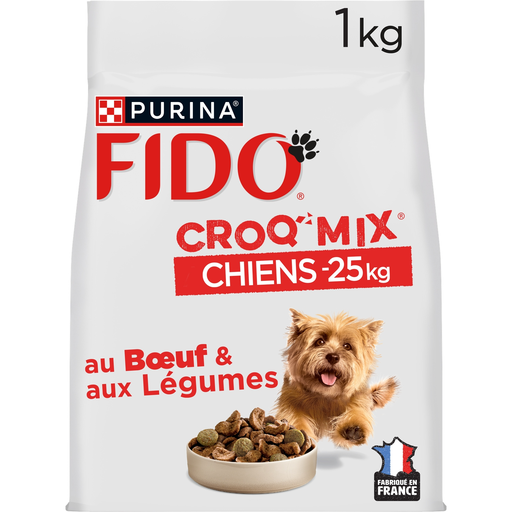
Why this choice? A complete and balanced formula that focuses on the essentials. Offered by a trusted and accessible brand, it's perfect for owners seeking a reliable and affordable solution for their small to medium-sized adult dog (under 25 kg).
Rather than getting lost in marketing claims, this recipe relies on a simple and clear composition (beef protein, vegetables) that provides the essential nutrients for a healthy adult dog.
Complete nutritional balance; Made in France with 70% of ingredients sourced from France.
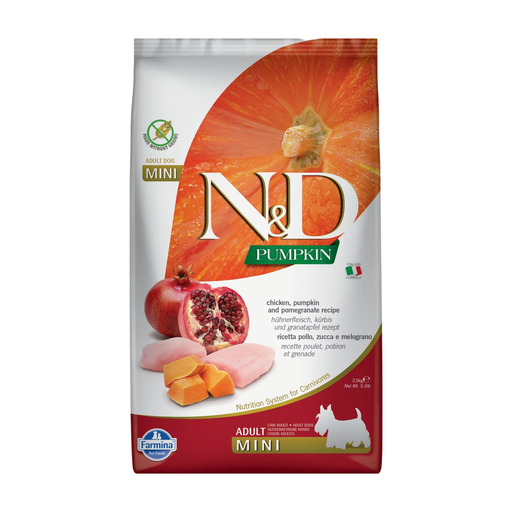
Why this choice? A benchmark for owners who demand a high animal protein content and a grain-free composition, aiming for a diet they consider more "natural" for their small companion.
The ingredient list is crystal clear: fresh chicken comes first. The brand goes further by specifying that 96% of the proteins are of animal origin. This objective, data-driven fact goes beyond the simple "grain-free" marketing angle.
Very high animal protein content (96% of total); Grain-free formula with pumpkin, valued for its nutritional benefits.
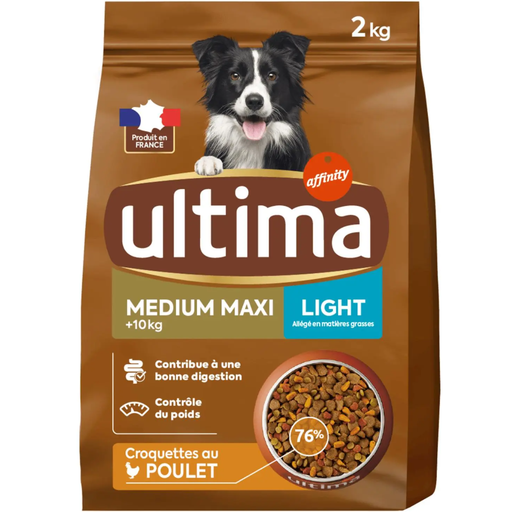
Why this choice? The perfect solution for dogs over 10 kg who are prone to weight gain or have a moderate activity level. This formula helps control calorie intake without sacrificing muscle mass.
Here, the "Light" claim is not just for show: the recipe contains 30% less fat than the brand's standard formula. It is also enriched with L-carnitine to help burn fat.
Reduced fat content (-30%); Enriched with L-carnitine to help maintain muscle mass.
We have put together a complete selection of products that meet these quality criteria and current regulations.
To avoid digestive issues, a smooth transition is essential. Over 7 to 10 days, mix the new kibble with the old, gradually increasing the proportion of the new food until you have completely replaced the old diet.
Not necessarily. The most important thing is the overall quality of the recipe and how well your dog digests it. For an animal with no particular sensitivities, quality whole grains are an excellent source of fibre and energy. Grain-free formulas are most relevant for dogs with proven digestive intolerances or skin allergies.
Yes, dog treats are an excellent training tool and a great way to strengthen your bond. However, they should be given in moderation and never exceed 10% of the daily calorie intake. Opt for healthy treats with a simple composition (dried meat, fruits, vegetables...). And of course, always leave a bowl of fresh water available for your dog.