
Livraison le jour même ou le lendemain

Qualité garantie

Débloquez vos offres de bienvenue: Livraison GRATUITE | Jusqu'à -80 % | 30 jours d'essai gratuits à JoyPlus
Téléchargez l'application
Choosing the right kibble for your dog can often feel like an uphill battle. With shelves overflowing with packages making tempting marketing claims, it's hard to know where to start. Should you opt for a high-protein recipe, a low-fat formula, or a grain-free option?
Our mission is to help you navigate this complex landscape. This guide is designed to give you reliable, objective benchmarks—free from advertising slogans—so you can choose the dog kibble that's truly right for your companion. Together, we'll break down the key points to check before introducing our 2026 selection, curated to meet specific needs.
Before comparing brands, it's crucial to master a few fundamentals. Here are the three points to inspect on the label to make the right choice.
This is the heart of the matter. A careful reading of the label is the only reliable source of information about the kibble's true quality.
Every dog has unique needs. Your companion's age, activity level, and health are the factors that should guide your choice.
This table, mandatory on every bag, is your best ally for comparison. It details the product's nutritional breakdown: percentages of crude protein, crude fat, crude fibre, and crude ash (minerals). Be aware that a very high protein level isn't necessarily a guarantee of absolute quality; the overall balance is what matters most.
After careful analysis, here are three products that stand out for their formulation and their ability to meet specific needs.
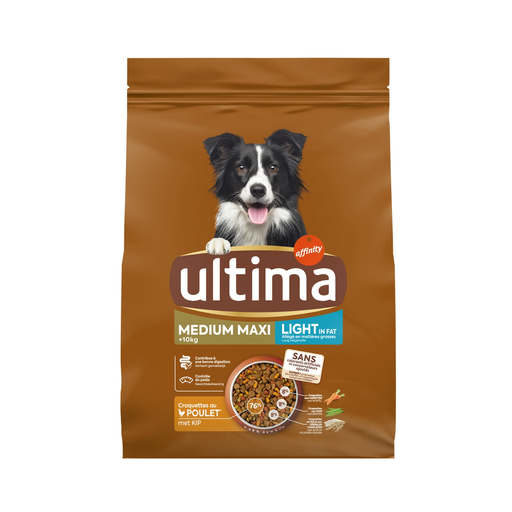
This product's mission: Specially formulated for weight management. With 10.1% fat, it's an effective nutritional solution for dogs prone to weight gain, without compromising on essential nutrients.
Key features:
Who is it for? Ideal for adult dogs (medium to large breeds) in need of light kibble or kibble for sterilised dogs to control their calorie intake.
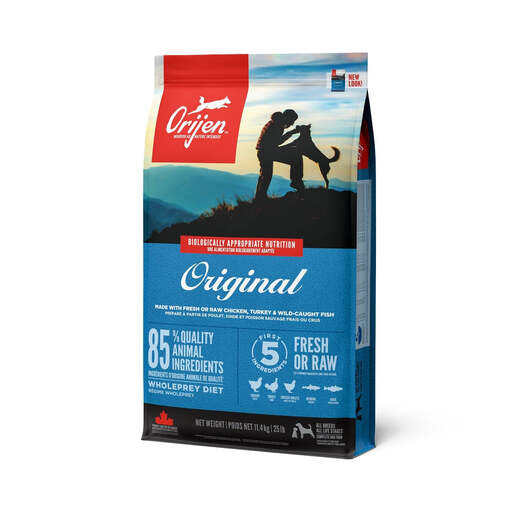
This product's mission: Orijen adopts a "WholePrey" philosophy with a very high protein content from multiple animal sources. An option for those who want to get as close as possible to a meat-based diet.
Key features:
Who is it for? Perfect for active adult dogs whose owners are looking for very high-protein kibble and a composition focused on a diversity of animal-based ingredients.
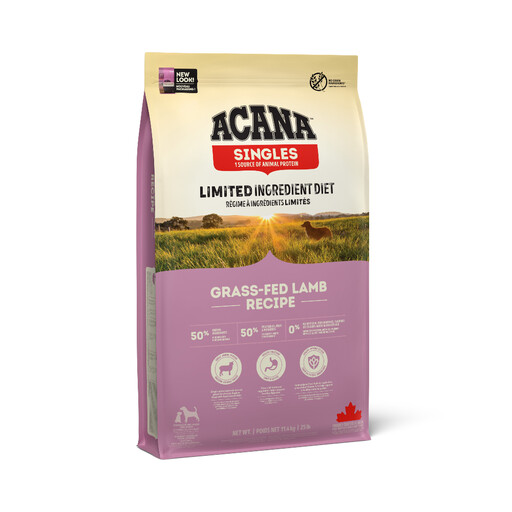
This product's mission: The Acana Singles range is built around a single source of animal protein. A top-tier choice for dogs with sensitive stomachs or those prone to allergies.
Key features:
Who is it for? An excellent option for dogs that require food for sensitive dogs or hypoallergenic kibble. Also suitable for owners looking for a tasty, grain-free formula for a picky dog.
Our selection is an excellent starting point. But because every dog has its own tastes and sensitivities, you may need to try several options before finding the perfect match.
To discover a wider range of kibble suitable for all profiles, check out our complete dog food category.
1. How do I successfully transition to a new kibble? To avoid digestive upset, the introduction should be gradual. Over 7 to 10 days, mix a growing portion of the new kibble with the old one until it's fully replaced.
2. Is grain-free kibble always better? Not necessarily. It is very effective for dogs with intolerances or allergies. For others, good-quality grains are a perfectly suitable source of energy and fibre. It all depends on your dog's tolerance.
3. How much kibble should I feed my dog? The recommended feeding amounts are always listed on the packaging and vary according to the animal's weight. This is a starting point to be adjusted based on their age, activity level, and physical condition. And of course, never forget to leave a bowl of fresh water available for them.