
Livraison le jour même ou le lendemain

Qualité garantie

Débloquez vos offres de bienvenue: Livraison GRATUITE | Jusqu'à -80 % | 30 jours d'essai gratuits à JoyPlus
Téléchargez l'application
Buying dog food is about more than simply choosing your companion’s favourite flavour. With dry food, wet food, veterinary diets and treats all competing for attention, packaging is full of claims that can be difficult to compare. A recipe marketed as “natural” is not necessarily suitable for every dog. Likewise, a product designed for weight control is not automatically appropriate for an animal with a medical condition.
Here are the key criteria to review before placing an order, along with a selection of products available on Joybuy.
A dry dog food or wet food labelled “complete food” is formulated to provide a dog’s daily diet, provided the manufacturer’s feeding guidelines are followed. Dog treats, soft bites and lickable tubes are generally considered complementary foods.
INABA Churu Dog tubes, for example, contain approximately 88% moisture. They can be offered as a reward or used to enhance a meal, but they do not replace a complete diet. Their quantity should therefore be deducted from the dog’s daily allowance.
These marketing claims are not enough to assess whether a recipe is genuinely suitable. Instead, look at:
A grain-free recipe is not necessarily the best choice for a puppy or a sensitive dog. The right product is primarily the one that matches your animal’s specific circumstances.
Once opened, wet dog food should generally be stored in the refrigerator. Depending on the label, some products must be consumed within 24 to 48 hours. Dry food can also lose freshness and palatability if the bag is not properly sealed.
When changing your dog’s diet, gradually mix the old and new food over approximately 5 to 10 days. A transition carried out too quickly can cause digestive upset.
Puppy food should be designed for growth and comply with any guidance relating to the dog’s size or breed. RENSKE Puppy, for example, is presented as a complete dry food for puppies of all breeds from 3 weeks of age, with 28% protein and 19% fat, according to the information provided.
For adult dog food, make sure the product is not intended exclusively for puppies, senior dogs or a specific weight category. A product designed for small dogs weighing less than 10 kg should not be selected for a large dog without first confirming that it is suitable.
Fat content and energy value deserve particular attention in sedentary, neutered or overweight dogs. Ultima Medium-Maxi Light dry dog food contains 11.5% fat and is intended for medium- or large-sized adult dogs weighing more than 10 kg. The brand states that it contains 30% less fat than its standard adult recipe.
This figure should nevertheless be considered alongside the recommended serving size. A lower-fat food can still provide too many calories if the portion is too generous. Weigh meals regularly and monitor changes in your dog’s body condition.
Dog food for joint, heart or kidney problems should not be selected solely on the basis of an online search. Veterinary diets such as Vet Life Canine Joint Formula or Vet Life Canine Kidney Formula are designed for specific nutritional situations. The manufacturer recommends consulting a vet before using the joint formula; the same precaution applies to any renal or cardiac diet.
Do not change the diet of a dog under medical supervision without discussing it with the clinic responsible for its care.
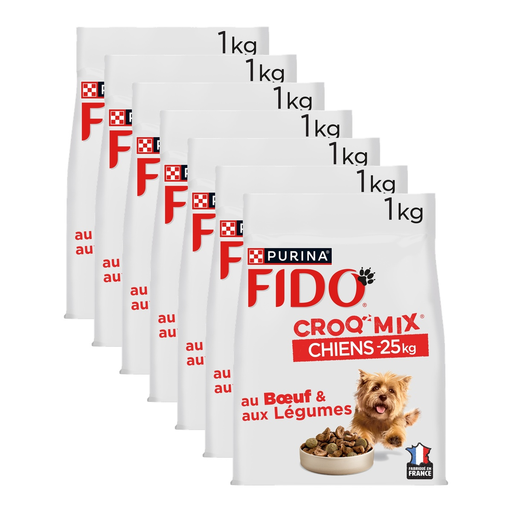
Why this choice suits this profile: a large-format bag designed for owners looking for adult dog food for everyday meals.
The product page clearly states that this is a complete food for adult dogs and recommends a 10-day transition.
A 7 kg bag, 20% crude protein and production stated to take place in France.
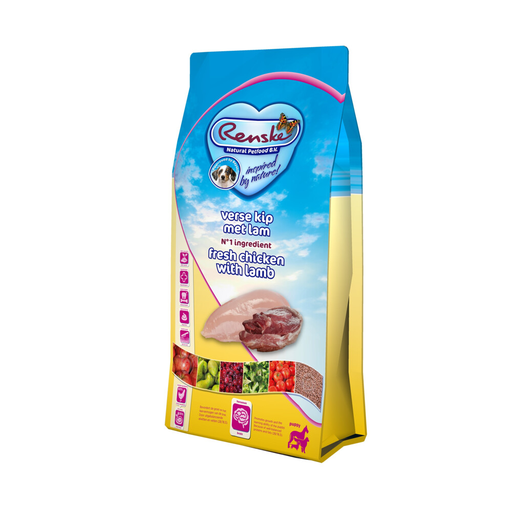
Why this choice suits this profile: a complete puppy recipe with guidance tailored to growth and a gradual 7-day transition.
The label clearly distinguishes puppy food from adult dog food and provides transition instructions.
26% fresh chicken stated, 28% protein and 19% fat, according to the product page.
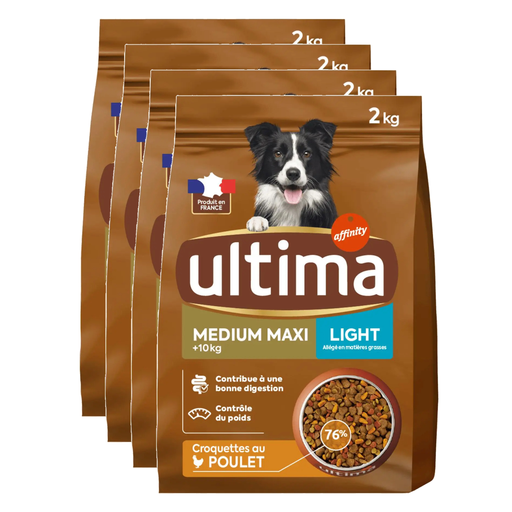
Why this choice suits this profile: an option intended for medium- or large-sized adult dogs when weight and portion sizes need to be monitored closely.
The product clearly states the weight limit — over 10 kg — and does not present itself as a universal medical solution.
An 8 kg bag, 11.5% fat and L-carnitine, according to the manufacturer’s information.
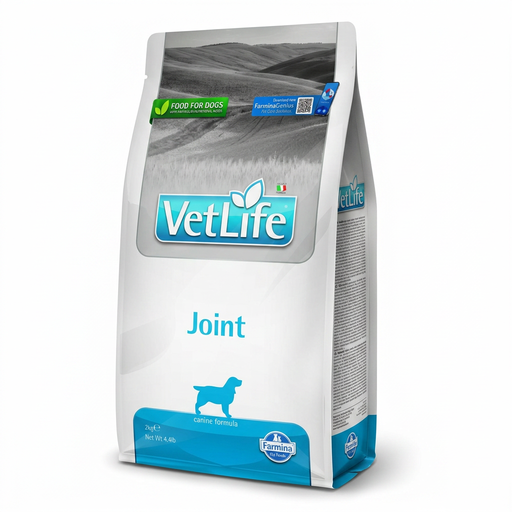
Why this choice suits this profile: a dietary formula to consider only after consulting a vet, when a joint-related nutritional need has been identified.
The product page mentions a limited initial period of use and recommends seeking veterinary advice.
The ingredients include glucosamine, chondroitin and omega-3 fatty acids.
Wet dog food can complement dry food or replace it when labelled as a complete food. CESAR Garden Inspirations terrines, for example, contain 82.5% moisture and are marketed as complete food for adult dogs. Once opened, they should be refrigerated and consumed within two days.
Treats remain complementary foods. INABA Fun Bites with chicken and cheese, INABA chicken bites and Pedigree Schmackos strips can be used during training sessions. If treats become part of your dog’s daily routine, remember to reduce the main food allowance accordingly. Treats should never replace meals.
Dog dental chews can complement an oral hygiene routine, provided you choose a size suited to your dog’s weight and supervise them while chewing. They do not replace tooth brushing or the dental care recommended by a vet.
Explore an updated selection of dog products for everyday meals, specific nutritional needs and rewards.
Start by consulting the feeding chart on the packaging, then adjust the portion according to your dog’s weight, age, activity level and body condition. Regular weigh-ins make it possible to adjust quantities gradually. Treats and added wet food should also be included in the daily intake.
Yes, provided both products suit your dog’s individual profile. When adding wet food, reduce the amount of dry food and monitor your dog’s stools, weight and appetite. As with any recipe change, a gradual transition is preferable.
They may be sold without a prescription, but their use should be discussed with a vet when they target the kidneys, heart, joints or another medical condition. The formula and duration of use must be appropriate for the animal’s medical history.