
Livraison le jour même ou le lendemain

Qualité garantie

Débloquez vos offres de bienvenue: Livraison GRATUITE | Jusqu'à -80 % | 30 jours d'essai gratuits à JoyPlus
Téléchargez l'application
Choosing the right dog food can quickly become overwhelming. Between the eye-catching packaging, endless ingredient lists, and marketing jargon, it's hard to separate fact from fiction. As a product expert for Joybuy, my mission is simple: to help you cut through the noise. Let's decode the labels together to make an informed choice for your companion and, most importantly, to avoid the traps that drain your wallet without truly nourishing your pet.
Before comparing products, let's learn to outsmart the most common marketing strategies.
To make the right choice, you just need to focus on a few objective criteria that don't lie.
The label is packed with valuable information, provided you know how to read it. Here are the keys:
The generic term "meat and animal derivatives" is a red flag. Always favour formulas that specify the species and nature of the meat: "fresh chicken," "dehydrated lamb," etc. This is a sign of traceability and, often, quality. For sensitive stomachs, a single-protein diet (only one source of meat) is often the solution.
A dog's nutritional needs evolve throughout its life. Large-breed dog food, for example, is not formulated in the same way as food for a Chihuahua. The kibble size is adapted to encourage chewing, and the recipe often includes specific nutrients to support joints (glucosamine, chondroitin). Likewise, a growing puppy, an active adult, and a less active senior have very different energy requirements.
Rather than an exhaustive list, here are a few products that perfectly illustrate our criteria and meet very specific needs.
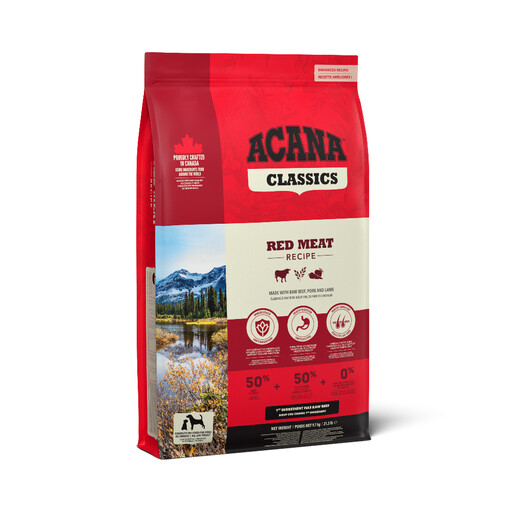
Why we recommend it: Perfect for owners who are particular about protein sources. With 50% quality animal ingredients and 50% whole grains, fruits, and vegetables, it's a balanced recipe for an active adult dog.
The ingredient list is crystal clear: raw beef (16%) is listed first, followed by lamb meal. This is a far cry from vague formulations like "meat and animal derivatives."
A high protein content (27%) from multiple red meats (beef, pork, lamb). The presence of prebiotics and fibre ensures good digestive comfort.
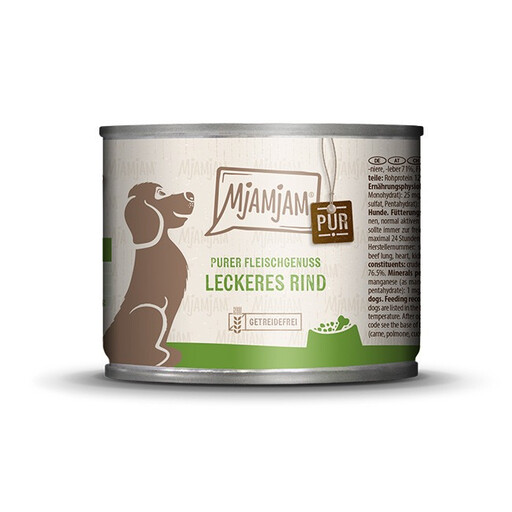
Why we recommend it: The perfect solution for dogs prone to intolerances. Its single-protein (100% beef), grain-free, lactose-free, and gluten-free formula makes it an ultra-simple and digestible option.
Here, "grain-free" isn't just a buzzword; it's the core of a truly streamlined recipe. The ingredient list is short and clear, with 71% beef meat and offal.
A single-protein recipe, perfect for elimination diets. Its high moisture content (76.5%) is a real bonus for hydration. All this, with no added sugars or synthetic preservatives.
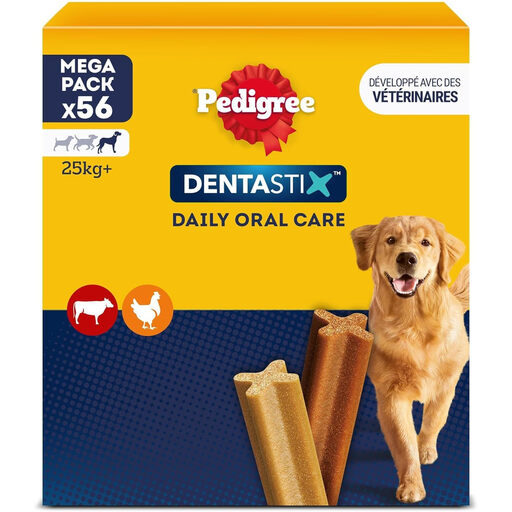
Why we recommend it: This is the convenient solution for integrating dental care into your dog's routine. These dog treats are designed as a supplement, not a meal.
No miracle promises here. The claim is specific and conditional on daily use, which is much more honest than a vague "for healthy teeth." It's a maintenance tool, not a veterinary treatment.
Its X-shape and slightly abrasive texture help clean teeth through mechanical action. Low-fat formula with no added sugars.
Discover our full selection of products that meet our quality criteria and current regulations.
It's all about moisture. Dry dog food (kibble) contains about 10% water; it stores better, and chewing it has a brushing effect on the teeth. Wet dog food contains nearly 80% water, which makes it highly palatable and helps with hydration. The ideal solution? Mixed feeding (a bit of both), which is often a big hit!
To avoid upsetting your dog's digestive system, the transition must be gradual. It's best to spread it out over 7 to 10 days: mix the new food with the old, gradually increasing the dose. Start with a 25/75 ratio (new/old), then move to 50/50, 75/25, and finally 100% of the new formula.
Yes, they are a useful supplement. Their effectiveness is primarily mechanical: by chewing on a treat with an abrasive texture, the dog "brushes" the surface of its teeth, which limits plaque build-up. Be aware that this is no substitute for regular brushing or a professional cleaning at the vet if needed. Think of them as a preventative maintenance tool.