
Livraison le jour même ou le lendemain

Qualité garantie

Débloquez vos offres de bienvenue: Livraison GRATUITE | Jusqu'à -80 % | 30 jours d'essai gratuits à JoyPlus
Téléchargez l'application
Choosing a dog food can quickly become a headache with all the claims like “natural”, “grain-free”, “high in meat” and the promotional multi-packs. Whether you have an adult dog or a puppy, the packaging doesn’t always make it clear whether the product actually meets your pet’s needs.
Three common pitfalls keep cropping up among owners in the UK:
Here are the key criteria to consider before buying wet dog food, moist dog food or dog treats.
The term “complete food” means the product can form your dog’s daily diet, as long as you follow the manufacturer’s recommendations. In contrast, a product labelled as “complementary food” should only be used as a reward, a snack or a supplement.
This distinction is especially important for chicken dog treats, chewy bites and tubes of wet food. Even if they contain meat, these products are not necessarily formulated to cover all of your pet’s nutritional needs.
For a puppy, make sure the packaging clearly states the age or growth stage it’s intended for. A puppy food cannot simply be swapped for an adult dog food: needs vary according to growth, expected adult weight and activity level.
Ingredients are listed in descending order by weight. This list lets you compare recipes properly, without drawing conclusions from a single slogan.
The analytical constituents to check include:
Wet food naturally contains a lot of water. So you shouldn’t directly compare the protein percentage of a wet food with that of dry kibble without accounting for moisture. If you’re feeding a mixed diet, the amounts of kibble and wet dog food need to be adjusted to avoid exceeding your dog’s daily energy needs.
The term grain-free wet dog food may suit a preference for a certain type of recipe, but it isn’t a universal recommendation. Your choice should also take into account your dog’s tolerance, age, activity level and the information on the label.
Individual 100 g portions are handy for small dogs or for easily switching between different recipes. 400 g tins are better suited to medium-sized dogs or households that regularly feed wet food.
Once opened, the products featured here generally recommend refrigeration and consumption within 24 to 48 hours, depending on the product. Serve the wet food at room temperature when advised, and always make sure your dog has access to fresh water.
For treats, check the recommended daily amount. They should only make up a limited part of your dog’s daily intake. A dog food hamper or a multi-pack can help you avoid buying too often, but check the best-before date and your available storage space before opting for a large format.
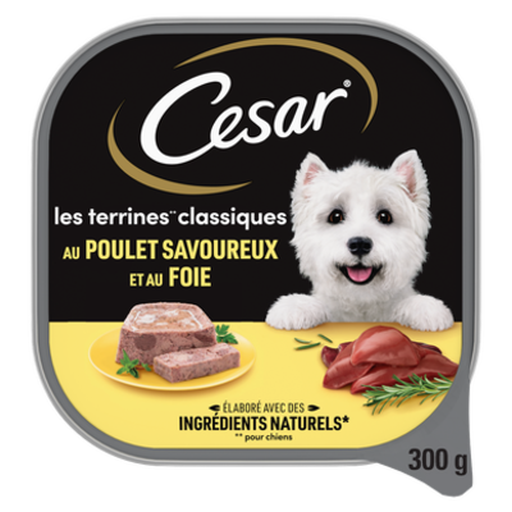
Why this choice suits this profile: At 300 g, this format lets you gradually try a wet food designed for small adult dogs, without stockpiling tins.
The product page clearly states it is a complete food for small adult dogs, with clear guidance on portion size and storage.
A chicken and turkey terrine with 80% moisture and feeding guidelines based on your dog’s weight.
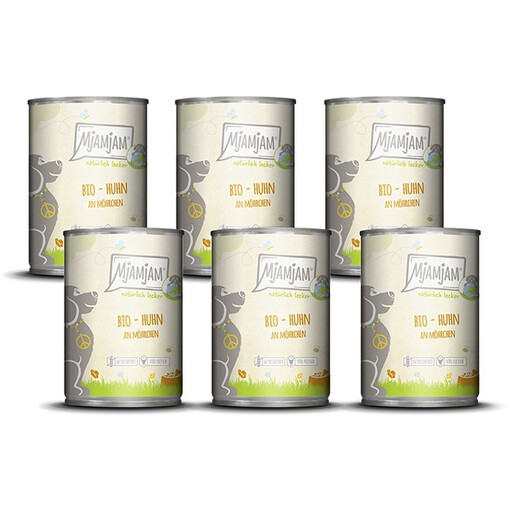
Why this choice suits this profile: This six-tin pack is ideal for households that regularly feed a natural dog food and want to space out their orders.
The published ingredients list details the proportions of chicken, broth and carrots, while its status as a complete food is clearly stated.
A recipe described as organic, grain-free and with no added sugar, packed in 400 g tins.
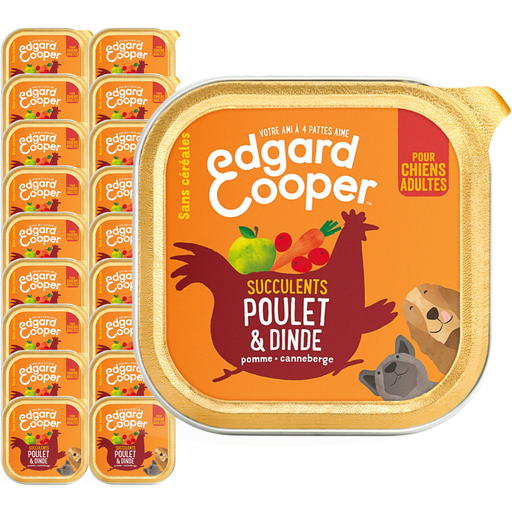
Why this choice suits this profile: With 18 portions, this pack makes it easy to rotate meals in households that often serve wet food or combine kibble with wet dog food.
The 100 g portions minimise leftovers after opening, with instructions to refrigerate and consume within 24 hours.
A grain-free recipe with 30% chicken, 26% turkey and 82% moisture according to the product page.
We’ve put together a comprehensive, real-time updated list of products that meet these strict selection criteria as well as European safety regulations.
Introduce the new recipe gradually over several days by mixing it with the old food, unless the manufacturer or a veterinary professional advises otherwise. Keep an eye on the actual amounts you’re serving, especially if you’re adding chicken dog treats, chewy bites or a topper to the main meal.
If your dog has a known food sensitivity, read the full ingredients list and don’t stop at the “grain-free” claim alone. For a puppy, a pregnant bitch or a dog with special needs, ask your vet for advice before making a long-term change to their diet.
Yes, as long as you adjust the quantities. Add the recommended portions together rather than serving a full portion of each food. The aim is to maintain an intake that suits your dog’s weight, age and activity level.
It depends on the product. The items featured here generally recommend refrigeration and consumption within 24 to 48 hours. Use a clean container and always follow the instructions on the packaging first.
No. Dog treats are complementary foods. They can be used for training or to reward good behaviour, but they don’t replace a complete diet. If the amount of treats increases, slightly reduce the main meal portion.