
Livraison le jour même ou le lendemain

Qualité garantie

Débloquez vos offres de bienvenue: Livraison GRATUITE | Jusqu'à -80 % | 30 jours d'essai gratuits à JoyPlus
Téléchargez l'application
Choosing a dog food isn’t just about comparing the price per kilo or spotting the word “premium” on a bag. Your dog’s age, weight, size, activity level and the type of food — complete or complementary — all play a part in making the right choice.
Some marketing claims can also leave you feeling unsure. Here are the main pitfalls to avoid before you fill your basket.
Dog treats and rewards are designed to be given alongside meals. They are not a replacement for a complete, balanced diet. INABA bites, VITAKRAFT sticks or Pedigree strips can be part of training and bonding moments, but you should keep the quantity sensible.
Always check the label on the packaging: look for “complete food” for everyday meals, or “complementary food” for occasional use.
A recipe described as “with chicken” can contain very different amounts of chicken, sometimes shown in the ingredients list. Some chicken dog kibbles, for example, contain 17% chicken, while others state 40% fresh chicken. The full ingredients list is far more useful than the picture printed on the bag.
Similarly, the phrase “high in protein” doesn’t guarantee the formula will suit every dog. A puppy, a senior dog, a very active dog or one prone to weight gain all have different needs.
Bags of 8 to 12 kg can be good value for multi-dog households or to reduce the cost per portion. Once opened, however, dry food gradually loses its freshness if the bag isn’t sealed properly or is stored in a warm, humid room.
Choose a size that matches how much your household actually uses. Seal the bag carefully and store it in a cool, dry place away from direct sunlight.
Puppy kibble must be suitable for growth. A young dog’s needs differ from an adult’s, especially when it comes to energy and mineral content. The RENSKE Puppy recipe, for example, is suitable for puppies of all breeds from 3 weeks old, with 28% crude protein and 19% fat according to the information provided.
For an adult dog, look for a clear statement like “complete food for adult dogs”. A recipe designed for adults should not be given to a puppy without veterinary advice.
Small breed kibble is usually made with pieces suited to smaller jaws. Ultima Dry Food for Small Dogs Adult Chicken is designed for adult dogs under 10 kg and recommends a daily portion of 30 to 120 g, to be adjusted according to weight and activity level.
On the other hand, foods for dogs of 10 kg and over may contain larger kibble. Check this before you buy to avoid problems with gripping or eating too quickly.
Compare the analytical constituents: crude protein, fat, fibre and ash. These figures alone aren’t enough to judge the overall quality of a recipe, but they do allow you to compare products on a more objective basis.
The portion size on the packet is a starting point, not a fixed rule. It should be adjusted according to body condition, activity, age and any other foods given. For a neutered or overweight dog, a lighter formula may be an option, but any weight management plan should be discussed with a vet.
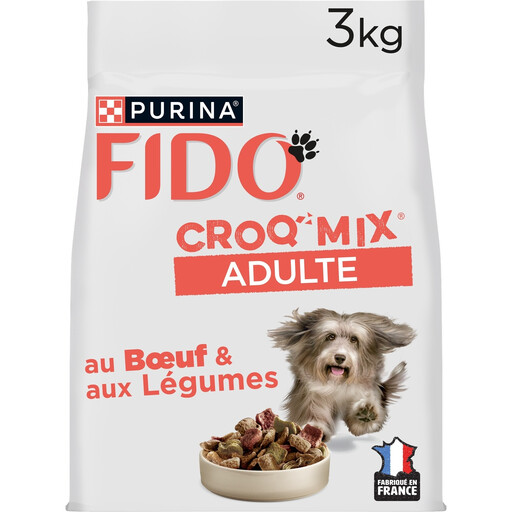
Why this choice suits this profile: This recipe for adult dogs comes in a 3 kg bag, a practical size for getting started without storing a large amount at home.
The product page clearly states it is a complete food for adult dogs and recommends a gradual transition over 10 days.
20% crude protein, 10% fat and the option to soften the kibble with warm water.
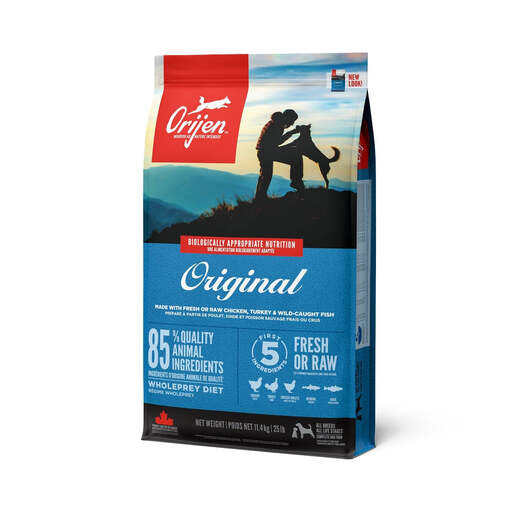
Why this choice suits this profile: Its large format and recipe based on chicken, turkey, fish and eggs can appeal to households looking for a food rich in animal ingredients.
The product page presents a complete food and details the analytical constituents, rather than relying solely on a general claim.
38% crude protein, 18% fat and an 11.4 kg bag. A gradual transition over 7 to 10 days is recommended.
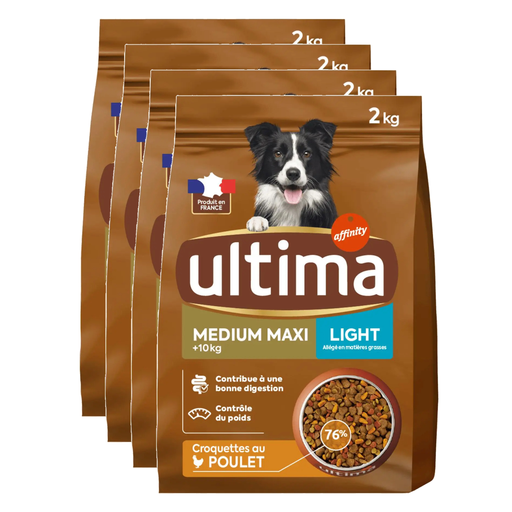
Why this choice suits this profile: This formula is designed for adult dogs of medium or large size, weighing 10 kg or more, when portion and weight control is a priority.
The product page states 30% less fat compared to another Ultima reference and recommends regularly monitoring your dog’s weight.
26.5% crude protein, 11.5% fat, an 8 kg format and large-sized kibble.
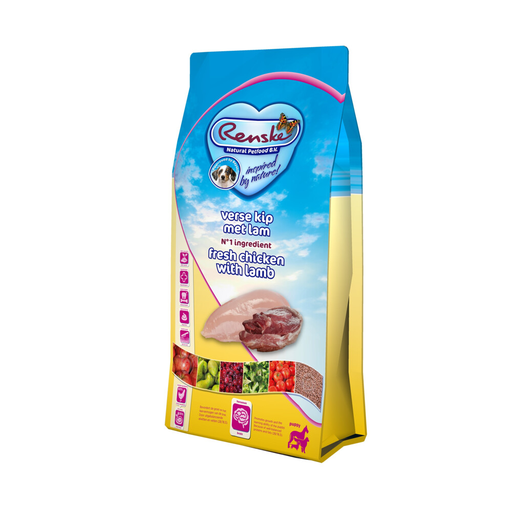
Why this choice suits this profile: This dry food is specifically designed for puppies of all breeds, with a recommended transition period of 7 days.
The target age is clearly stated, which helps avoid accidentally choosing an adult dog formula during the growth stage.
26% fresh chicken, 15% dried chicken, 28% crude protein and 19% fat according to the product page.
We have put together a comprehensive, real-time list of products that fully meet these strict selection criteria and European safety regulations.
The amount depends on weight, activity level, age and the energy density of the recipe. Start by following the table on the bag, then adjust gradually while monitoring your dog’s shape and weight changes.
The shelf life depends on the packaging and the best-before date. After opening, store the kibble in a cool, dry place, seal the bag carefully and avoid large temperature changes. A large format is only worthwhile if it will be used up quickly enough.
No. Dog treats are complementary foods. They should be given occasionally or included in the daily portion to keep calorie intake in check.