
Livraison le jour même ou le lendemain

Qualité garantie

Débloquez vos offres de bienvenue: Livraison GRATUITE | Jusqu'à -80 % | 30 jours d'essai gratuits à JoyPlus
Téléchargez l'application
Choosing a dog food isn’t just about comparing the price per kilo or being won over by a picture of chicken on the packaging. Age, weight, size, activity level and whether it’s labelled “complete food” or “complementary food” can completely change how suitable a product is for your pet.
In the UK, certain mistakes crop up time and again among dog owners. A well-designed packet can push essential information into the background – things like the analytical composition, daily feeding guide or storage instructions. Here are the criteria to check before you buy dog kibble, wet dog food or dog treats.
A complementary food – such as certain chewy bites or chicken-based preparations – cannot replace main meals. It can be used as a reward during training or as a small snack, but the amount you give must stay proportionate to the daily ration.
The MeatyWay and INABA products featured later are, for example, labelled as complementary foods. Even though they contain ingredients dogs love, they don’t on their own make up a balanced adult dog food.
A grain-free dog food isn’t automatically right for every animal. This claim tells you nothing about the overall balance of the recipe, the portion size to serve, or your dog’s individual tolerance. It’s far better to check the ingredients list and the analytical constituents than to stop at a single marketing point.
Kibble that’s too large can be difficult for a small dog to eat. Conversely, a formula designed for medium and large dogs won’t necessarily suit a puppy or a dog under 10 kg. A dog food for overweight dogs must also be paired with careful monitoring of portions and weight – it’s not a miracle solution you can use without thinking.
Start by spotting the legal statement on the label. For a daily meal, look for a complete dog food suited to your pet’s age. Puppy food must be clearly intended for growth, while an adult formula corresponds to a different life stage.
Treats, chewy bites and sticks are generally complementary foods. They should be given according to your dog’s size, activity level and the amount of main food already provided.
The ingredients list details the raw materials used. The analytical constituents show the levels of crude protein, fat, fibre and moisture. These figures let you compare products more objectively, without mistaking a brand’s promise for a guaranteed result.
In wet food, the moisture content is usually high. So you shouldn’t directly compare its protein level with that of kibble without accounting for the water in the product. A chicken wet dog food can be served on its own if it’s a complete food, or only as a supplement if the label says so.
The feeding guide on the packaging is a starting point. You should then adjust it based on your dog’s activity, age, weight and body condition. When switching kibble, a gradual transition over several days helps avoid digestive upset.
Also think about the bag size. A 2 kg pack can be handy for trying out a recipe, while an 8 kg bag will be better value for a household that regularly uses kibble for medium and large dogs. Once opened, wet preparations usually need to be kept in the fridge and used quickly, following the manufacturer’s instructions.
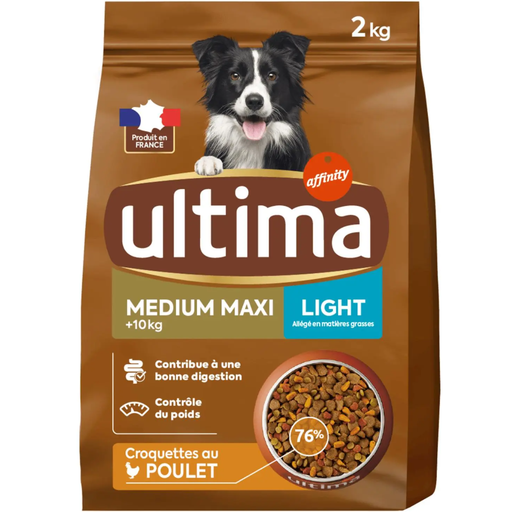
Why this choice suits this profile: This complete formula is designed for adult dogs of medium or large size, from 10 kg upwards. Its 2 kg bag lets you start without being left with a huge stock.
The label clearly states the age, minimum weight and daily use. This stops you from choosing a “light” formula for a puppy or a small dog.
26.5% crude protein, 11.5% fat and large-format kibble. The recipe contains chicken, rice, whole grains and vegetables.
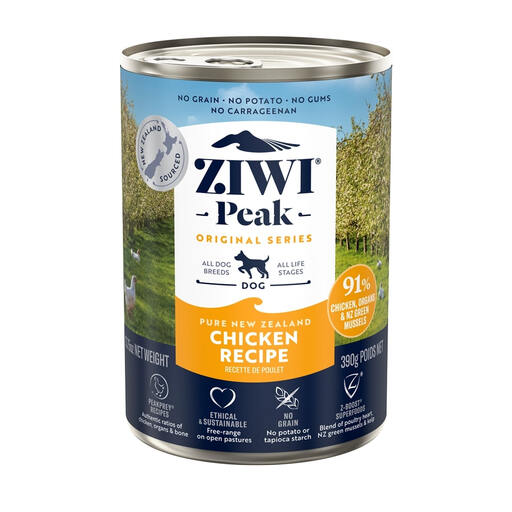
Why this choice suits this profile: This complete wet food with chicken is aimed at owners who prefer a moist diet and a recipe based on a single source of animal protein.
The “complete food” label stops you from mistaking a wet food meant for meals for a simple treat. The portion should be adjusted to your dog’s weight.
77% moisture, 11% crude protein and 8% fat according to the product sheet. Once opened, the tin must be kept in the fridge and used within two days.
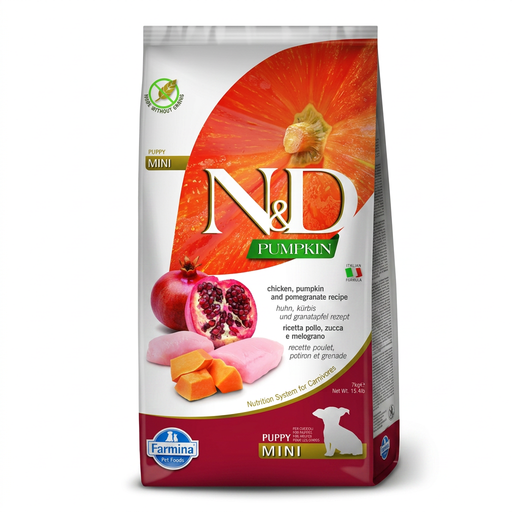
Why this choice suits this profile: This formula is designed for puppies of small breeds. The kibble size is said to be suited to their jaws, while the recipe combines chicken, squash and pomegranate.
The target age and dog size are clearly stated. This stops you from giving a puppy kibble meant for adult small breeds.
The recipe is said to be grain-free and gluten-free, with 24% boneless chicken and 22% dehydrated chicken protein, according to the information available.
We’ve put together a complete, real-time updated selection of products that meet these strict criteria, as well as European safety requirements.
Yes, but in moderation. The INABA Fun Bites in chicken and cheese, sweet potato or squash are presented as complementary foods. Their soft texture and small size can be handy for training. The chicken and squash version has 83% moisture and offers recommendations that vary according to the dog’s weight.
The MeatyWay chicken and banana product, sold in a 100 g pouch, is also intended for intermittent or complementary feeding only. It contains at least 20% crude protein and should be served with fresh water available. These products therefore don’t replace kibble or a complete wet food.
It all depends on your dog’s weight, age, activity level and the energy density of the product. Start by following the manufacturer’s feeding table, then regularly check your dog’s body shape and weight. Treats should be counted as part of the total daily amount.
Both formats can work, as long as the food matches your dog’s profile and the quantities are properly adjusted. Kibble is easy to store and serve. Wet food generally contains more moisture, but it needs extra care once opened.
Make a gradual transition over five to seven days, slowly mixing the old food with the new one. This method lets you check that your dog accepts the new food and reduces the risks of a sudden change. If a problem persists, ask your vet for advice.