
Livraison le jour même ou le lendemain

Qualité garantie

Débloquez vos offres de bienvenue: Livraison GRATUITE | Jusqu'à -80 % | 30 jours d'essai gratuits à JoyPlus
Téléchargez l'application
Choosing a dog food isn’t just about comparing an appetising picture, a recipe labelled “natural” or the price per kilo. Your dog’s age, weight, size, activity level and digestive sensitivity all need to play a part in the decision.
Some mistakes are particularly common among owners:
A puppy doesn’t have the same needs as an adult dog. A puppy food must be suited to its growth stage and the breed size stated by the manufacturer. For example, RENSKE Puppy is described as a complete food for puppies of all breeds from 3 weeks old, with 28% protein and 19% fat according to the information provided.
For an adult dog, check for the phrase “complete food for adult dogs”. Needs also vary between a small breed dog food and a food intended for medium or large dogs. The size of the kibble, the energy density and the daily portion can all differ.
The ingredient list is presented in descending order by weight. It lets you identify the protein sources, grains, fats and plant-based ingredients. That said, the presence of terms like “fresh chicken”, “fruits” or “natural” isn’t enough to judge a recipe.
Also check the analytical constituents:
Edgard & Cooper adult dog kibble, for instance, shows 25% protein, 18% fat and 4.5% fibre. Meanwhile, Edgard & Cooper chicken and turkey wet food states, per 100 g, 9% protein, 5% fat and 82% moisture. These figures can’t be compared as they are: you need to account for the amount of water in the wet food.
A small bag of dog kibble at 1 kg or 2 kg lets you check palatability and digestion before moving to a family-sized bag. To avoid upsetting the digestive system, manufacturers generally recommend a gradual transition over several days.
Once the bag is opened, seal it tightly and store it in a cool, dry place. For wet dog food, put leftovers in the fridge and use them within the time stated on the packaging. 100 g portions are handy for small dogs or for easily alternating with kibble.
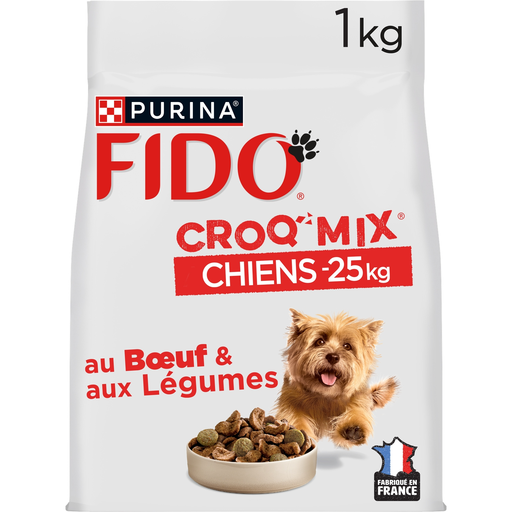
Why this choice suits this profile: With its 1 kg bag, this product reduces the risk of being left with unused stock during a first transition. The product is indicated for adult dogs, particularly small breeds according to the product page information.
The small bag lets you test the recipe before buying a larger one. The ingredient list details the grains, animal sources and analytical constituents.
A complete food for adult dogs, with 20% crude protein and 10% crude fat according to the product page.
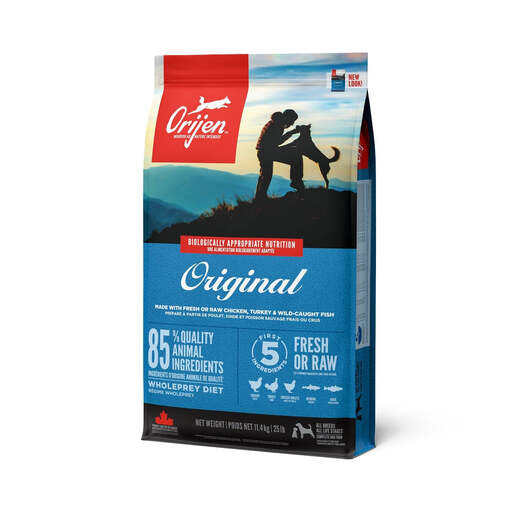
Why this choice suits this profile: This large bag is ideal for households looking for a complete dry food, with a recipe based on chicken, turkey, fish and egg.
The product page details the analytical constituents and suggests portions based on the dog’s weight, rather than relying solely on a marketing promise.
11.4 kg, 38% crude protein, 18% crude fat and transition recommendations over 7 to 10 days.
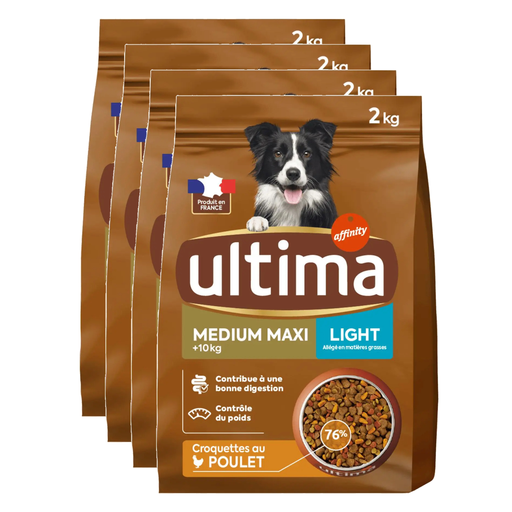
Why this choice suits this profile: This recipe is aimed at adult dogs of medium or large size, weighing over 10 kg, whose owner wants to better control the portion and fat intake.
The “light” label comes with a concrete figure: 30% less fat compared to the Ultima Medium-Maxi Adult recipe stated by the manufacturer.
8 kg, large-sized kibble, 26.5% protein and 11.5% fat according to the product page. Weight monitoring is still essential.
For a change of texture, Edgard & Cooper chicken and turkey wet food is available in 100 g trays or as a pack of 18 × 100 g. The stated recipe contains 56% chicken and turkey, along with carrots, cranberries, tomatoes, squash and apples. It is intended for adult dogs and must be refrigerated after opening.
Dental chews for dogs, such as Pedigree Dentastix for dogs weighing 10 to 25 kg, should remain an occasional treat or be included in the daily ration. The product page mentions a plaque reduction of up to 80%, according to the brand’s information. This claim does not replace regularly checking your dog’s mouth or seeking veterinary advice.
We’ve put together a complete, real-time updated selection of products that meet these strict selection criteria and European safety requirements.
Both formats can work if they are labelled as complete foods suited to the dog’s age. Kibble is easy to portion and store, while wet food provides more moisture and adds variety to meals. Always compare the portions, not just the price of the packaging.
Make a gradual transition by mixing the old and new recipes over several days. Recommendations depend on the product: some product pages suggest 5 to 7 days, others 7 to 10 days. If digestive issues persist, seek veterinary advice.
Start by weighing the portion, monitor weight changes and take the dog’s physical activity into account. A formula designed for neutered or overweight dogs may have a different energy density, but it doesn’t replace regular monitoring. If there is a health problem or significant weight loss, consult a vet.