
Livraison le jour même ou le lendemain

Qualité garantie

Débloquez vos offres de bienvenue: Livraison GRATUITE | Jusqu'à -80 % | 30 jours d'essai gratuits à JoyPlus
Téléchargez l'application
Choosing dog food is not simply a matter of comparing the price per kilo or relying on a picture of chicken on the packaging. Your dog’s age, weight, size, activity level and the composition of their diet all play a part in determining whether a product meets their needs.
Between dry dog food, wet dog food, grain-free recipes and treats, marketing claims can quickly make things confusing. Here are the criteria to check before buying, along with a selection suited to different needs.
The wording ‘with chicken’ does not necessarily mean that chicken makes up most of the recipe. Check the ingredients list and review the percentages provided. Complete and balanced dog food should also clearly state which dogs it is intended for: puppies, adults, small breeds or another category.
Grain-free dog food may suit a particular preference or need, but this claim alone does not indicate the product’s nutritional quality. A grain-free recipe may contain peas, potatoes or other sources of starch. So, examine the full composition, analytical constituents and feeding recommendations shown on the label.
A bag sold at a low price may ultimately work out more expensive if the recommended daily portions are large. Conversely, wet food sold in small trays may require several units per day. Compare the daily cost, not just the price of the pack. The portion should be tailored to your dog’s weight, activity level, age and body condition.
Adult dog food is not automatically suitable for a puppy. During growth, young dogs have specific nutritional needs and should receive a formula explicitly designed for them. For small dogs, the size of the kibble and the feeding guidance also deserve your full attention.
Products for medium and large-breed dogs generally contain larger pieces and provide feeding recommendations calculated for higher body weights. Do not choose a ‘large breed’ formula based on the brand alone: check the category stated on the product.
The levels of crude protein, fat, fibre, ash and moisture allow you to compare products within the same category. However, bear in mind the difference between dry and wet food: wet food contains much more water, making the percentages less directly comparable.
Wet food containing 82 % moisture will naturally show a lower protein level than dry food containing approximately 10 to 12 % moisture. This figure alone is therefore not enough to determine whether one recipe is more or less suitable.
For your dog’s main meals, look for the wording complete food for dogs. Dog treats, dried meat pieces and supplementary bites are generally intended for occasional or complementary feeding. They should not replace daily meals.
In cases of excess weight, it is the total ration that matters, far more than the word ‘light’ alone. Some products contain less fat than another formula in the same range. Weigh out portions and ask your vet for advice if your dog needs to lose weight.
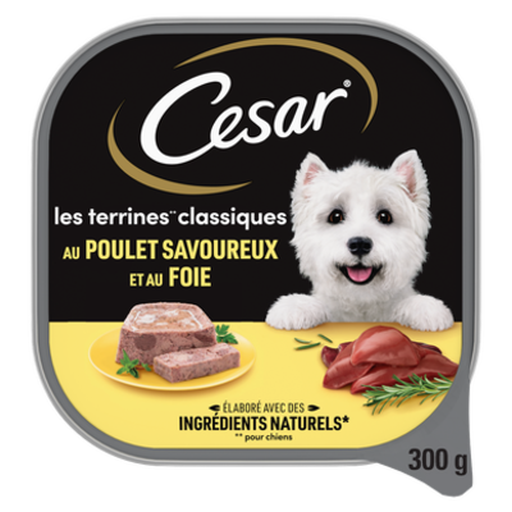
Why this product suits this profile : This format lets you try the product in a small quantity and see whether your dog likes it before moving on to a larger pack. It is suitable for small-breed adult dogs weighing less than 10 kg.
The product information clearly states that it is a ‘complete food’ and details the advertised proportions of chicken and turkey, rather than relying solely on an image or slogan.
300 g tray, 10 % crude protein and feeding recommendations based on weight.
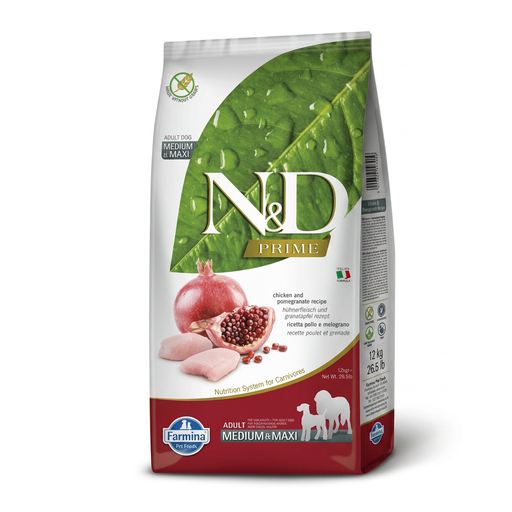
Why this product suits this profile : This large pack is aimed at owners looking for a grain-free dry recipe for a medium or large adult dog.
The formula clearly states that it is suitable for medium or large adult dogs and specifies its composition based on chicken, herring, eggs, peas and chickpeas.
12 kg bag, grain-free recipe and clearly identified animal sources in the ingredients list.
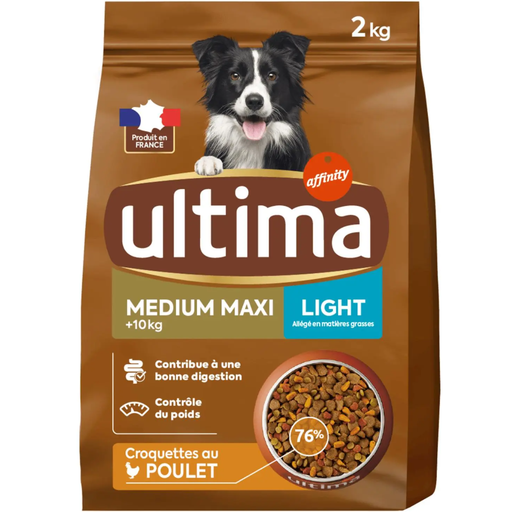
Why this product suits this profile : This formula is intended for medium or large adult dogs weighing more than 10 kg, when portion and weight management are everyday priorities.
The product information states that this formula is not suitable for puppies or small dogs and recommends adapting the portion to the animal’s activity level and metabolism.
26.5 % crude protein, 11.5 % fat and a fat content advertised as 30 % lower than another reference Ultima formula.
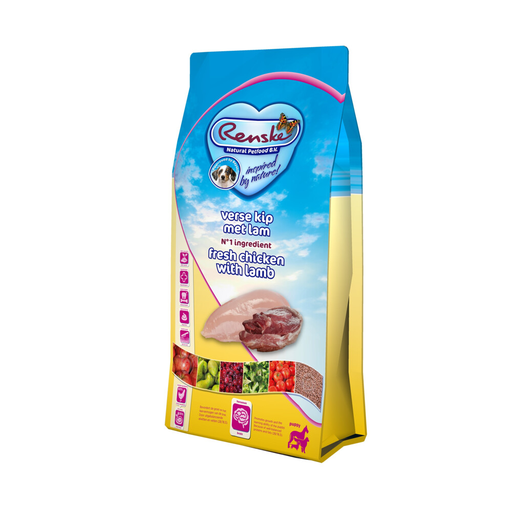
Why this product suits this profile : This puppy food is suitable for young dogs of all breeds from 3 weeks of age. A gradual transition over 7 days is recommended.
The age category is clearly stated, helping you avoid feeding ordinary adult dog food to an animal that is still growing.
28 % crude protein, 19 % fat, an advertised 26 % fresh chicken and a gluten-free recipe.
Chicken dry food for dogs is easy to measure, store and divide between several meals. It is particularly suitable for households looking for a simple everyday routine. Wet food provides a different texture and can be served on its own or mixed with dry food, provided you recalculate the total ration.
When choosing natural dog food, do not rely solely on the word ‘natural’. Check the ingredients list, additives, complete-food designation and storage instructions. Opened wet food should generally be kept in the fridge and used within the time stated on the packaging.
Any change of formula should be made gradually, over around 5 to 10 days in line with the manufacturer’s recommendations. This transition helps minimise digestive upset caused by changing the diet too quickly. Always make sure your dog has access to fresh water.
We have brought together a complete, real-time selection of products that meet these demanding criteria and European safety regulations.
The amount depends on your dog’s weight, age and activity level, whether they have been neutered and the recipe’s energy density. Start by following the feeding table on the packaging, then regularly monitor your dog’s body condition. Adjust the portions if necessary.
Yes, provided you reduce the amount of each food so that you do not exceed your dog’s daily requirements. Choose products labelled ‘complete food’ and introduce the mixture gradually.
No. Treats are intended for occasional or complementary feeding. They should remain a small part of the daily ration, particularly for an overweight dog. Check the label and include their nutritional contribution when calculating your dog’s meals.