
Livraison le jour même ou le lendemain

Qualité garantie

Débloquez vos offres de bienvenue: Livraison GRATUITE | Jusqu'à -80 % | 30 jours d'essai gratuits à JoyPlus
Téléchargez l'application
Choosing the right dog food can quickly become overwhelming. Faced with aisles filled with marketing promises and enticing packaging, it's hard to separate the essential from the non-essential. Our mission is to bring you clarity and help you decode labels to make an informed choice, far from the advertising hype.
Before we get to our top picks, let's review the most common marketing traps. The goal?? To prevent you from spending money on a diet that's unsuitable for your companion.
To make the right choice, focus on a few technical indicators. They often say more about the quality of a natural dog food than any slogan.
Every bag of kibble displays an "analytical constituents" label. Here's how to decipher it simply?:
The choice between wet dog food (p?té) and dry food (kibble) depends on your pet's needs and your lifestyle.
For sensitive dogs, opting for hypoallergenic kibble is a worthwhile option. These are often formulated around a single protein source (mono-protein), such as lamb, duck, or fish, to limit the risk of allergic reactions. For all dogs, a clearly identified protein source is a sign of transparency and quality.
Rather than searching for THE one miracle product, it's better to find the one that perfectly matches your dog's profile.
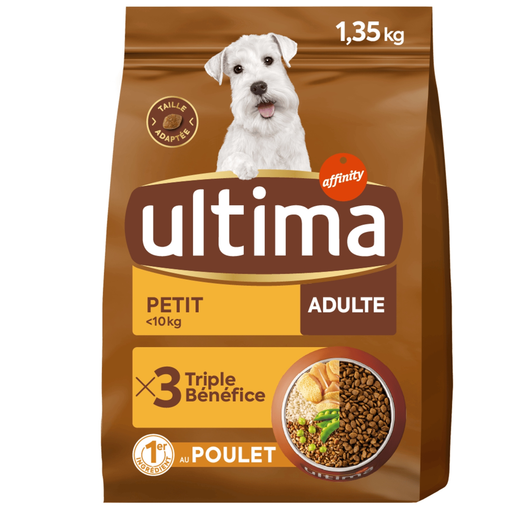
Why it's a great choice ? Small dogs have a faster metabolism and higher energy needs. This formula is dedicated to them, with appropriately sized kibble that makes chewing easier and a nutrient density designed for their small frames.
It avoids the vague-ingredient trap by clearly listing chicken (17 %) and whole wheat (17 %) at the top of the list—a welcome level of transparency.
Contains sodium hexametaphosphate, an ingredient that helps reduce tartar formation, a common problem for small breeds.
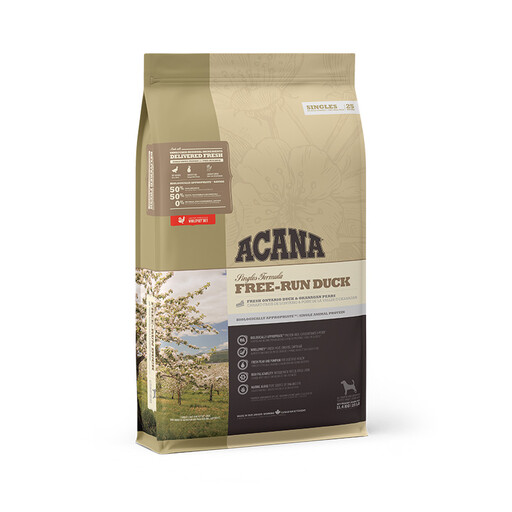
Why it's a great choice ? The perfect solution for dogs with sensitive stomachs or those prone to allergies. Its limited ingredient diet (L.I.D.) formula makes it easy to isolate the source of a potential intolerance.
It avoids the "catch-all grain-free" trap by using quality legumes (lentils, peas) and offering total transparency in its composition. Its foundation : a single animal protein source, duck.
A mono-protein formula with 50 % duck, including meat, liver, and fat. This "WholePrey" approach ensures a natural and complete nutrient intake.
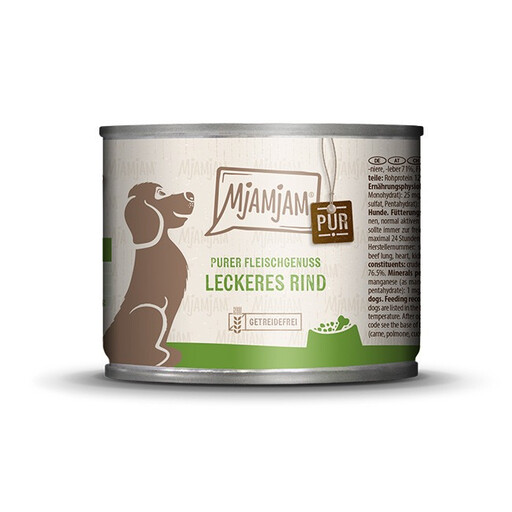
Why it's a great choice ? For owners who demand a meat-rich dog p?té with an ingredient list that's as short as it is clear. Its high moisture content is a real bonus for hydration.
This is the antithesis of long-winded ingredient lists and vague formulas. The composition is disarmingly simple : 71 % beef (meat, lung, heart...), meat broth, and minerals. That's it.
A record-high meat content and a mono-protein formula guaranteed to be free of grains, gluten, and added sugar. It's hard to get closer to a natural diet.
Let's not forget dog treats, which should also be chosen with the same care. Options like INABA Fun Bites with Chicken & Sweet Potato offer a healthy and hydrating reward based on simple, high-quality ingredients.
Choosing a quality diet is a cornerstone of your companion's health. For those seeking formulas particularly rich in animal protein, we've curated a selection of products that meet our strict criteria.
The secret to a successful transition is to do it gradually. To avoid any digestive upset, mix the new food with the old over a period of 7 to 10 days. Start with a ratio of 25?% new kibble to 75?% old, then gradually increase the proportion of the new food until the substitution is complete.
Not necessarily. "Grain-free" has become a powerful marketing term, but it doesn't guarantee a product's quality on its own. The most important factors remain the overall digestibility and nutritional value of the recipe. A dog with no particular sensitivities can perfectly tolerate quality grains (like brown rice or oats) in reasonable amounts. The number one criterion remains a high-quality animal protein source at the top of the list.
The distinction is crucial. A complete food is designed to cover 100?% of your dog's daily nutritional needs; it can serve as their sole meal. Conversely, a complementary food, like most treats or some p?tés, is not nutritionally balanced to be served alone. It must be given in addition to a complete diet to avoid deficiencies. Always remember to check for this designation on the packaging.