
Livraison le jour même ou le lendemain

Qualité garantie

Débloquez vos offres de bienvenue: Livraison GRATUITE | Jusqu'à -80 % | 30 jours d'essai gratuits à JoyPlus
Téléchargez l'application
Fleas and ticks can quickly take hold in a dog’s coat, even after a simple walk in town, the park or the woods. Yet choosing a dog flea and tick treatment isn’t just about comparing a price or the duration stated on the packaging.
Two formats come up most often: the spot-on flea treatment for dogs and the spot-on tick treatment for dogs, as well as the flea and tick collar for dogs. The right choice depends mainly on the animal’s lifestyle and the owner’s habits. Here are the points to check to avoid picking an unsuitable product.
A “small” dog doesn’t necessarily weigh less than 8 kg. Conversely, a large-breed dog can change category as it grows. A dog antiparasitic based on weight must therefore be chosen according to the animal’s current weight, not its breed or a previous estimate.
A dose that’s too weak may not match the instructions on the leaflet. On the other hand, using a presentation intended for a heavier dog can lead to an unsuitable dosage. Weigh your companion before buying, especially if it’s a growing puppy.
A collar advertised for several months and a spot-on that needs renewing each month don’t necessarily target the same parasites. Some products work mainly against fleas and ticks, while others also mention mosquitoes, sandflies, biting lice or stable flies.
The duration of protection should therefore always be considered alongside the type of parasite targeted. An indication about fleas doesn’t mean the product offers exactly the same protection against all insects.
Water resistance doesn’t automatically mean the product can withstand frequent baths or long swims. Similarly, a spot-on applied to the fur rather than directly onto the skin risks being poorly distributed. Children and other animals must not touch the treated area until it is completely dry.
Before ordering, check these three details:
Some spot-ons containing permethrin are strictly prohibited for cats. This precaution matters particularly in households with multiple species. If in doubt, ask a vet or pharmacist for advice.
Fipronil is used in some spot-ons targeting fleas and ticks. Formulas based on imidacloprid and permethrin from the Advantix range also mention action against mosquitoes, sandflies, biting lice and stable flies. Seresto collars indicate action against fleas, ticks and biting lice, as well as a repellent effect against certain ticks.
This information comes from product sheets and leaflets. It does not constitute a medical guarantee and should be verified on the labelling supplied with the item.
An Advantix spot-on is generally designed for monthly application. It is recommended to avoid bathing in the 48 hours before and after application. Beaphar Fiprotec products are intended for renewal every four weeks. Seresto collars are designed to be replaced after several months, but frequent or prolonged immersion can reduce their lifespan, according to the product sheet.
If your dog swims regularly, carefully check the water-resistant claim rather than relying on a general promise of long-lasting protection.
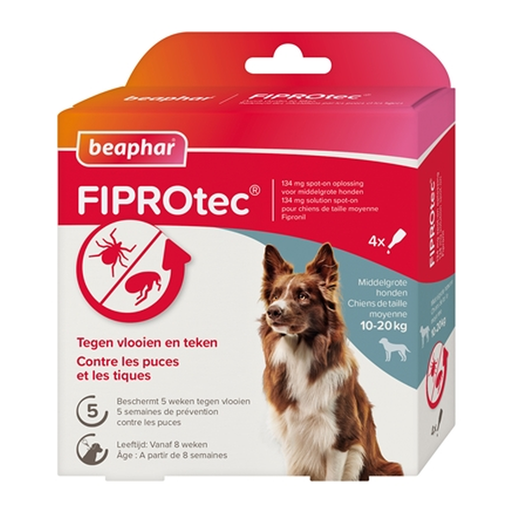
Why this choice suits this profile: This format is suitable for dogs weighing 10 to 20 kg. It relies on simple skin application and a pack of four pipettes.
The weight range and renewal every four weeks are clearly stated, which reduces the risk of dosage or scheduling errors.
The formula contains fipronil and the pack includes 3 + 1 pipettes for successive applications.
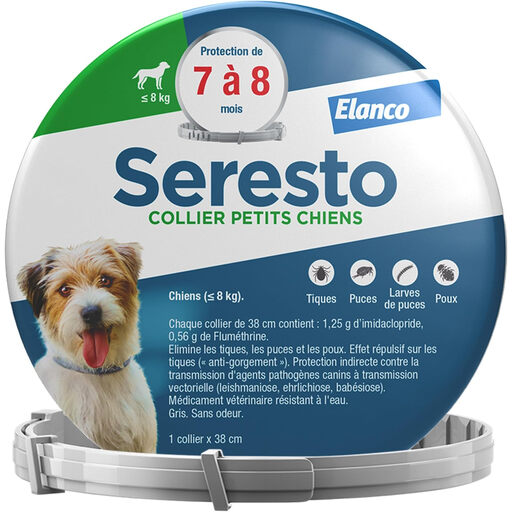
Why this choice suits this profile: This collar is aimed at owners who prefer to avoid monthly applications and want a solution worn every day.
The 36 cm length and 8 kg limit are clearly specified. You should be able to slip two fingers between the collar and the neck.
The product sheet claims up to eight months of use against fleas and ticks, with resistance to rain and moderate water exposure.
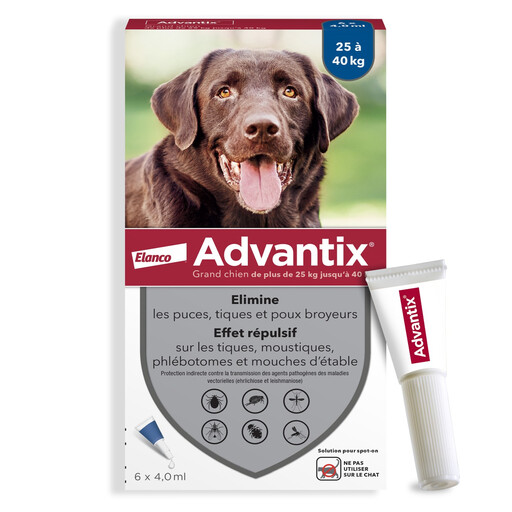
Why this choice suits this profile: This presentation is aimed at dogs weighing 25 to 40 kg that are regularly exposed to ticks and several insects during outdoor outings.
The 4 ml dose per pipette corresponds to a precise weight range. The product sheet also recommends avoiding baths around the time of application.
The product sheet mentions four weeks of use against six parasites, including mosquitoes and sandflies, with resistance to moderate water exposure.
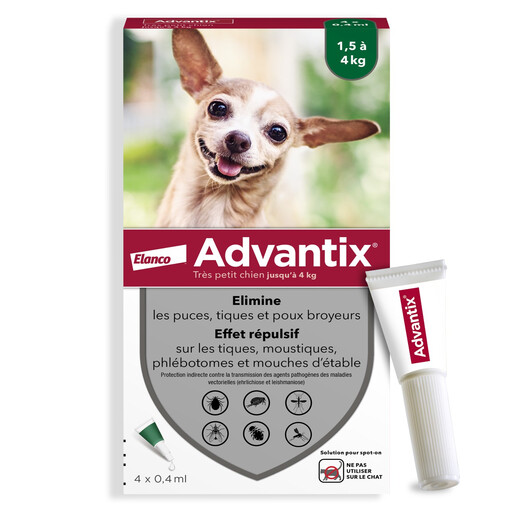
Why this choice suits this profile: This version is suitable for very small dogs and puppies that have reached the minimum age stated in the leaflet.
The 0.4 ml format corresponds to the 1.5 to 4 kg weight range. It must not be used below the minimum weight or age indicated.
The product sheet recommends application every four weeks and mentions action against fleas, ticks, mosquitoes, sandflies, biting lice and stable flies.
We have selected a complete, real-time updated range of products that meet these strict criteria, in compliance with European safety regulations.
Do not combine several insecticides without professional advice. If persistent redness, unusual itching or accidental ingestion occurs, contact a vet. Antiparasitic products are intended for animal use and must be kept out of reach of children.
The duration depends on the product chosen. Advantix spot-ons are designed for around four weeks, while Beaphar Fiprotec claims up to five weeks against fleas and four weeks against ticks. Seresto collars claim up to eight months, according to their product sheet. Always consult the leaflet corresponding to your dog’s weight.
The spot-on is suitable for owners who are happy with regular application and sometimes want to target several parasites. The collar allows less frequent monitoring, provided it is correctly fitted and well tolerated by the animal. The choice also depends on baths, swimming and the dog’s lifestyle.
Yes, but only if the puppy has reached the minimum age and weight stated in the leaflet. The products presented here generally start at 7 or 8 weeks, but the limits vary depending on the formula. Check the labelling before buying and ask a vet for advice if the puppy is fragile, ill or already undergoing treatment.