
Livraison le jour même ou le lendemain

Qualité garantie

Débloquez vos offres de bienvenue: Livraison GRATUITE | Jusqu'à -80 % | 30 jours d'essai gratuits à JoyPlus
Téléchargez l'application
As a product expert at Joybuy, I see countless solutions for canine oral hygiene. Choosing the right dog dental toy seems simple, but a few common mistakes can make your purchase ineffective or even dangerous. The goal? To find a product that will keep your companion engaged while caring for their teeth, cutting through the marketing noise.
Before you dive in, let's review three common mistakes pet owners often make:
To avoid these pitfalls, focus on a few objective criteria. They will help you evaluate a product beyond its packaging and marketing claims.
The choice of material is critical for the toy's durability and safety. Each type meets a specific need.
Solutions for canine oral hygiene fall into two main categories.
The golden rule: the toy must be large enough that it can't be swallowed, but manageable enough for the dog to hold between its paws and reach all its teeth. A puppy toy will often be smaller and made from a softer material to avoid damaging their baby teeth. Conversely, a large dog will need a robust and substantially sized toy.
To help you see more clearly, here are a few options that cater to distinct profiles, taking into account the criteria we've just discussed.
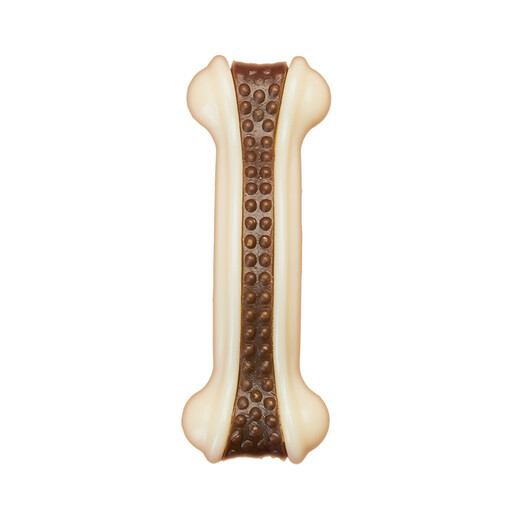
Why we love it: Perfect for serial destroyers who get through their toys in record time. The combination of cowhide and nylon offers a long-lasting chew that satisfies their natural instinct.
It's not marketed as "indestructible," but as "durable." A much more honest promise.
Its dual-material design (durable nylon and tasty cowhide) keeps a dog's interest far longer than a standard toy.
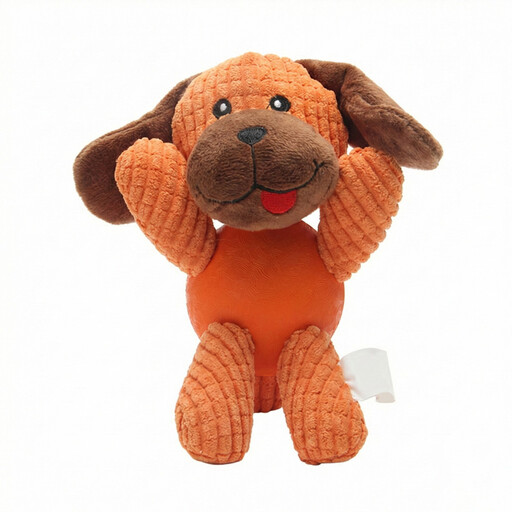
Why we love it: Ideal for a teething puppy. The squeaky toy and its built-in squeaker spark curiosity, while the different textures (corduroy and rubber) soothe their sore gums.
Its softness is designed for baby teeth, without sacrificing the sturdiness needed to satisfy their urge to chew.
The combination of plush, rubber, and sound makes it a 3-in-1 toy that serves as a comforter, an outlet for energy, and a playmate.
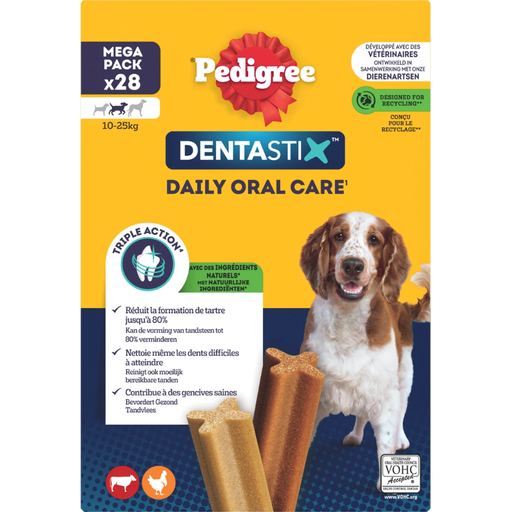
Why we love it: A reliable choice for food-motivated dogs. It's the ultimate convenient solution for daily dental care.
Its low-fat, no-added-sugar formula makes it a functional treat, not just a calorie bomb.
According to the brand, its X-shape and abrasive texture help reduce tartar buildup by up to 80% with daily use.
We've curated a complete selection of products that meet our quality criteria and safety standards.
No. A dog dental toy or an anti-tartar stick is an excellent supplement, but nothing replaces the mechanical action of manual brushing. A toothbrush remains the most effective method for removing plaque in hard-to-reach areas. Think of them as a valuable daily boost between brushings.
For stick-type treats, the general recommendation is one per day. For non-edible chew toys, you can leave them available to your dog, but always under supervision. The key is to integrate chewing into their daily routine to maximise the benefits for their oral hygiene.
Inspect your dog's toys regularly. Discard a toy as soon as it shows cracks, pieces are breaking off, or it has become small enough to be swallowed whole. Your pet's safety comes first. A damaged toy is a dangerous toy.