
Livraison le jour même ou le lendemain

Qualité garantie

Débloquez vos offres de bienvenue: Livraison GRATUITE | Jusqu'à -80 % | 30 jours d'essai gratuits à JoyPlus
Téléchargez l'application
Dog dental care isn’t just about picking up a product labelled “anti-tartar”. Between treats, chew toys and wipes, differences in size, texture and how they’re used can make an item impractical, or even unsuitable for your pet.
To avoid wasted purchases, it’s best to check three things before you order:
A dental treat can support your dog’s oral hygiene, but it doesn’t replace a veterinary check-up if there’s persistent bad breath, sensitive gums or difficulty eating.
Phrases like “reduces tartar” or “cleans teeth” generally describe the action claimed by the manufacturer. They don’t guarantee that every dog will get the same result. With dental sticks for dogs, effectiveness depends on how often your dog chews, the size of the product and how your dog eats it.
Pedigree’s product page, for example, states that the X-shape and slightly abrasive texture of DENTASTIX are designed to help remove plaque during chewing. The claimed reduction should therefore be understood as a brand claim, not a guarantee that works for every dog.
A stick designed for a dog weighing 10–25 kg isn’t automatically suitable for a small dog. A product that’s too big can be difficult to chew; on the other hand, one that’s too small risks being swallowed quickly, without enough contact with the teeth.
Always check the weight range, minimum age and daily quantity stated on the packaging. Anti-tartar treats for dogs should also be factored into their overall daily food allowance, especially if your dog already gets several rewards throughout the day.
A dog chew toy isn’t indestructible. Fabric, rope or squeaky toys are more suited to supervised play than intensive chewing. A dental toy for dogs should be inspected regularly: loose stitching, detached pieces, cracked plastic or exposed stuffing are all reasons to remove it immediately.
A textured surface, grooves or an X-shape can increase contact areas during chewing. However, shape alone isn’t everything. For a small dog, choose a size they can handle easily with their mouth, without sharp edges or parts that could come off.
For a fetch or tug toy, also check the dimensions. The ZEZE flying disc measures 23 × 23 × 3.5 cm, while the bamboo-shaped stick reaches 22 × 5.5 × 2.5 cm including its leaves.
Moulded nylon, natural rubber, EVA, fabric or rawhide all offer different levels of durability and feel. A soft material may suit a dog that chews gently, while a determined chewer will need something more robust. This never removes the need for supervision.
Fabric toys and interactive dog toys are great for keeping your dog occupied, but they should be removed as soon as any part starts to tear. For dog dental wipes, check the ingredients, ensure they’re alcohol-free if your dog is sensitive, and follow the storage instructions.
Even the most promising solution will be useless if your dog refuses it. Introduce it gradually, at a calm time, and pair the session with a suitable reward. Treats should be given according to the recommended dosage, with fresh water always available. Clean toys as per their instructions: some can be rinsed, while others should only be wiped with a damp cloth.
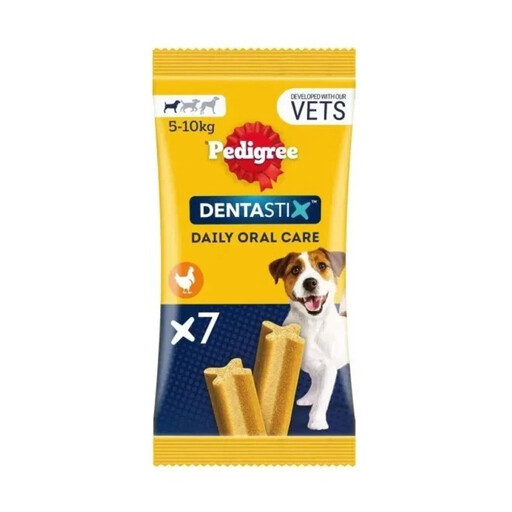
Why this choice suits this profile: The format is designed for adult dogs of small build, with a recommendation of one treat per day according to the product page.
The weight category is clearly stated, which reduces the risk of choosing a stick that’s too big for your dog’s jaw.
Individually portioned format, a texture described as slightly abrasive, and a choice of several flavours depending on the variant.
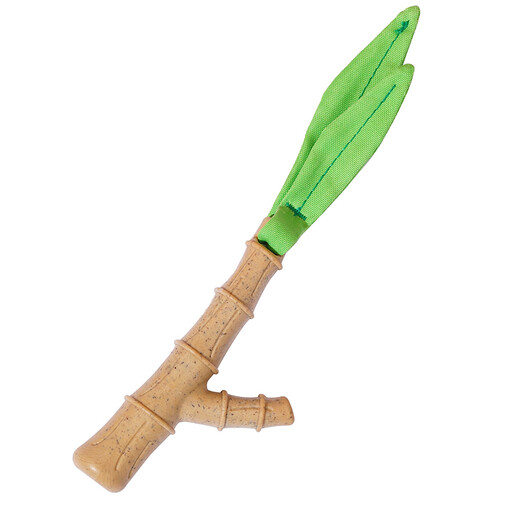
Why this choice suits this profile: This toy combines chewing with fetch play, ideal for owners who want to vary their daily activities.
The instructions advise regular inspection and recommend replacing the toy as soon as it’s worn or damaged, rather than treating it as indestructible.
Stated dimensions of 22 × 5.5 × 2.5 cm, with a structure made from nylon, wood chips and Oxford fabric.
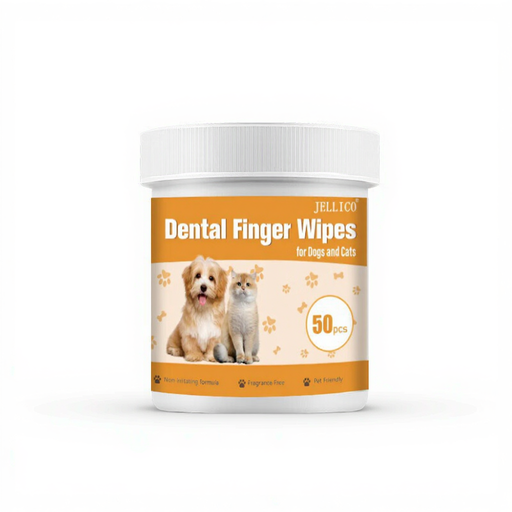
Why this choice suits this profile: These finger wipes are aimed at owners looking for a simple, direct approach, without a traditional brush or rinsing.
Each wipe is single-use, which avoids storing a damp accessory between cleanings. Close the lid after each use.
Textured surface, box of 50 pieces and no-rinse use according to the provided instructions.
A simple routine is far more likely to become a lasting habit than a complicated one. Adapt the steps to your dog’s temperament:
Interactive dog toys, especially squeaky ones, can help keep your dog occupied and encourage shared play. However, they should not be presented as a substitute for brushing or examining the mouth.
We’ve put together a comprehensive, real-time updated list of products that meet these strict selection criteria and European safety regulations.
Start with an easy-to-use accessory, such as a dental wipe, then gradually get your dog used to being touched around the mouth. A dental treat or toy can complement this routine, depending on your dog’s weight and chewing habits.
It all depends on the material, how often it’s used and the strength of your dog’s jaw. There’s no universal lifespan. Inspect the toy before each session and replace it as soon as a piece comes off, a crack appears or the stuffing becomes accessible.
No. They can support daily maintenance through the mechanical action of chewing, but they don’t replace regular cleaning or veterinary advice if you notice a problem. Also take their calorie content into account and stick to the recommended daily allowance.