
Livraison le jour même ou le lendemain

Qualité garantie

Débloquez vos offres de bienvenue: Livraison GRATUITE | Jusqu'à -80 % | 30 jours d'essai gratuits à JoyPlus
Téléchargez l'application
Dog dental care products come in the form of treats, sticks, chew toys and brushing accessories. But a convincing package isn't enough – the product also needs to suit your dog's size, age and chewing strength.
Before you place an order, there are three pitfalls to avoid:
A dental treat or toy is no substitute for brushing with a suitable toothbrush, nor for a vet's opinion if your dog has persistent bad breath, sensitive gums or visible tartar.
Start by checking the weight category on the packaging. Dental treats for small dogs, sizes for medium dogs and those designed for large dogs differ in both dimensions and resistance.
In practice:
Weight isn't everything, though. A dog that swallows treats without chewing needs closer supervision and, in some cases, a longer or more substantial product.
A slightly abrasive texture can help create mechanical friction on certain tooth surfaces during chewing. Pedigree Dentastix sticks, for example, have an X-shape and a texture the brand describes as mildly abrasive. According to the manufacturer, daily use may help limit tartar build-up. This is a marketing claim and not a guarantee that holds true for every dog.
For a dental chew toy, examine the material carefully:
Avoid items that feel excessively hard compared with your dog's teeth. If your dog chews with unusual intensity, ask your vet for advice before offering a particularly rigid toy.
A dental treat is a complementary food, not a complete meal. Its calorie content needs to be factored into your dog's daily ration, especially if your dog is not very active or tends to gain weight.
Take the time to check:
After opening, seal the bag carefully and store it in a cool, dry place. For natural chews, remove the piece when it becomes small enough to be swallowed. Always make sure your dog has access to fresh water.
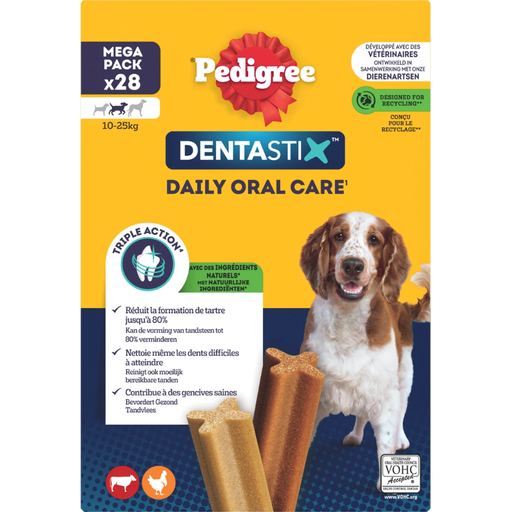
Why this product suits this profile: With 28 sticks, this pack fits easily into the daily routine of a dog weighing 10 to 25 kg, from the age stated on the packaging.
The weight category is clearly stated and the recommended dose is one stick per day. Chewing and total calorie intake still need to be monitored.
An X-shape, a texture the brand describes as mildly abrasive, 28 pieces and a formula said to be low in fat and with no added sugars.

Why this product suits this profile: This lamb lung chew is aimed at owners looking for a short ingredient list and a slow-dried product.
The product page states it is a complementary food, not a complete meal. Supervision is still essential, as is removing small pieces.
A lamb lung-based recipe, a stated crude protein content of at least 60% and an 80 g pack size.
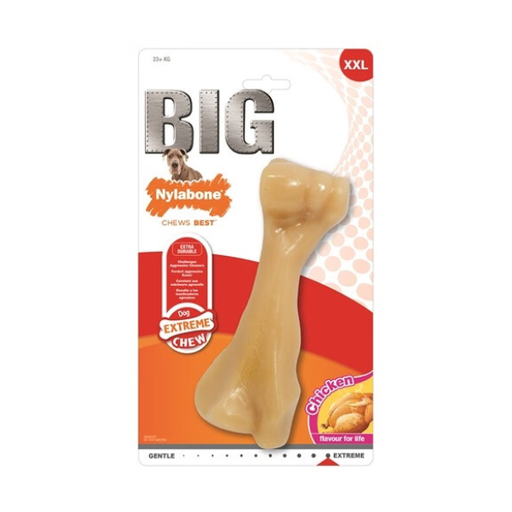
Why this product suits this profile: This nylon chew toy is designed for dogs over 23 kg known for their strong jaws. Its main purpose is to keep them occupied for longer.
The weight threshold and the intended use for powerful chewers are clearly stated. Inspect the nylon and replace the toy if it becomes too small or shows significant wear.
A nylon designed for heavy chewing, a chicken flavour and the option to clean it with warm water and a mild, non-toxic detergent.
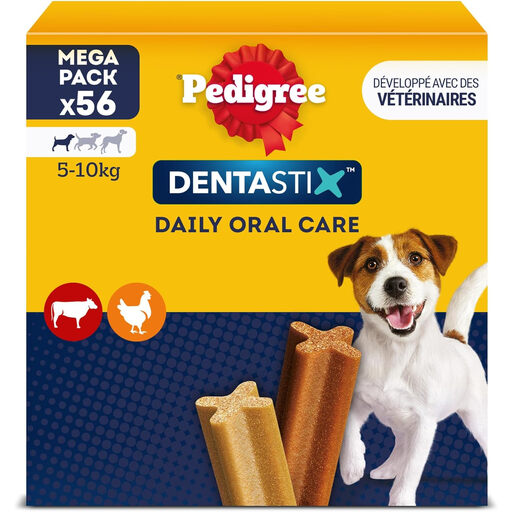
Why this product suits this profile: This pack is designed for small dogs under 10 kg and puppies from 4 months old, subject to the instructions on the label.
The target weight is clearly stated, which reduces the risk of choosing a size that's too large. The product page recommends one stick per day, with fresh water available.
56 sticks split into bags, an X-shape and a detailed ingredient list on the product page.
We've put together a full, real-time selection of products that meet these demanding criteria and European safety regulations.
To establish a teeth and gum care routine, start gradually and watch how your dog reacts. Give the treat after a meal or at a set time each day to avoid offering too many.
Keep these precautions in mind:
Dog dental treats can contribute to a plaque reduction routine, but they won't necessarily remove established deposits. If your dog will tolerate it, regular brushing remains a particularly useful addition.
It depends on the product. Some sticks recommend a daily portion, but always follow the instructions, take your dog's weight into account and factor the treat into the total daily food allowance. Without adjusting the diet, avoid giving one several times a day.
The lifespan depends on the material, the dog's size and its bite strength. At first, inspect the toy before and after each use, then check it regularly. Replace it as soon as a piece comes off, a crack appears or it becomes too small to use safely.
No. Chewing can complement daily care, but it does not replace brushing or veterinary check-ups. To establish a suitable routine, consider your dog's age, weight, eating habits and dental condition.