
Livraison le jour même ou le lendemain

Qualité garantie

Débloquez vos offres de bienvenue: Livraison GRATUITE | Jusqu'à -80 % | 30 jours d'essai gratuits à JoyPlus
Téléchargez l'application
Grooming your dog at home is an excellent idea, whether to save money, for practical reasons, or to reassure a slightly stressed pet. But here's the catch: the pet clipper market is a jungle of marketing promises where it's easy to get lost. As a product expert for Joybuy, my mission is to help you decode the spec sheets and identify the criteria that truly matter for a successful purchase, far from the common pitfalls.
Before you even start comparing models, it's essential to know the hidden flaws that too often turn a good deal into a nightmare.
To make the right choice, focus on these three technical criteria. They define the performance and safety of a dog clipper.
Motor Power and Blade Type: Cutting performance depends directly on the motor. Rotary motors, which are more powerful, are preferable for dense and long coats. As for blades, ceramic heats up less than stainless steel, which limits the risk of irritation during a long grooming session. The downside: they are more fragile if dropped. A good dog grooming kit will always include several cutting heads or guide combs to adapt to different lengths and body areas.
Actual Noise Level (in decibels): For a truly quiet dog clipper, look for a model whose noise level is clearly displayed and is below 60 dB. This threshold is generally well-tolerated by most pets, including the most fearful ones. If this information is missing, be wary.
Battery Life and Power Consistency: For a cordless dog clipper, there are two points to check: the advertised battery life (in minutes) and the charging time. A good lithium-ion battery ensures stable power from start to finish, without the power drops that cause the clipper to "chew" the hair.
Rather than an endless list, here is our selection of models that meet specific needs, keeping in mind the pitfalls and criteria we've just discussed.
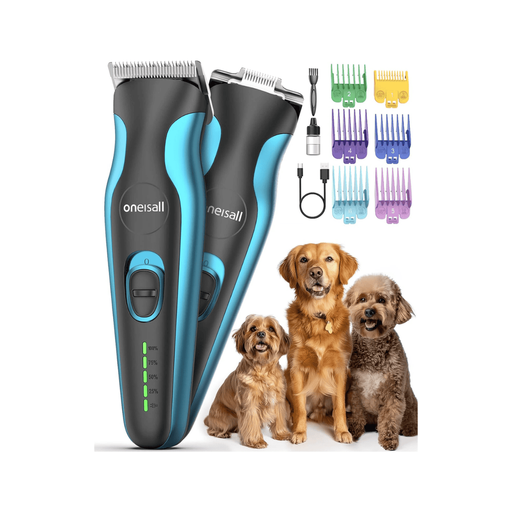
Why we love it: This model focuses entirely on its low-noise motor, a decisive asset for dogs (or cats) who panic at the sound of a classic clipper. Its cordless design offers essential freedom of movement for handling a pet that can't sit still.
It tackles the "quiet" clipper myth by concretely focusing on a low decibel level to soothe the pet, rather than just making a vague marketing promise.
The combination of quiet operation and cordless design makes it a very reassuring option for starting out with at-home grooming.
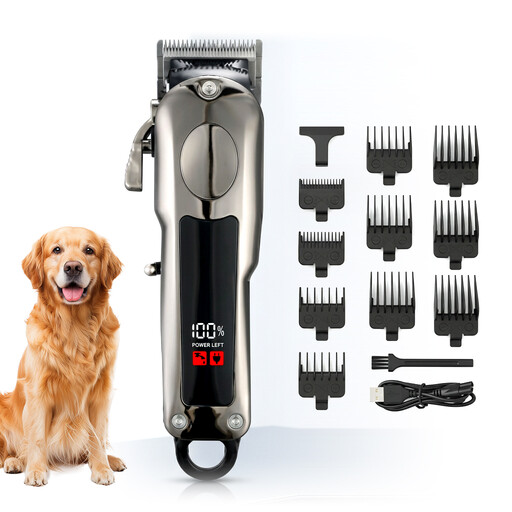
Why we love it: This model is armed with a powerful motor (up to 7200 RPM) designed to tackle the densest fur without struggling. It's the perfect solution for those who have experienced the frustration of jamming with low-end clippers.
It bypasses the "universal" blade trap with 5 precision adjustment levels and 10 guide combs. It also prevents power loss thanks to a robust motor that doesn't falter.
Its power and extensive range of accessories make it a truly complete grooming kit, ready for the most demanding jobs.

Why we love it: For anyone who dreads the battlefield of fur after a grooming session, this 5-in-1 kit is the miracle solution. It doesn't just clip: it vacuums up hair in real time, leaving your floor and your pet impeccable.
This system tackles an often-overlooked problem: hair dispersion. The cleaning chore becomes a simple step integrated into the grooming process.
Its vacuum function (12,000 Pa) which, according to the manufacturer, captures up to 99.99% of hair. A compelling feature for keeping a clean house.
A successful grooming session always ends with a reward. Treat your companion to a well-deserved rest on a cosy bed to praise them for their patience.
The frequency depends on the breed, coat type, and season. As a general rule, clipping every 4 to 8 weeks is a good average for long or curly-haired breeds. But be aware, regular brushing between sessions remains essential to prevent mats and maintain a healthy coat.
The key is patience and a gradual approach.
Yes, this is absolutely essential. Oiling the blades before and after each use (one or two drops of oil are enough) reduces friction, prevents overheating, inhibits rust, and ensures a clean cut for longer. Remember to remove all hair from the cutting head before applying the oil.