
Livraison le jour même ou le lendemain

Qualité garantie

Débloquez vos offres de bienvenue: Livraison GRATUITE | Jusqu'à -80 % | 30 jours d'essai gratuits à JoyPlus
Téléchargez l'application
A dog chew toy can keep your companion occupied, share in their playtime and satisfy their natural need to chew. But a nice shape or a simple "tough" label isn't enough to guarantee a good choice. Size, materials and your dog's temperament all play a crucial role in both safety and the toy's lifespan.
Before you place an order, here are the most common mistakes to avoid.
No toy suits every dog, especially the most determined chewers. A fabric model might be perfect for a dog that nibbles gently, but could be shredded in minutes by an energetic adult. Conversely, an extremely hard toy won't necessarily be suitable for a puppy or a small dog.
Labels like "tough" or "durable" should therefore be considered alongside the material, the toy's shape and your pet's chewing strength.
A toy that's too small risks being swallowed or getting stuck in your dog's mouth. One that's too bulky will be difficult to carry and unpleasant to chew. Attached elements, such as a rope, squeaker or decorative pieces, also need regular checking.
Supervision is essential, especially during the first few uses, with a puppy, or with a dog that destroys its toys quickly.
A dog dental toy with ridges can encourage mechanical friction on certain tooth surfaces during chewing. However, it does not replace brushing or the care recommended by a vet. Promises of tartar reduction in dogs should be seen as usage guidelines, not a guaranteed result.
A toy and a dental treat for dogs actually serve different purposes: the treat is consumed, whereas the toy needs to be inspected and replaced as soon as it becomes damaged.
A size given in centimetres is far more informative than a vague phrase like "all breeds". Compare it with the width of your dog's mouth and their habits.
Nylon, natural rubber, TPR and certain multi-layer structures are commonly used for chew toys. However, they don't all behave the same way:
A combination of nylon and rubber can offer a good compromise between firmness and flexibility. However, it shouldn't be presented as suitable for all dogs without considering their size and behaviour.
A squeaky toy or an interactive dog toy often attracts attention thanks to a squeaker, texture or unusual shape. It can be used for fetch and retrieve sessions, or as a boredom-busting dog toy. In a flat, though, think about the noise level and the possibility of putting the toy away once playtime is over.
For cleaning, always follow the instructions on the product page. Some models can be rinsed with water, while others should only be wiped with a damp cloth. Dry them completely before giving them back to your pet.
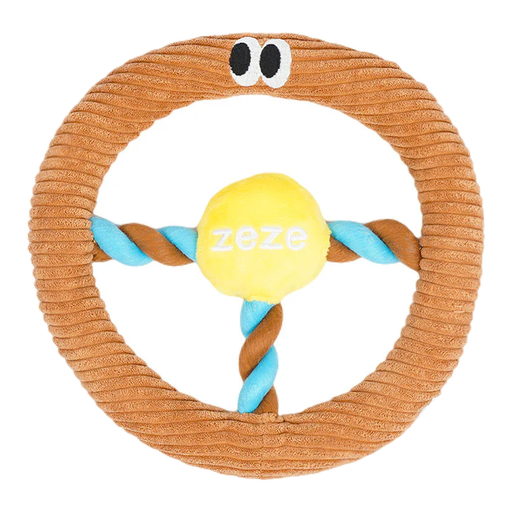
Why this choice suits this profile: Its dimensions of 23 × 23 × 3.5 cm and built-in squeaker make it a great companion for shared play, fetch and supervised chewing.
The product page states that this model is not intended for very heavy chewers and recommends regularly checking the squeaker.
An original shape, textured surface and built-in sound to encourage interaction.
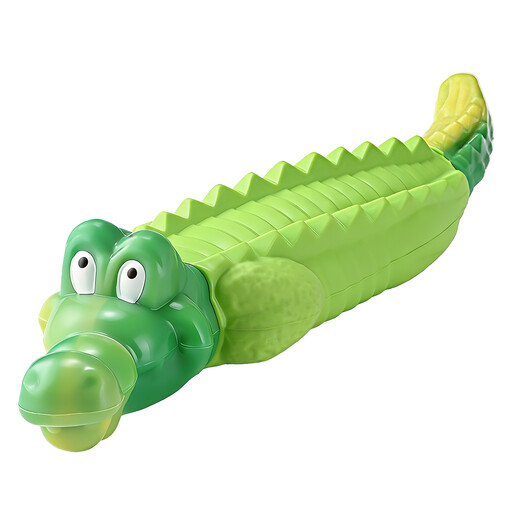
Why this choice suits this profile: Its dual nylon and natural rubber structure, combined with its 24 × 6 cm size, targets medium and large dogs.
The size is clearly stated for medium and large dogs, avoiding reliance on a vague "suitable for all" promise.
A textured surface, easy mouthing and suitability for both fetch and outdoor play.
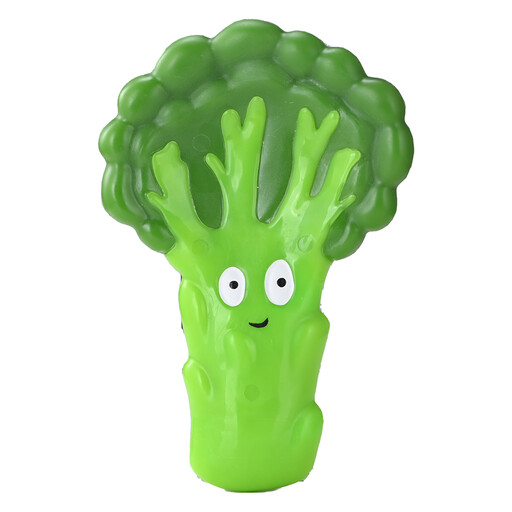
Why this choice suits this profile: This 11 × 3.5 × 16.5 cm nylon toy is designed for chewing, fetch and keeping your dog occupied, both indoors and outdoors.
The material and dimensions are clearly stated. The product page also recommends replacing the toy if sharp edges or loose parts appear.
Nylon construction, an easy-to-grip shape and dual use: chewing and fetch games.
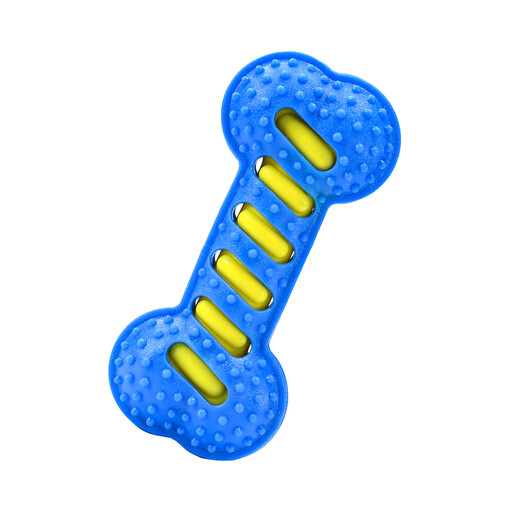
Why this choice suits this profile: Its bone shape and built-in squeaker are ideal for small and medium dogs that enjoy short, frequent interactions.
The product page restricts its use to small and medium dogs and recommends regularly checking the squeaker and for any cracks.
A blend of PVC and TPR, a sound effect and water-cleanable as stated by the manufacturer.
We've put together a comprehensive, real-time updated list of products that meet these demanding selection criteria and European safety regulations.
It all depends on the material, how often it's used and your dog's chewing power. Inspect the toy before and after each session. Replace it as soon as you spot a crack, an open seam, a sharp edge, a visible squeaker or any piece small enough to be swallowed.
No. The ridges can assist chewing and mechanical friction, but they don't replace a proper oral hygiene routine. If there's significant tartar, pain or persistent bad breath, seek advice from a vet.
An interactive, squeaky or fetch-style model can stimulate your pet more. However, let them discover the toy under supervision. Remove fabric models, or those with a rope or squeaker, as soon as they're torn. Rotating several toys helps maintain their interest, without ever compromising on safety.