
Livraison le jour même ou le lendemain

Qualité garantie

Débloquez vos offres de bienvenue: Livraison GRATUITE | Jusqu'à -80 % | 30 jours d'essai gratuits à JoyPlus
Téléchargez l'application
A dog chew toy can keep your pet occupied, accompany their playtime and satisfy their natural urge to gnaw. But a hasty purchase can quickly go wrong: a toy that’s too small, an unsuitable material, or stitching that gives way after just a few sessions.
Before you place an order, it’s worth sorting through the marketing claims and focusing on the features you can actually verify.
No toy is truly indestructible. Labels like “bite-resistant” or “durable” usually indicate a reinforced design, but they never replace the need to supervise your dog. A dog that chews vigorously can detach a piece, crack a rigid material, or tear a seam.
Even a durable dog toy should be inspected regularly. As soon as an edge becomes sharp, a piece breaks off, or the stuffing starts to show, remove the toy.
Two dogs of the same breed can have very different jaw sizes, bite strength and play habits. The toy needs to be large enough for your companion to grip, without being able to swallow it whole. For a ball, this point is especially important: a diameter that’s too small increases the risk of accidental ingestion.
Always check the dimensions provided by the manufacturer and observe how your pet carries and chews the toy.
A grooved or textured surface can rub against teeth and gums during chewing. However, it does not replace the oral care recommended for your pet. A dog tooth-cleaning toy should be seen as a play and enrichment accessory, not a medical device.
Look for clear information about the composition, dimensions, cleaning instructions, target species and warnings. A mention like BPA-free or non-toxic should be understood as a stated product feature: it does not replace supervision.
A chew toy can serve several purposes:
A washable toy fits more easily into your daily routine. Some models can be cleaned with water, others with a damp cloth or in the top rack of the dishwasher. Follow the manufacturer’s recommendations: boiling water, harsh disinfectants and immersion can damage certain materials.
The lifespan depends on how often it’s used, the strength of your dog’s chewing and how well it’s maintained. It’s better to rotate several toys than to leave the same one available all the time.
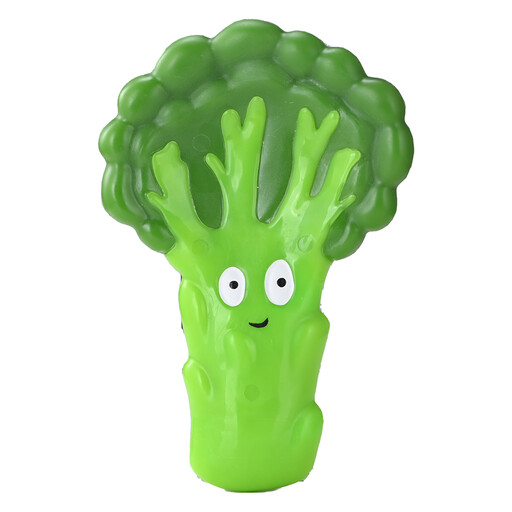
Why this choice suits this profile: Its playful shape and dimensions of 11 × 3.5 × 16.5 cm make it a versatile toy for getting started, suitable for both indoor use and fetch games.
The nylon material and inspection guidelines make it easier to assess the toy’s durability than with a model whose composition remains unclear.
Nylon, easy-to-grip broccoli design, chewing and fetch functions. The manufacturer states it is BPA-free.
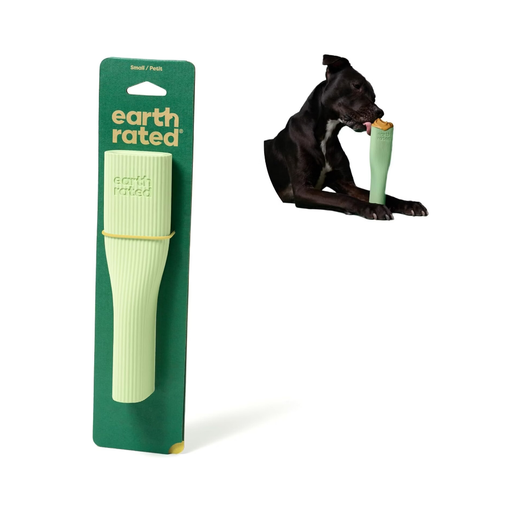
Why this choice suits this profile: This natural rubber model combines chewing, mental stimulation and treat dispensing. Its design suits small dogs and puppies alike.
The stated dimensions of 17.8 × 5.1 cm reduce the risk of choosing a toy that’s disproportionate for a small frame.
Compartment for dry or wet food, can be placed in the freezer and cleaned in the top rack of the dishwasher.
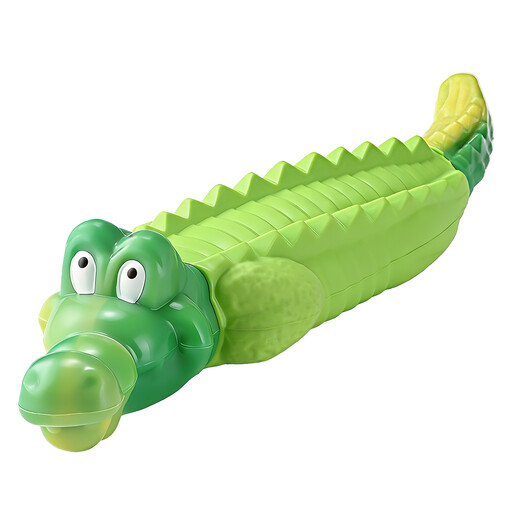
Why this choice suits this profile: Its double-layer structure and dimensions of 24 × 6 cm target medium and large dogs that alternate between chewing and fetch games.
The combination of nylon and natural rubber is clearly detailed, which avoids relying on a simple promise of sturdiness.
Nylon core, natural rubber shell, 3D texture and handle for an easy grip during fetch or tug-of-war games.
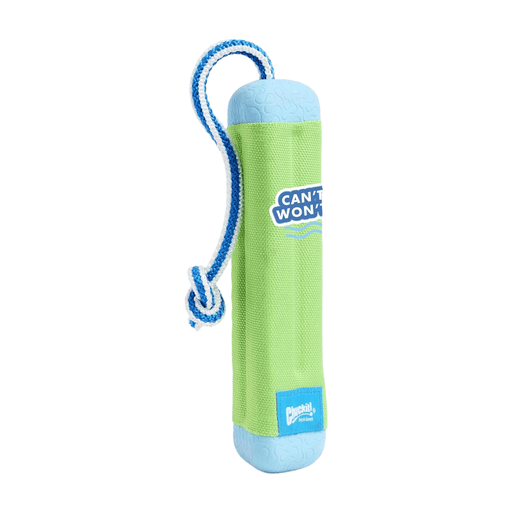
Why this choice suits this profile: This floating dog toy is designed for fetch, retrieve and tug-of-war games at the beach, by a lake or in the garden.
The buoyancy, dimensions according to the chosen size and rinsing instructions are specified, rather than relying on a simple promise of water play.
Materials: nylon, rubber and memory foam, knotted handle and colours that are highly visible on water and in grass.
We’ve selected a comprehensive list, updated in real time, of products that meet these strict selection criteria and European safety requirements.
There is no universal lifespan. The frequency of use, jaw strength and material all play a role. Inspect the toy before each session and replace it at the first sign of significant damage.
For a puppy toy, choose a suitable size, a material that’s soft enough and a shape that’s easy to hold. Avoid small detachable parts and always supervise the first few uses, especially during the teething period.
No. A texture can accompany chewing and help rub certain tooth surfaces, but it does not replace regular hygiene care or a vet’s advice if a problem arises.