
Livraison le jour même ou le lendemain

Qualité garantie

Débloquez vos offres de bienvenue: Livraison GRATUITE | Jusqu'à -80 % | 30 jours d'essai gratuits à JoyPlus
Téléchargez l'application
A dog chew toy can keep your companion occupied, add excitement to playtime, and steer them away from your furniture or shoes. But not all jaws are the same. A toy that's too small, a material that's too soft, or a "dental" feature advertised without clear explanation can quickly turn a purchase into a wasted expense.
Before you settle on a shape or colour, focus on the criteria that really matter day to day.
A very hard toy isn't necessarily the best choice. It can be difficult to grip or uncomfortable for some dogs, while a toy that's too soft may tear under repeated chewing. Toughness depends on the material, thickness and overall design of the toy.
Dogs that chew forcefully generally need a robust structure, but no toy is indestructible. Claims like "tough" or "long-lasting" should therefore be seen as design indicators, not guarantees of longevity.
A toy designed to help clean teeth may have ridges or a textured surface that rubs against the teeth during chewing. This does not replace regular dental care or a vet's supervision. A dental dog treat and a dental toy are also two very different products: the former is meant to be eaten, while the latter should not be ingested.
Weight is just one indicator among many. The size of the jaw, chewing style and tendency to swallow pieces all matter just as much. A toy that's too small could be swallowed, or even cause choking. Conversely, a toy that's too bulky will be hard to carry, especially for a puppy or small dog.
For regular chewing, look for a page that clearly details the material used:
A multi-layer design — for example, a nylon core covered with natural rubber — can offer a good balance between firmness and flexibility. Also check the cleaning instructions: some toys can be rinsed with water, while others just need wiping with a damp cloth.
Compare the stated dimensions to the size of your dog's mouth and their ability to hold the toy. A model measuring 11 × 3.5 × 16.5 cm may suit several sizes depending on its shape, while a toy of 24 × 6 cm will be more suited to medium and large dogs.
For a small dog, choose something easy to grip and avoid detachable parts. For a medium or large dog, pick a toy with enough length and thickness to reduce the risk of swallowing.
A chew toy can also serve as:
Versatility can be handy if you plan to use the same accessory indoors and outdoors. However, it shouldn't overshadow the product's primary function or the limits set by the manufacturer.
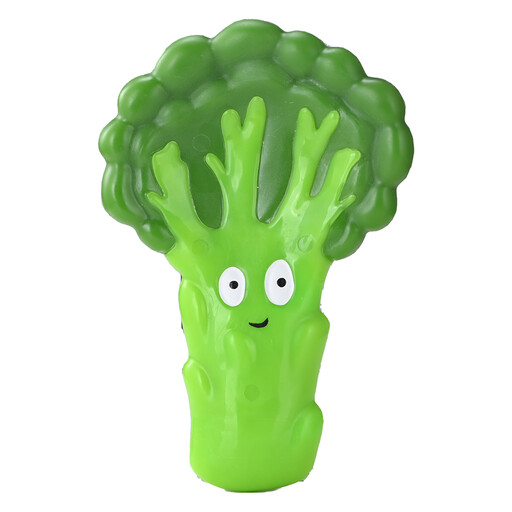
Why this choice suits this profile: With its stated size of 11 × 3.5 × 16.5 cm and nylon construction, this toy is a versatile first option, suitable for both chewing and fetch games.
The page specifies the material, dimensions, cleaning with a damp cloth and the need to replace the toy as soon as it shows signs of wear.
Nylon construction, an original shape and possible use indoors and outdoors, under supervision.
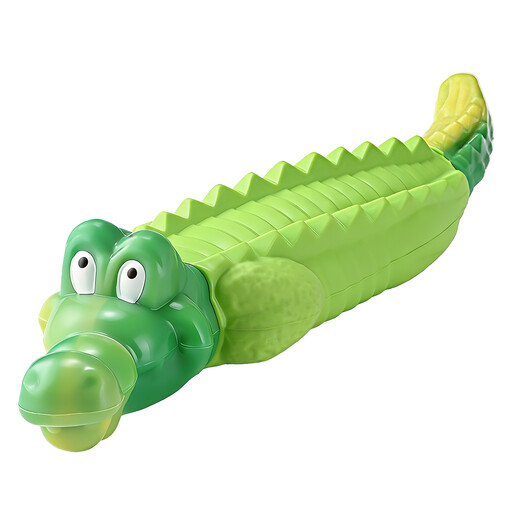
Why this choice suits this profile: Its structure, made from nylon and natural rubber, along with its 24 × 6 cm size, is aimed at medium and large dogs that enjoy fetching their toys.
The combination of the two materials is clearly described, without presenting the toy as indestructible. Regular checks on its condition are still essential.
A nylon core, a natural rubber outer layer, a textured grip and multiple possible uses: fetch, retrieve or tug-of-war.
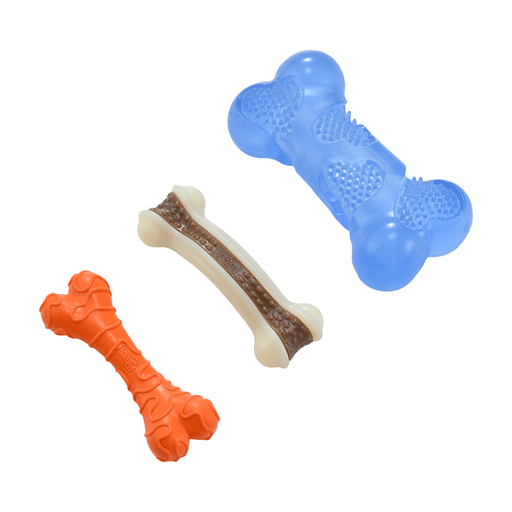
Why this choice suits this profile: This set, made up of bone and cheese-shaped toys, is aimed at owners who want to alternate between chewing, fetch and tug-of-war with a single bundle.
The page mentions a cleaning action linked to chewing, while recommending you supervise the toy and replace it as soon as it becomes damaged.
Multiple shapes, a surface designed to support chewing and compatibility stated with different dog sizes.
We've put together a comprehensive, real-time updated selection of products that meet these demanding criteria, while complying with European safety regulations.
Even a tough dog toy needs regular inspection. Before each session, check that it has no cracks, sharp edges, open seams or small parts that could come loose. Remove it immediately if your pet starts tearing pieces off.
To minimise risks:
A squeaky dog toy deserves extra attention around the sound mechanism. Fabric or plush models should also be removed as soon as the stuffing or squeaker becomes accessible.
It all depends on how often it's used, the material, the size of the toy and the strength of your dog's chewing. There's no universal lifespan. Regular visual checks are more reliable than any commercial promise of longevity.
No. The ridges on the toy can provide mechanical friction during chewing, but they don't replace a proper hygiene routine or a vet's advice if there's a dental problem.
Pick a model suited to their size, with no easily detachable parts, and test it first while you're present. An anti-boredom chew toy can help during quiet times, but it won't solve persistent anxiety or destructive behaviour on its own.