
Livraison le jour même ou le lendemain

Qualité garantie

Débloquez vos offres de bienvenue: Livraison GRATUITE | Jusqu'à -80 % | 30 jours d'essai gratuits à JoyPlus
Téléchargez l'application
Dog and cat treats can be used as rewards, to keep pets occupied or simply to add variety to the time you spend together. But an attractive photo, a “chicken flavour” label or a large pack does not necessarily tell you whether a product is genuinely suitable for your dog or cat.
Here are the key criteria to consider before buying, along with a selection of products available from Joybuy France.
Most dog snacks and cat snacks are complementary foods. They should not replace your pet’s daily diet. Even when a recipe contains vitamins, taurine or a substantial proportion of meat, it should remain a reward given in reasonable quantities.
If you give treats every day, adjust the amount of your pet’s main food accordingly. As a general rule, it is best to keep treats below 10% of the daily calorie intake, unless the packaging or your vet recommends otherwise.
A chicken treat may contain very different quantities of chicken depending on the recipe. Check the ingredients list and look for the stated percentage. For example, Catisfactions treats contain 4% chicken, while INABA dog bites contain more than 55%, depending on the product.
Marketing claims alone are therefore not enough to compare two products. Also check the analytical constituents: protein, fat, fibre, ash and moisture.
A multipack of treats can reduce the cost per serving, but only if the contents will be consumed quickly enough. Wet products, liquid cat treats and soft bites generally need to be refrigerated after opening and consumed promptly.
Dry biscuits and dehydrated strips are easier to store: a resealable pouch kept away from heat and moisture is usually sufficient.
A cat treat is not necessarily suitable for a dog, and vice versa. Check the species stated on the packaging, as well as the relevant life stage: kitten, adult cat, puppy or adult dog.
For a small dog, treats that are easy to break into pieces are practical during training sessions. For a large dog, a chew may be more suitable, provided you supervise your pet and choose a size compatible with its jaw.
A soft texture does not necessarily mean a product is low in calories. To compare products, rely on the nutritional information and the portion actually given.
Low-calorie treats should be assessed according to the portion served, not simply by their marketing claims. INABA Churu products, for example, have a high moisture content: 86% for one cat product and 88% for one dog product. The result is a liquid texture and a water-rich portion, but not a complete food.
For dry recipes, pay particular attention to the quantity given each day. A high-protein treat may be useful for certain purposes, but a high protein percentage alone is not enough to assess the product’s overall quality.
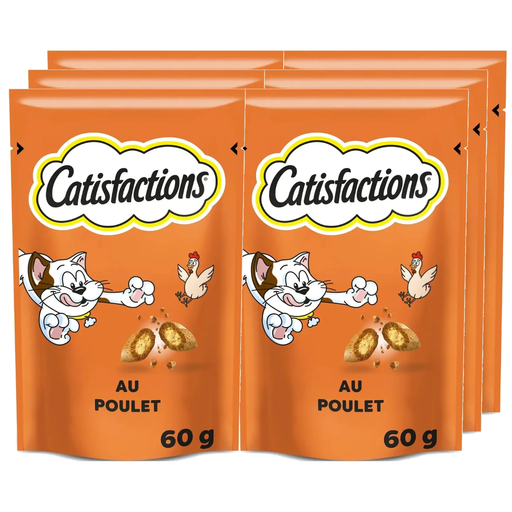
Why it fits the profile: A 360 g format designed for adult cats, ideal for households that regularly give out small rewards.
The ingredients list specifies that the product contains 4% chicken and confirms that it is a complementary food. This helps prevent confusion between a stated flavour and a high meat content.
A crunchy texture with a tender centre, 12% fat and up to 12 treats per day depending on the cat’s weight.
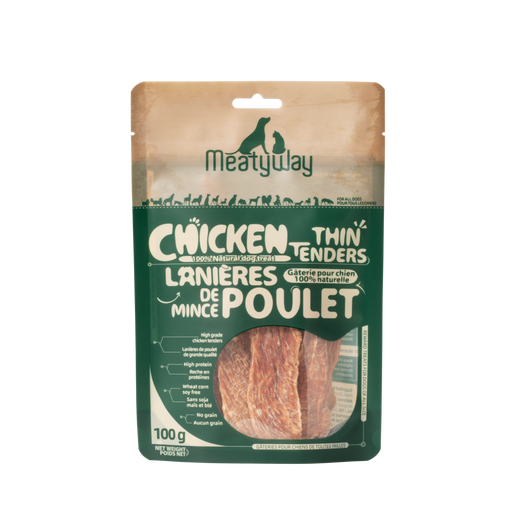
Why it fits the profile: An option for dog owners who want to review a concise ingredients list before choosing rewards for training.
The product page lists a single ingredient: chicken. The “grain-free” claim therefore does not conceal a long list of additives.
Soft strips that are easy to break into pieces, with 70% crude protein and 5% fat according to the product specifications.
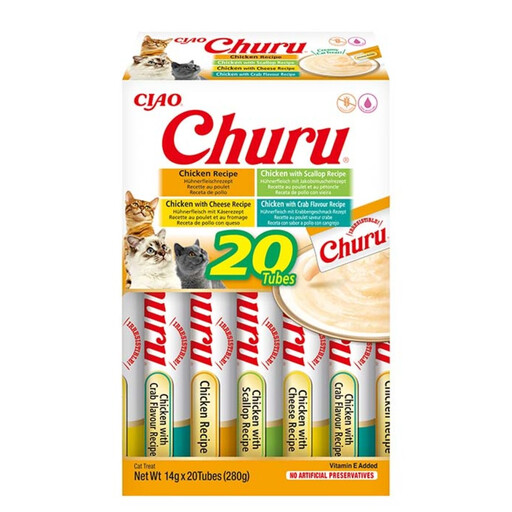
Why it fits the profile: A purée texture that suits cats who enjoy wet snacks or treats served directly by hand.
The 91% moisture content is clearly stated, along with the recommendation to limit consumption to 1 or 2 sticks per day for an adult cat.
A pack of 20 14 g portions, several chicken recipes and refrigeration after opening.
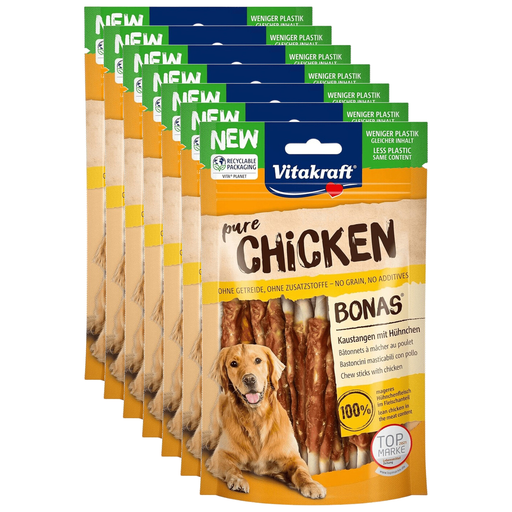
Why it fits the profile: A large format for households that regularly give their dog chews or rewards during activities.
The 560 g format is best suited to regular consumption. Check the date, reseal the pouch carefully and supervise your dog while it chews.
Sticks made with beef hide, containing 4% chicken and 4% cheese according to the stated ingredients.
Explore an updated selection of products to compare formats, flavours and uses based on the criteria outlined in this guide.
It depends on the species, weight, age, activity level and recipe. Follow the serving recommendation on the packaging and slightly reduce the main food portion if necessary. If your pet tends to gain weight, pay particular attention to weighing out its portions.
They contain more water than dry biscuits, as shown by the moisture levels of certain INABA products. They can contribute to fluid intake, but they should never replace constant access to fresh water.
Not necessarily. Compare the price per gram or per serving, then check the shelf life after opening. A large pack is worthwhile if your pet consumes the product regularly and you can follow the recommended storage conditions.