
Livraison le jour même ou le lendemain

Qualité garantie

Débloquez vos offres de bienvenue: Livraison GRATUITE | Jusqu'à -80 % | 30 jours d'essai gratuits à JoyPlus
Téléchargez l'application
Pet hair on your clothes, impossible knots and claws catching on fabrics… Grooming at home requires the right tools. However, choosing dog and cat grooming tools isn’t simply a matter of picking the accessory with the longest list of specifications.
Some marketing claims deserve closer scrutiny. A brush advertised as universal may be too harsh for a fine coat. A device fitted with a sprayer may require particularly careful maintenance. And although a clipper may be described as quiet, it can still heat up during prolonged use. Here are the criteria to review before placing your order.
A short-haired dog, a long-haired cat and a rabbit do not have the same needs. A dog brush with long pins may penetrate a dense coat, but it must be used carefully on sensitive skin. Conversely, a comb with teeth that are too fine may pull at knots without properly reaching the undercoat.
Read the information about species and coat types carefully. For long hair, a detangling brush for dogs and cats can be invaluable, provided you work in small sections rather than forcing your way through a mass of knots.
A self-cleaning pet brush makes it easier to remove accumulated hair using a button or retractable pins. However, it does not eliminate the need to clean the head and handle regularly.
Models with a sprayer can reduce static and lightly dampen the coat. However, check whether it produces a cool mist, whether the reservoir is easy to remove and whether the device is genuinely watertight. A model that is not waterproof must not be rinsed under the tap or immersed in water.
An uncomfortable tool will usually end up at the back of a drawer. Weight, handle shape, cable length and battery life all matter, particularly during longer grooming sessions. When choosing a dog and cat clipper, also remember to check the blade temperature and the lubrication procedure.
Electrical accessories must be used in accordance with their instructions. Also make sure you can find the contact details of the manufacturer, importer or responsible person in the European Union, along with the safety instructions in French where provided.
The material also deserves your attention. Silicone is flexible and easy to rinse, while stainless steel provides the rigidity needed for pins and blades. In all cases, inspect the tool regularly to identify a bent tooth, a crack or a surface that has become sharp.
A dog and cat nail clipper should provide a sufficiently open cutting area and a secure grip. Stainless-steel blades are the most common. Cut only the clear tip of the claw, taking care to avoid the pink area containing blood vessels and nerves.
An LED pet nail clipper can improve visibility when trimming light-coloured claws. However, the light is not always enough to identify the sensitive area on very dark claws. In this case, remove only the tiniest amount and proceed gradually.
When choosing a clipper, compare the stated noise level, battery life, included guards and available cutting-height adjustments. Brush and dry the coat before clipping to reduce snagging. Take regular breaks to check the temperature of the head.
A pet hair vacuum cleaner included in a kit can reduce residue around the grooming area. Check the dust-container capacity, how easy it is to clean and the device’s noise level. Suction that is too powerful or a sudden noise may stress some animals.

Why this choice suits this profile : This glove is ideal for first bathing sessions and for owners looking for a simple accessory to groom dogs, cats or rabbits.
Its design combines a glove and a brush, with no battery or reservoir to maintain. The movements remain easy to control during washing.
Silicone advertised as non-toxic, five fingers and 3 000 10 mm silicone pins according to the product listing.
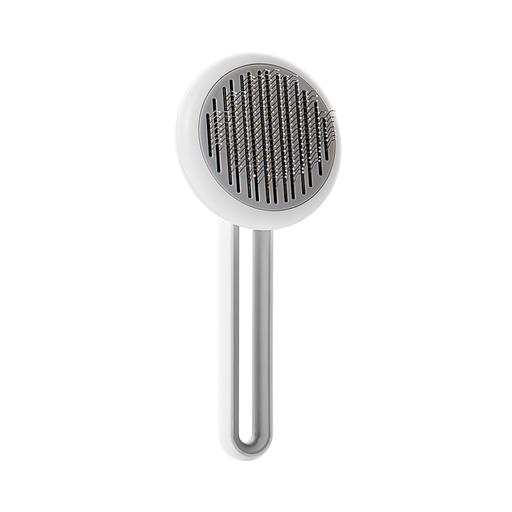
Why this choice suits this profile : This brush is designed for users who want a reusable tool suitable for several species and different hair lengths.
The rounded tips are designed to minimise harsh contact with the skin, while the eject button lets you remove hair without pulling it out by hand.
Stainless-steel pins, a curve advertised at 150° and a single-button cleaning mechanism.
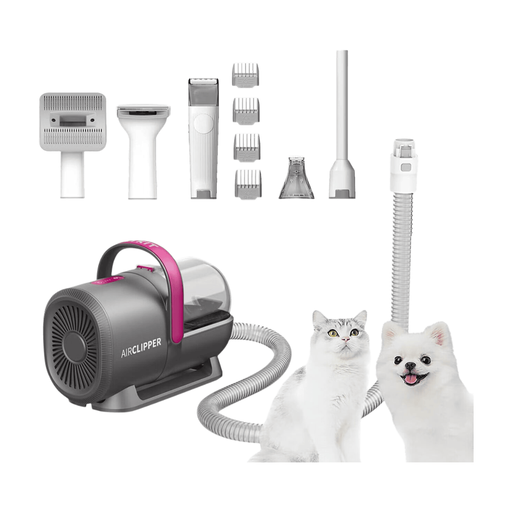
Why this choice suits this profile : This kit is designed for households that regularly groom a dense coat and want to minimise loose hair during the session.
Its 1.5 litre container and dedicated accessories eliminate the need for multiple devices, provided you are prepared to clean it after every use.
Kit advertised as 5-in-1, with detachable clipper, several guards, suction and a washable dust container.
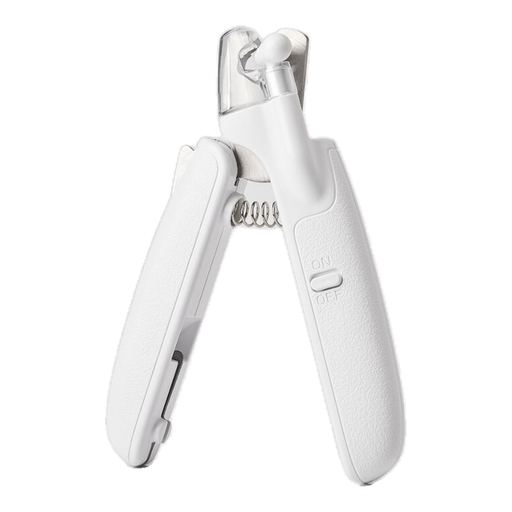
Why this choice suits this profile : This nail clipper is aimed at people who want to combine lighting, trimming and finishing in a single accessory for small pets.
The light helps you see light-coloured claws more clearly, but trimming must still be limited to the tip and carried out on a calm animal.
LED light, nail-trimming debris collector, fold-away file and three LR44 batteries included according to the product listing.
We have put together a comprehensive selection, updated in real time, of products that meet these demanding criteria while also taking European safety regulations into account.
It all depends on the coat, the moulting season and your pet’s tolerance. A short, regular brushing session is generally better tolerated than a long session carried out at widely spaced intervals. If your companion has long hair, pay particular attention to the areas behind the ears, under the paws and around the collar.
First, let your pet sniff the device while it is switched off. Start with a few strokes without mist, then activate the gentle mode for one or two seconds. Reward calm behaviour and avoid spraying towards the eyes, ears or nose. Stop the session as soon as your pet shows signs of discomfort.
The lifespan depends on how often it is used, the type of coat and how well it is maintained. Replace a brush when its pins become deformed or sharp. With a clipper, clean the head after every use, check its temperature and apply the oil recommended in the instructions. A rechargeable battery may also gradually lose capacity, which is worth considering before you buy.