
Livraison le jour même ou le lendemain

Qualité garantie

Débloquez vos offres de bienvenue: Livraison GRATUITE | Jusqu'à -80 % | 30 jours d'essai gratuits à JoyPlus
Téléchargez l'application
Buying dog and cat food is not simply a matter of choosing a familiar brand or a recipe labelled “natural”. Between dry food, wet food, pouches in gravy and family-sized formats, differences in composition, storage requirements and price can be substantial.
For French households, three mistakes come up time and again: treating a marketing promise as a nutritional guarantee, comparing the percentages of dry and wet food at face value, or buying a large pack before knowing whether the animal likes the recipe and digests it properly.
Grain-free dog food may suit certain animals, but the absence of grains alone is not enough to assess whether a recipe is balanced. You should also examine the sources of protein, fats, fibre, minerals and nutritional additives.
For an adult dog, an Edgard & Cooper wet food recipe lists 56% chicken and turkey, 9% crude protein and 82% moisture. These figures need to be viewed in context: because wet food contains a great deal of water, it cannot be compared directly with dog kibble.
Labels such as “with salmon”, “with chicken” or “with vegetables” are designed to catch the eye, but only the detailed percentage in the composition reveals what the recipe actually contains. In some cat food pouches, for example, Purina’s recipe lists 4% salmon or turkey, depending on the variety.
That does not necessarily make the product unsuitable. It is simply a useful reminder to distinguish between the product name, the complete ingredients list and the food’s classification: complete food or complementary food.
Large bags of kibble often reduce the price per kilogram, but they require careful storage. Once opened, the bag should be resealed airtight, kept in a dry place and used according to the recommendations on the packaging.
For wet food, the risk of waste is different: an opened tray or pouch should generally be refrigerated and consumed within the stated time frame. The 100 g portions offered by Edgard & Cooper can therefore help reduce leftovers for a small dog.
Puppy food should support growth, while adult cat food is intended for an animal that has completed its development. A neutered cat or one that lives mainly indoors may also need a different ration, depending on its activity level.
Always check the information shown on the label:
This information does not replace advice from a vet in the event of illness, suspected allergies or sustained changes in weight.
The main reference points are crude protein, fat, fibre, ash and moisture. Orijen Original dog kibble lists 38% protein, 18% fat and 12% moisture. The daily ration should then be adjusted to the dog’s weight, activity level and lifestyle.
By contrast, wet foods often contain between 78% and 82% water. Their protein content may therefore appear lower on the label, but it cannot be compared directly with that of kibble without taking dry matter into account.
When choosing high-protein dog food, do not focus solely on the stated percentage: also review the detailed composition, energy density and recommended daily ration.
A smaller pack lets you check whether the animal likes the texture and recipe before committing to a large bag. For kibble, a gradual transition over 7 to 10 days is generally recommended, progressively increasing the proportion of the new food.
Formats worth considering include:
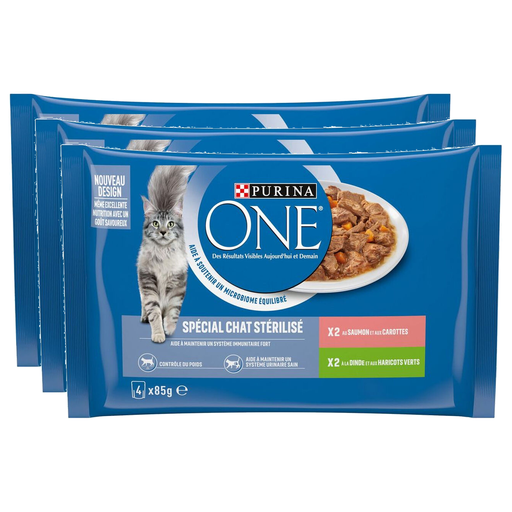
Why this choice suits the profile: With individually portioned pouches and 1.02 kg of food in total, this multipack is ideal for households that want to manage portions while trying several flavours for a neutered adult cat.
The 85 g portions help minimise leftovers after opening. The composition and analytical values are provided for the salmon and turkey varieties.
Complete food for neutered adult cats, 12 pouches, 78% moisture and a stated protein content of 13%.
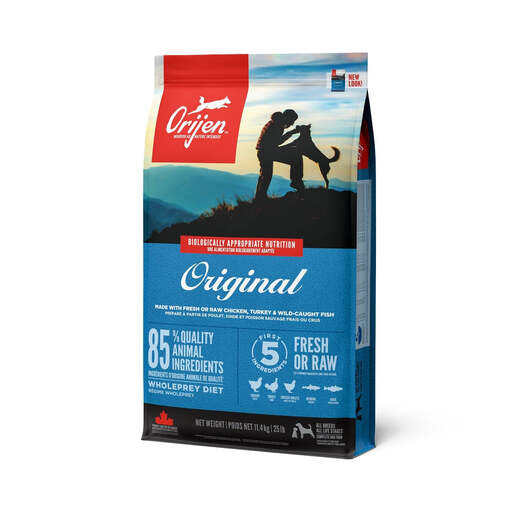
Why this choice suits the profile: This large bag is designed for owners of an adult dog that eats kibble every day and who want to examine its analytical constituents in detail.
The ration should be adjusted to the dog’s weight and activity level. A gradual transition over 7 to 10 days can help minimise digestive upset caused by an abrupt change.
38% crude protein, 18% fat, 5% fibre and 12% moisture according to the supplied information.
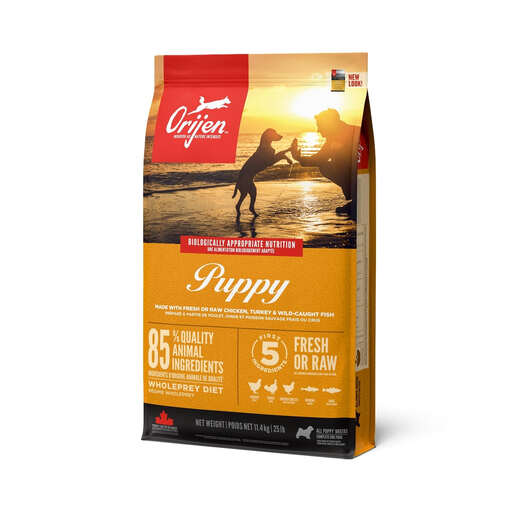
Why this choice suits the profile: This format is suitable for puppies of different breeds, particularly in a household with consistent demand and where portions need to be monitored precisely.
The grain-free label does not eliminate the need to monitor portions. The manufacturer recommends splitting meals and adjusting quantities according to the puppy’s age, weight and breed.
Recipe marketed for puppies, with 38% crude protein and 18% fat. The kibble is presented as suitable for their jaws.
We have brought together an updated selection so you can compare formats, compositions and intended uses before placing your order.
Yes, provided you adjust the total ration to meet the cat’s needs. Take into account the calories supplied by each food and, if necessary, reduce the quantity of kibble when adding wet food or pouches. Fresh water should always be available.
Refrigerate it and follow the storage time indicated on the packaging. For Edgard & Cooper wet food, the stated recommendation is to consume it within 24 hours of opening. If the smell, colour or texture seems unusual, it is best not to serve the product.
Do not simply compare the price displayed on the bag. Divide its price by its weight, then estimate how many days of food it provides based on the recommended daily ration. A larger format may reduce the cost per kilogram, but only if the dog tolerates the recipe well and the bag can be stored properly.