
Livraison le jour même ou le lendemain

Qualité garantie

Débloquez vos offres de bienvenue: Livraison GRATUITE | Jusqu'à -80 % | 30 jours d'essai gratuits à JoyPlus
Téléchargez l'application
Choosing dog and cat food isn’t just about comparing flavours and promotions. Between grain-free recipes, high-protein formulas and claims of being “natural”, it’s easy to end up paying more for a difference that’s barely noticeable day to day.
Your pet’s age, weight, activity level and lifestyle should guide your decision. An adult dog doesn’t have the same needs as a puppy. Similarly, a neutered cat living in a flat won’t necessarily eat the same way as a very active cat.
Terms like “premium”, “natural” or “rich in meat” aren’t enough to judge the quality of a pet food. Take the time to check the ingredients list, the analytical constituents and the legal product description.
A wet food may highlight an ingredient on its packaging even though its actual proportion is modest. Claims like “with chicken” or “with turkey” therefore deserve a closer look: the ingredients list should normally state the quantity of the featured ingredient.
Wet food often contains more than 75% water, compared with around 10% for dry kibble. As a result, a protein level of 9% in wet dog food cannot be compared directly with the 36% shown on cat kibble.
For a more meaningful comparison, you need to consider the dry matter. As a guide, a wet recipe containing 9% protein and 82% moisture equates to roughly 50% protein on a dry matter basis. This calculation is an estimate: the daily portion and the energy density of the product also matter.
A grain-free diet can suit certain preferences or requirements, but this claim alone doesn’t guarantee a better recipe. Grains aren’t necessarily a problem for all animals, and their absence doesn’t mean you can skip checking the overall nutritional balance of the food.
If you suspect an allergy, notice persistent digestive issues or need a specific diet, it’s far better to ask a vet for advice than to change your pet’s food long-term at random.
For everyday meals, look for the term complete food, along with the species and age category it’s intended for: adult dog food, adult cat food, food for neutered cats or puppy kibble.
A complementary food can be given occasionally, but it shouldn’t replace a complete meal without proper advice. Also check that the product is actually meant for dogs or cats: some terrines and preparations made for humans aren’t suitable for them.
Pay particular attention to:
A high-protein food isn’t necessarily suitable for a sedentary pet or one on a special diet. The amount you serve should be adjusted according to your pet’s weight and body condition.
Individual 85g pouches and 100g trays make portioning easy for cats and small dogs. 400g tins and large bags of kibble can reduce the cost per meal, but only if the contents are used up before they lose their freshness.
Once opened, wet pet food should generally be kept in the fridge and consumed within the time stated on the packaging. For kibble, reseal the bag carefully and store it in a dry place, away from heat and light.
The products below have been chosen based on the composition, format and usage information available on their product pages. The benefits highlighted by the brands are not considered here as proven medical effects.
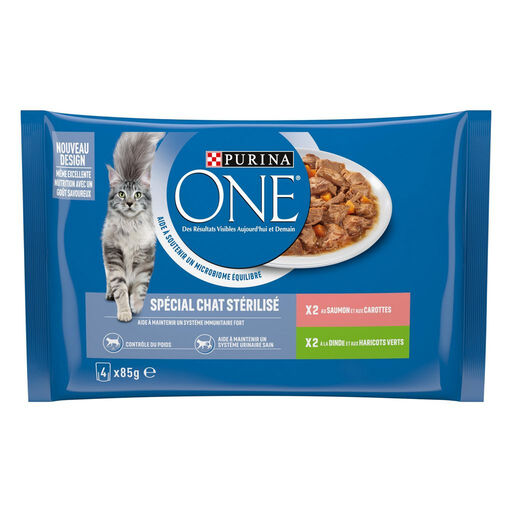
Why this suits this profile: With its 4 x 85g pouches, this product lets you try a wet cat food without buying a large stock. The recipe is presented as complete for adult neutered cats.
The product page states 78% moisture, 13% protein and specifies the quantity of salmon or turkey featured. This helps you look beyond the packaging visuals.
85g pouches, two recipes featuring salmon and turkey, and usage guidance for adult neutered cats.
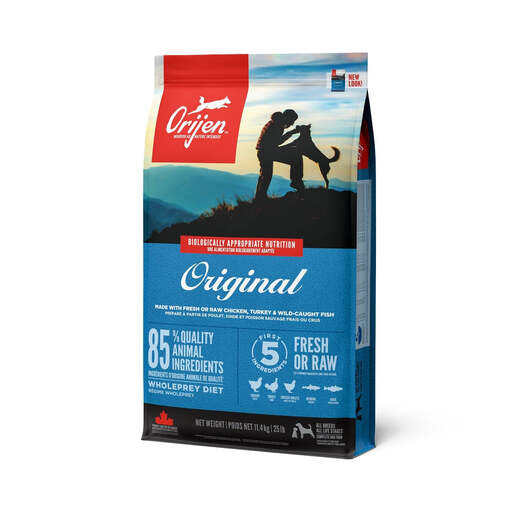
Why this suits this profile: The large bag is aimed at households looking for a dry formula based on chicken, turkey, fish and egg, with precise daily portion control.
The product page details 38% protein, 18% fat, 5% fibre and 12% moisture. A more solid basis for comparing recipes than the simple “rich in meat” claim.
An 11.4kg format, complete dog food and declared presence of chicken, turkey, fish and egg.
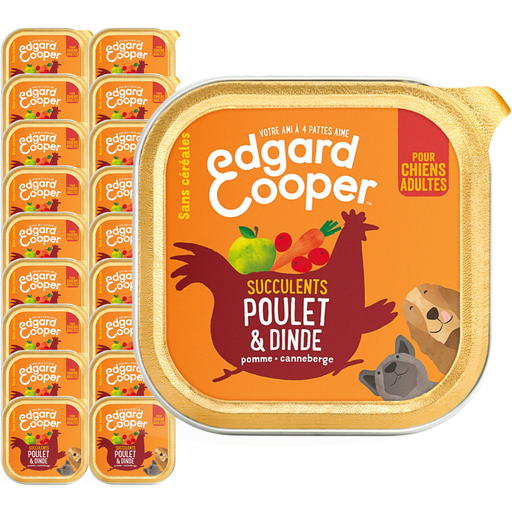
Why this suits this profile: The 18 x 100g trays make it easy to manage an adult dog’s meals, especially when you need to serve regular portions.
The recipe states 30% chicken and 26% turkey, with no grains or added sugars according to the product page. At 82% moisture, this is clearly a wet food to compare with other moist products.
18 individual portions, 56% declared chicken and turkey, plus carrots, cranberries, tomatoes, squash and apples in the ingredients.
We’ve put together a full selection, updated in real time, of products that meet these exacting criteria and comply with European safety regulations.
Wet food generally provides more water and is sold in individual portions or tins. Dry kibble is easier to store and can be portioned out over several days. The choice depends on your pet’s preferences, your budget, the storage space you have and the recommendations on the packaging.
Make a gradual transition by mixing the old food with the new one over several days. A sudden change can be poorly tolerated. Follow the recommended portion size, keep an eye on your pet’s appetite and general condition, and consult a vet if any reaction persists.
The portion depends on the species, age, weight, activity level and energy density of the product. Use the manufacturer’s feeding guide as a starting point and include treats in your daily calculation. Regular weighing helps you adjust portions without relying solely on the volume you put in the bowl.