
Livraison le jour même ou le lendemain

Qualité garantie

Débloquez vos offres de bienvenue: Livraison GRATUITE | Jusqu'à -80 % | 30 jours d'essai gratuits à JoyPlus
Téléchargez l'application
Invoices, administrative mail, a simple letter… you might think choosing an envelope is a minor detail. That's a mistake. A poor-quality model can tarnish your brand's reputation or, worse, leave your documents vulnerable to the rigours of shipping. Faced with a vast array of choices, the pitfalls are numerous and can quickly turn a simple purchase into a real headache.
As the head of product selection at Joybuy, I'm breaking down the essential criteria for choosing the perfect DL envelope and, most importantly, for avoiding the most common traps.
Before we even get into the technical specs, let's review the deal-breaking flaws that plague most entry-level envelopes.
To make the right choice, just three technical points are enough to distinguish a good envelope from a bad one.
Expressed in grams per square metre (g/m?), paper weight measures the thickness and density of the paper. It's the primary indicator of quality.
For a letter envelope, two systems compete.
The DL (110x220 mm) format is the go-to standard for business correspondence. It's designed to hold an A4 sheet folded into three lengthwise. It is the essential standard for invoices, quotes, and the majority of company mail.
Other formats meet specific needs:
To illustrate these criteria, here are a few models that tick all the boxes for very different uses.
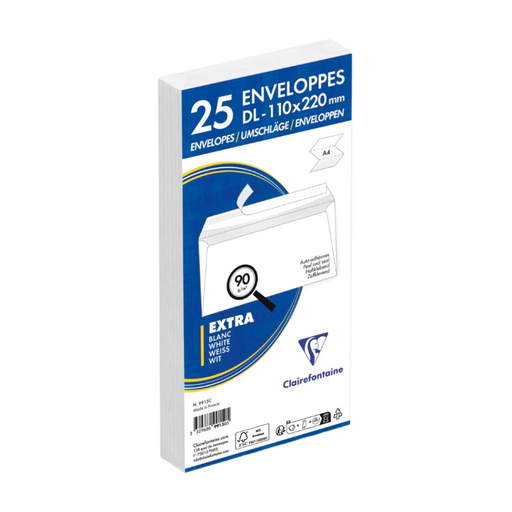
Why we chose it: This is the reliable choice for professionals and discerning individuals. The DL format is perfect for administrative mail, and Clairefontaine remains a guarantee of quality and French manufacturing.
Its 90 g/m? paper guarantees excellent opacity. The self-seal closure with a silicone strip is reliable, clean, and built to last.
A perfect balance of quality, convenience, and a fair price for a pack of envelopes. The FSC-certified paper is also a plus for responsible forest management.
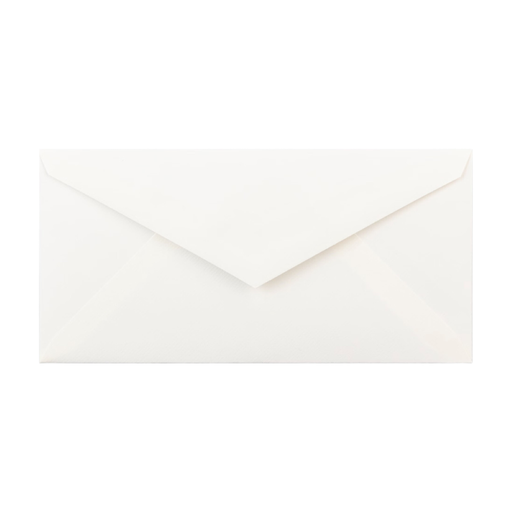
Why we chose it: For invitations, announcements, or any correspondence where elegance is key. The "Laid" texture and high paper weight signal special attention to detail.
With its 100 g/m? paper and lining, the opacity is total and the feel is decidedly premium. The gummed seal is a timeless and reliable classic in this segment.
The unique texture of the Vergé de France paper, which brings a touch of refinement and authenticity to your most precious mail.
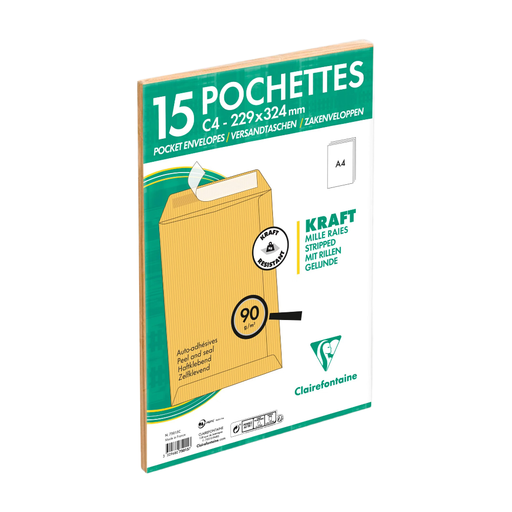
Why we chose it: The perfect solution for sending A4 documents without folding them (contracts, reports, photos…). Kraft paper is renowned for its heavy-duty robustness.
This model avoids the "wrong format" pitfall. The C4 is the only solution for not damaging important documents. Kraft paper is, by nature, opaque and strong.
The strength of virgin fibre Kraft paper, combined with the convenience of a self-seal closure, makes it ideal for bulky or fragile mailings.
We have curated a complete selection of products that meet our quality criteria and current standards.
It's all a matter of dimensions and, therefore, use:
To preserve the effectiveness of the adhesive, store your pack of envelopes in a dry place, away from light and extreme temperature changes. Ideally, keep them in their original packaging.
Yes, in most cases. A good quality 90 g/m? paper offers enough opacity to prevent reading through it under normal lighting. For truly sensitive documents, look for envelopes with a printed interior (often a grey pattern) that guarantees maximum confidentiality.